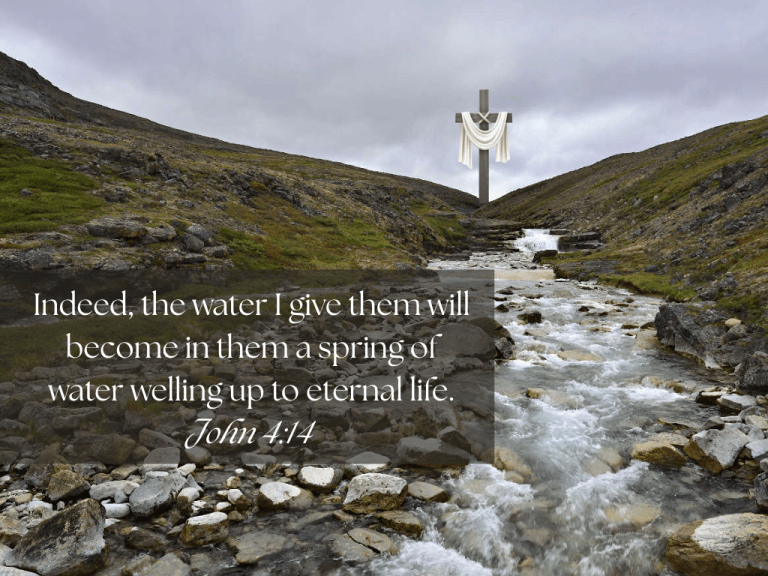
Part of the Family! A New Life and a New Identity in the New Covenant.

A sermon for Baptism, Confirmation, and the Renewal of Baptismal Vows

We are gathered here today to see a truly extraordinary thing.

We’re here today to watch the unfolding of a plan that God set in motion from before the foundation of the world.

Today two families, with their supporters, are going to enter into a covenant with God, they’re going to say “yes” to raising their child to know and love the Lord, so that child knows they have a Heavenly Father.  That’s extraordinary.

Today a young man and a young woman are going to stand before God and before you, and they’re going to say “yes”, we accept the vows that were made at our baptism, yes, I know I need God’s help and I want to live as a member of God’s family.  That’s extraordinary.

And today, one of your sisters, Helen, will stand before God and before you, and, having gone through the ups and downs of life, and having come to better understand what it means to trust in God, she will re-affirm her vows, and ask for the strengthening of the gift of God’s Holy Spirit as she lives them out.  Extraordinary!

This is big stuff.  This is not just life-changing stuff, this is the sort of stuff that changes eternity, making the decision to accept and live out the promises of God – and more than that – admitting that none of us can do it on our own, baptism and confirmation is us saying to God “yes, I need your help. I can’t do it on my own, I can’t save myself, I can’t work hard enough or do enough good to fix the world around me: I need to accept God’s offer to adopt me as His own.”

Did you hear that? 
It’s extraordinary – it might even sound crazy! – to suggest that God would want to adopt me and you as members of His family, to really be Our Father.

But that’s what you’re going to witness today. 

And it sounds crazy… but it’s something that God promises long ago in ages past.

God’s Design for Relationship with Him

You see, from the very beginning, God intended for us to live with him.
Not just to know He’s there – but to really live with Him.

Not as enemies, not as acquaintances, not as neighbours going through life, God minding His business and us minding ours. No, God intended for us to live with Him as children, in peace with each other, in peace with God and with all of creation.

But, as much as we might wish there was another way, God knew that true love can’t be forced.  From the beginning, God didn’t force people to love Him.

No, true love, that offer to live as members of the family of God, is offered.
But it can be accepted, or it can be rejected.

And I’m sure all of us know what happened next – and even if we’re not familiar with the Bible, we can see the effects of what happened rippling out across all of time and space.  God offered that love to all of humanity, but it was rejected.

We wanted to trust our own way instead of trusting the one who made it all.
And God, as much as it made Him grieve, respected that choice. And, no matter your age, no matter your experience, if you’re honest, I’m sure you’ll agree that – while there is good in the world – we aren’t up to the task of being our own Lord.  Me, and you, we are powerless to save ourselves or fix the world around us. We need God’s help.

But, the good news is that God knows that. And, from the beginning, He didn’t leave us on our own. His plan from the start was to send His Son to crush the serpent’s head, to win victory over the devil and his lies.  His plan – and it’s the extraordinary thing that we are about to witness today – was just as we heard read from Jeremiah chapter 31 – He would give a New Covenant – He would make an agreement with ordinary people like you and me, that we could be His… and He – God – could be ours. That we could say “Our Father” and truly mean it.  God said “I will put my law – my ways – within them, and I will write it on their hearts, and I will be their God, and they shall be my people”. 

That’s incredible! 

And He means it!  For those who accept God’s plan, who trust in Jesus as their Saviour and become part of the new covenant in his blood offered on the cross, you can really run to God – yes, the Almighty Creator of everything that is – you can run to Him, cry out to Him, “my God, my God”, help me my father – and it’s true, because He says that’s how it is. 

God is willing and wanting to adopt any person into His family… all it takes is admitting that He is God and we are not.  That our ways, our trying, our striving, our attempts at doing good, can never actually save ourselves. It’s admitting, like we are doing here today, that “yes, God, I need your help.”

What’s New About this New Covenant?

This is the “new covenant” that God promised long ago, and which came in the fullness of time when Jesus, God’s only Son, stepped into our place and did what we could never do for ourselves.

So what is this covenant, what’s “new” about it?

Well, look at what we read from Jeremiah.  Look there towards the bottom of that reading, verses 32 to 34. 

In this promised new covenant, who does the work?

(wait)  Is it something that we need to sort out?  Something where we need to get ourselves clean enough, fix ourselves up, figure it out for ourselves?

No!  “I”, says God.  God, as a loving, caring, providing, merciful father – far beyond even the best human father you could imagine – does the work. He reaches out. He says “I will do it”. 

And just like marriage vows create a new family, the vows of this covenant create a new identity… if you’ll accept it.  God says “I will do it”.  God says, you will be my child, and I will be your father.  That means – if you accept it – you, yes, you, with all your doubts and fears and hurts and struggles, and the two steps forward and one step back that we all have as we go through life, you are granted access to the throneroom of the Almighty God who created heaven and earth. 
…because you’re a child of the King.

You – yes, you – are given the right to speak directly, to cry out directly to Almighty God in prayer, because, yes – even though He’s the all-powerful creator of the universe, far above our ways and worthy to be feared, even though that’s true, He loves you, He wants to adopt you as His child.  Yeah, he’s running the universe, but it’s never an interruption when you cry out to him, because you’re a follower of Jesus His Son, and you’ve accepted the offer for God to look at you in Christ, rather than look at you based on your works or what you have done.

And this covenant has benefits – because of the relationship we can have with God, because that relationship has been made right by God, God’s own spirit, the Holy Spirit, our helper and guide, offers to move in – as the Bible says, He comes to take our hard hearts of stone and turn them into real, proper, living, beating hearts – He comes to give us life, renovating us from the inside out.

You see, this thing you’re about to do, this thing you’re about to witness…
It really is extraordinary!

God will do it! …But He won’t force it.

But remember – love can’t be forced.  Family can’t be forced.

God offers for us to live as His children of the new covenant, but it can be accepted or rejected.

I have a question for those of you who have been following and trusting in Jesus for a while.  Just a simple yes or no, but, if you’re a follower of Jesus, answer out loud so that those making promises today know what to expect.

Question – after you decide to follow Jesus, is it always easy to live as a child of God?

No!  It isn’t.

Ok, question – does accepting God’s offer, and deciding to follow Jesus, mean that all your problems instantly go away, and life will always be sunshine and lollypops from now on? 

No! Not at all.

The effects of the world, the flesh, and the devil rejecting God’s will still echo and ripple out through all of creation, and your own flesh and blood will struggle with it all through this earthly life.

But, last question – For those who follow Jesus, for those who put their trust in God, who say “yes” to his will and his plan, who depend on him as Lord, and Saviour, and Father… is it worth it, even through the ups and downs?

Yes.  To who else could we go, who else could we trust in, if not the one who made it all?

So my friends, it means you have a choice to make.  God offers a new way to live under this new covenant – He offers a new identity, adopted into his family, a God-given renovation of your heart and mind. But it isn’t forced.

Paul’s Letter to Timothy gives us a good reminder of what it takes to live this out.

Three “P”s.  Proclaim, Be Persistent, Have Patience.

We need to proclaim the good news to others, but first, we need to proclaim it again and again to ourselves.  Read God’s Word, get to know it, get used to hearing His voice, so that when life gets you down, you can hear the promises of God.

Be persistent in the good times and the bad.  There’s going to be ups and downs, but be persistent – God will complete the good work he has begun in you, and He is the only one who can work all things together for the good of those who love him.

And have patience. The Christian life isn’t easy, but it is good.  It can take a while for Jesus’ way, truth, and life, to really settle in and renovate our way of thinking and being.

See, my friends, we’re about to do something extraordinary.

You guys being confirmed and re-affirming your vows, you’re accepting something extraordinary.
Parents, you’re doing something extraordinary. 

Today, you are saying Yes to God’s plan, Yes to being a child of God.

May God give us the strength to live together as that family, proclaiming and persevering with patience, and all to God’s glory, now and forevermore.

Love God and Neighbour – Are you a “why” person, or a “how” person?

Deuteronomy 30:9-14
Psalm 25
Colossians 1:1-14
Luke 10:25-37


May only the Truth be spoken, and may only the Truth be heard,
in the Name of God: Father, Son, and Holy Spirit. Amen.

I have a question for you this morning.
Are you a why person, or are you a how person?
What’s your mind’s go-to response?  Why? or How?

Our lessons today deal with the law of God – the wonderful, life-giving, freedom-filled gift which is God’s law. Not a burdensome set of rules, nor is it something that should fill us with fear because of our natural and universal inability to fulfil it without a lot of God’s help; but a gift.  As we read in Deuteronomy, it’s in living into and living out the Lord’s vision for how we should live that we will find true blessing, true prosperity, the lasting inner peace that can carry us – together – through the ups and downs of life.

And Jesus sums it all up for us in a way that I’m sure many of us have committed to memory.  

Hear what the Lord Jesus Christ says: (say it with me!) you shall love the Lord your God with all your heart and with all your soul and with all your mind. This is the first and great commandment. And the second is like it: You shall love your neighbor as yourself.

If you haven’t committed that one to memory, take it home.  It’s on the front page of your bulletin.  Love the Lord your God with all your heart and with all your soul and with all your mind. And Love your neighbor as yourself.

What does it mean to live a Christian life?  Love the Lord your God…
What does it look like to follow Christ? Love the Lord your God…
How should we live if we want to see the Lord’s blessing?  Love the Lord your God…

It’s all pretty straight-forward, right?
Look again at Deuteronomy: God, through Moses, suggests that this is all rather easy!  The Law is not far away, hidden in heaven or buried in the depths that we need someone to bring it to us.  The Law, God says, is not too hard for you.  In fact, it’s very near, it’s in your mouth and in your heart, so that you can do it.

Easy, right?

(…well, lets just say I won’t ask for a show of hands for those who think they’ve succeeded!)

But I will say this: the Law is easy, in as much as it is easy to understand. 
When God says something, He means it.  He doesn’t throw words around lightly.

When He says “all”, it’s simple enough to understand – He really does mean all your heart, all your soul, and all your strength.  Hold nothing back.  Go all in.

And when He says “to love your neighbour”, again it’s simple enough – there’s no bones about it, no beating around the bush: the word is agapeo, agape, that fullest, sacrificial definition of love, the love that prefers the other above the self, the love that is defined as a desire to see and bring about the well-being of another.   On the one hand, it’s that simple: love your neighbour, desire and seek to bring about what is best for him or her, all the way.

It’s Simple enough… until our minds get in the way!

“It’s in your mouth and it’s in your heart”, God says, “so that you can do it”.

But did you notice what God did not say?

The Law is in your mouth and in your heart… the issue, though, is that, for us sinful human beings, we like to follow our minds

And that’s not where God says the Law has been written, even for those who are redeemed, who are filled with the Holy Spirit.  The Law isn’t found in your rational mind. Yes, by grace, over a lifetime of sanctification, we pray along with Romans 12 that with God’s help we can be transformed by the renewing of our mind, or with Ephesians 4 to be made new in the attitude of our minds, or with Philippians 2, that we would come to have the mind of Christ in us as we learn to decrease our self-interests so that the Body of Christ may increase.

My brothers and sisters, we have to be aware of this: yes, the Law is to be found in your mouth, each and every ordinary Christian, sharing that Good and life-giving News, and yes, God’s law is written deep on each and every human heart… but be aware – your mind, my mind, won’t live out God’s law naturally.

So let me as you… are you a why person, or are you a how person?

When you hear the law of God, what is your first response?
Are you a why person?  No shame, I think all of us are “why” people by nature.

You hear someone like me say “God wants you to go all in”… and, the natural human response is to say “what?  Why would I do that?  I’m not a preacher. I put my money in the plate, I pray for my church family, I come out on Sundays, I read my Bible most days.  Surely that’s good enough, or it at least counts for something, right?

Why should I need to do more?  Why should I need to be made into more or “transformed” any more than I already am? I’m already doing so much more for the Lord than most people are, most can’t even be bothered to get out of bed on Sunday morning. …No, I can’t say that I love God with all my heart or all my mind, but come on, why should I need to?  And hey, while we’re at it, it’s not like you’re living a perfect life either… and on and on and on it goes.

Are you a “why” person? 

Are you one whose nature, whose natural reaction, is to hear the simple, straightforward, but all-encompassing law of God, and whose first reaction is to explain why it’s not asking anything more of you than what you’re already doing, or why that simple command might apply to someone else who is doing less than you, but you’re alright.

Or, perhaps you hear “love your neighbour as yourself” – and you hear a crazy preacher who went back and looked at the Greek in Luke and Matthew and at the Hebrew in the quote from Leviticus that Jesus was referencing, and who says, no, it doesn’t mean “care about your neighbour”, it actually means agape, that all-in, self-sacrificing, deeper-than-your-love-for-your-own-blood sort of love, and your mind’s first reaction is “that doesn’t make sense, why would I do that?”. 

I care for the poor, I give money and sometimes even volunteer for stuff.  I pray for the homeless and addicted, I even stick around for coffee hour after church for a bit of fellowship with other church people… but what does God want of me?  Seriously? To have agape, all-in, sacrificial love my neighbour who I don’t even really know, and who wouldn’t do the same for me, why would I do that?  I already do more than most people, why would I actually love some random person as myself

A ”why” person.  Like the lawyer in today’s Gospel, who says “yes Master, I hear you… but let’s define our terms so that I can tell you why I’m off the hook”.

Now let’s be clear – there’s no shame in admitting you’re a “why” person, if that’s where you’re at right now.  I will confess that I lived most of my Christian life as a why person, including the first 5 years of my ordained ministry.  Yes, the law was in my heart, yes, it was even in my mouth on a daily basis… but my mind did a very good job of comforting myself to justify why other people needed to grow, but I had probably come far enough when it comes to being “all in” with love for God and neighbour.

There’s no shame in admitting if that’s where you are.  And I say that precisely because admission and confession – giving up that denial – those are the first steps to continuing in that journey of who God is calling you to be: someone who really is all in.

Someone whose mind has been transformed from “why”… to “how”.

You see, a “why” person – and we’re all why people by sinful human nature – uses their mind to decide what is right for them, what is good enough for them, and sets about explaining why they’ve already grown and been transformed enough, why the dead simple, totally straightforward, but breathtakingly hard “all-in” language of God doesn’t mean what it says, or at least doesn’t call them to do any extra.

A ”why” person uses their mind to set their priorities.

What’s the alternative?

But, by grace, we can become “how” people. 
You see, a “how” person knows that their mind is not trustworthy for setting priorities.
A “how” person knows that the law is on their heart, but that the transformation and renewal of the mind is still very much a work in progress. 

A “how” person says: ‘ok Lord… you’re right, I haven’t gone all in.  How can I make that simple command more visible in my life?  What’s the next step?”

A “how” person says ‘Lord, it’s hard… I barely know my neighbours… in fact, there are people I worship with each week and I don’t even know their names, and this is a pretty small church!  And Lord, I don’t feel like I have much time or energy… but you say I need to love my neighbour as myself, and I don’t, so how I can I do that better?  What’s the next step?”

Our homework: some practical obedience!

Friends, put that to the test this week.  I will too.
Take your bulletin home, and each day, recite that summary of the law that Jesus gave us, found on the front of your bulletin. 

And catch yourself… because, like the lawyer in the Gospel, your mind will naturally go to why you’re not called to do more, why this isn’t asking anything of you.

But switch, consciously, intentionally, from “why” to “how”.  Each day, read it, and then pray: Lord, this is your command.  How do I make this more visible in my life?  What’s the next step?

That’s the sort of obedience to God’s Law that changes a life; that changes a church; that changes a community.

Because, when we offer something to God – especially when we offer it off the top and out of our poverty, rather than offering God what is left over, He takes it and blesses it and opens the windows of heaven to multiply it.

It’s like the person who tithes of their money before all else.  Anyone’s rational mind can explain why it makes more sense that you should pay your power bill and pay for the repairs on your car before you give money to the Lord… but anyone who has ever tithed knows that by trusting God and saying “Lord, show me how”, you end up with more than you could have asked for or imagined.

So go all in.  Ask God how that should look, for you to love Him first and fully, and to really have agape, sacrificial love for your neighbours – and, lets start that close to home, right here, with getting to know your church family better, taking someone out for coffee, inviting someone over for tea, meeting up for lunch – like tithing, you offer the time and energy in obedience off the top, and God will give it back multiplied.

This is the law of God.  It is amazingly simple. It is wonderfully straightforward.  But it is also breathtakingly difficult to put into practice.

Say it with me.  Hear what our Lord Jesus Christ says. You shall love the Lord your God with all your heart and with all your soul and with all your mind. This is the first and great commandment. And the second is like it; You shall love your neighbour as yourself. On these two commandments depend all the Law and the Prophets.

Now… will you start to explain why… or will you ask God to show you how?

To God be the glory, now and forevermore.  Amen.
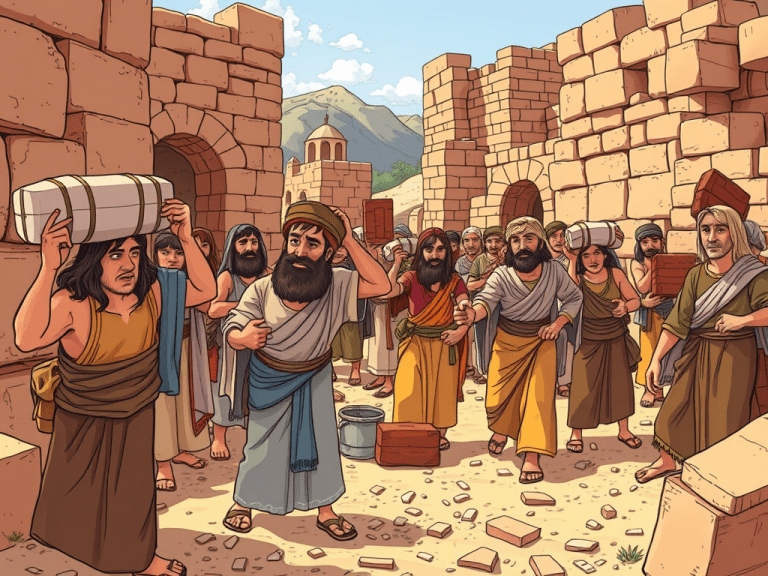
Not Just a Story: Living Holy Week from the Inside Out

Anyone who has known me for me than a year has certainly heard me say that this day, Palm Sunday, is my favourite liturgy of the entire Christian year.  If you’ve known me 2 years, you’ve certainly heard me say it twice… poor Kristina has known me 23 years, and has certainly heard it 23 times!

This is my favourite liturgy of the entire year for one reason: the drama.

It’s a service with a few extra parts, all of which go back to the earliest centuries of the undivided Christian church.  And, even when we go back and study those earliest Palm Sundays and Holy Weeks that we have recorded back in the 3rd and 4th century, it’s all dripping with drama – it’s full of emotion.  And this day in particular is supposed to hit you like a giant mood swing, like the irrational tantrum thrown by a toddler:  just a few minutes ago, you and I, part of the crowd, were joyfully singing “Hosanna!” which means “Save us!”.  We’re joyfully welcoming Jesus as Lord, shouting ‘you’re the Christ!  You’re the anointed Lord sent by God!  Save us and help us, we need you!”  It’s happy music, it’s the waving of palms and branches, it’s a victory parade down the aisle.

Hosanna!  Blessed is he!  Those were the words on your lips.

But then, moments later, what do you find yourself saying? 

You see, that’s the harsh, dramatic reality of this day.  It’s no accident that it’s you, and it’s me, it’s us, the same ones who proclaimed Him as Lord, now find ourselves shouting “crucify”.

This service, this holy week is dramatic.  But it’s not just a play for us to watch.

The drama is on purpose… and it’s for a purpose.

And it’s all about remembrance

But see, this is where we run into a problem, English-speakers in particular.  Because we don’t have enough words to accurately translate that Christian idea of remembrance.

You and I, we hear “remembrance” and we think of history, something long ago and far away that shouldn’t be forgotten.  We thing of happy things gone by, memories of something that used to be.

But that really isn’t an accurate translation of the idea of remembrance we find in scripture, the idea of re-membrance that Christ commands us to do “in re-membrance of me”, the idea where Paul instructs the church to re-member Christ’s sacrifice, proclaiming the Lord’s death until He comes again.

We’re not talking what we would normally call “remembrance”.  We’re talking about re-membrance.

Re-member. To become a member once more.
Re-member. To join ourselves back together, like the limbs, the members of a body. 
Re-member. To enter into the action, bringing it forth into our own day.

You see, the Christian observance of Holy Week should never be an exercise in learning history.  When we hear – when we enter into – the scriptures and recount the events of Christ’s passion, we’re not just “remembering” or “recalling” something done long ago by some Jewish leaders or the Roman governor.

No, it’s that older Christian, and even older Jewish idea of re-membrance that goes back to the Passover, where God instructs and commands us to enter into the action, these life-changing, universe-changing, cosmic-level once-and-for-all events, that sure, on our time scale, happened “long ago and far away”, but were nonetheless done for us as they were done for all humanity, in every time and in every place, for every language, people, and nation, to be passed on and entered-into and made present once more every year, in every place, taught to each new generation, as we enter into and proclaim the live-giving, soul-saving, absolutely earth-shaking reality that Christ died as a sacrifice to save you.  Yes, you, the same one who, moments ago, with all humanity, flipped from shouts of praise to shouts of “crucify”, the same one who, is just as much a sinner in need of grace as any person in that crowd or the soldier driving the nails.

As Isaiah prophesied, yes, all we – yes, we – like sheep have gone astray.  We have turned – every one – to his own way. 

Yes, this day is dramatic. But the reality of the brokenness of the entire universe is nothing short of the ultimate divine drama.

Why we need this drama.

We enter into these events as we are led deeper and deeper into the reality of our participation in the death of God’s own son – yes, it was me, and it was you – who participated in the events of this week, and why?  Because it’s me and it’s you who, even all these years later, still need that once-and-for-all sacrifice to pay the wages of sin: death. 

We, like all humanity, have sinned and have fallen short of the glory of God.  We all die, and like the thief on the cross was able to admit, it’s harsh, but it’s right.  It’s just the way it has to be for fallen humanity.  We can’t offer a price for our own lives, because our lives are bound to death and sin and pride and greed… in fact, apart from Christ, left to our own devices, we’re totally enslaved to it, and the quicker we acknowledge that, the better.

We enter into these events to remind us, to lead us to re-member, to join ourselves once more to Christ, to God’s only Son, the one and only person who, because He was God in the flesh, wasn’t enslaved to sin, and could pay something far above and beyond what was owed, breaking the whole system of bondage, freeing all who trust in Him from the captivity of sin, as He tramples Satan under His feet and offers hope that bursts through the gate of the grave and the chains of death.

But it’s no good – no, in fact, it’s useless – if that’s a story, a faint memory, a tale of something that happened long ago and far away.

Our Place in the Story

Friends, in a few moments we will turn to the confession.  It’s the same one we say week in and week out.
But, like everything else in the liturgy, it’s on purpose, and it’s for a purpose.

We confess our sins each week because it’s central to who we are and what we do.  Each week, this week, last week, and yes, next week too, you and I will fall short of the glory of God. We will sin by thought, word, or deed, by things done or left undone, and we will continue to need a saviour.

But remember: complete, utter, and ongoing reliance on God is not a bug, it’s not a failure.  No, it’s a feature of how humanity was intended to be: completely, utterly, and forever reliant on God.

Like the thief on the cross next to Jesus, it’s time to admit that you need Jesus.  That you need to enter into this Holy Week, because, yes, in fact, you are a part of that crowd, just as I am.

You and I, we need, and it is our privilege, to re-member, to join ourselves up with those disciples who gathered on Thursday night to receive a new commandment, to have our feet washed by our servant King.  We need, and it is a part of our confession, to walk with Christ to the garden of gethsemane overnight on Thursday, where he told us to watch and pray, but we, like the disciples, find our eyelids heavy and our hearts distracted.  We need, and it is for us, that we follow Christ to the cross on Good Friday, that amazing, horrible, terrible, and wonderful cross, the one that you and I caused, and from which you and I eternally benefit, and it’s really only then, that we can truly share in and proclaim that unspeakable joy of Easter.

So my friends, embrace the drama – and block out your calendar – because this Holy Week is God’s gift to you.  It’s God’s invitation for you to enter into those events of long ago and far away, and to join yourself to them, so that you, as a follower of Jesus, can know Christ and make Him known, in every age, in every place… and for His glory, now and forevermore.  Amen.

Blessed to be a Blessing!

A sermon preached at All Saints’ Church in Aklavik, NT
Jeremiah 17:5-10
Psalm 1
1 Corinthians 15:12-20
Luke 6:17-26

May only the truth be spoken, and may only the truth be heard: in the Name of God, who is Father, Son, and Holy Spirit. Amen.

The lessons this morning really have a whole lot to say about God’s blessings. 

In First Corinthians we hear about the truly remarkable blessing that we, ordinary people, sinners saved by grace through faith in Jesus Christ, get to share in his resurrection – a huge and incredible blessing.  In our Old Testament lessons we hear twice about those whom God has blessed being like a tree planted by the water; and not just any tree, we’re thinking one of those big fruit trees like they have down where they don’t get any snow: big branches reaching out over a river, big green leaves and plenty of fruit growing on it, never needing to worry if someone is going to come with the garden hose and water it, because God has provided all that it needs. 

And then, in today’s Gospel, Jesus speaks about God blessing all sorts of people.  God pours out his blessing on all sorts of people that, if we looked at their situation, we would say didn’t look very blessed: the poor, the hungry, those who weep, those who are hated or who are rejected by their family and friends because of their faith.  But God blesses them, and that blessing turns their situation around: the poor have what they need, the hungry are filled, those who cried in the night found joy in the morning, and those who were hated and rejected found their place in the family of God.

God is good!  Sometimes He’s so good that we have a hard time recognizing just how much His desire and His will is to pour out His blessing on His children.

And I must say, as I’ve been here this weekend, with the daytime talks and the evening services, I’ve heard and have even seen for myself how much we here have been blessed. 

Right here, in the lives in this room, there has been so much blessing, hasn’t there?

Even though the world is broken – it’s messy and hard and not as God intended it to be – still, even in the midst of that, God has blessed us.  People, even your brothers and sisters here in the family of God, have experienced healing, have experienced freedom from worry and pride and addiction, have experienced God’s miraculous way of providing what is needed.  Even as we go through the ups and downs of life, so many have experienced the unexpected gift of God’s joy to face hardships. 

Friday night we sang “count your blessings”, and we should!  Because He has blessed us.

And, it’s also right, as we saw in today’s Gospel, that we should desire that blessing for others, and for our community.  In the gospel today, a huge crowd had started following Jesus, coming on foot from across great distances to hear His teaching and experience His blessing.  And how did Jesus respond?  He blessed them!  As we read just a few minutes ago, people were being healed, having their burdens taken away as they encountered the power of God in the flesh.

God is so good!  We’ve all been blessed, and it’s His desire to bless us.

What’s the purpose of God’s blessing?

But, there’s a big question I want to ask today. 

I think we’ll all agree that, at least in some ways, God has blessed us.

But here’s the big one: what is the purpose of God’s blessing?

What is the purpose, or in other words, why does God bless us?

It’s a good question, and it’s one worth looking at.  Certainly, I’d say it’s a question that some people get wrong.  There are some on TV who preach a twisted message, saying that God blesses us so that we can get rich. That sounds nice, I guess, especially if you’d like to have money to buy a new truck or to go down south for a vacation, but is that actually what the Bible teaches?  Or, ask it this way, does it even make sense for God’s purpose, his ultimate desire, to be for us to be rich, when in today’s Gospel – like elsewhere – He warns about how hard it is for a wealthy person to please God?  And, as we all know, money is just worldly stuff: you can’t take it with you!  There’s a reason you never see a U-Haul truck full of stuff following the casket to the cemetery.

So, let’s ask that question.  What is the purpose of God’s blessing.  Why does He bless us.

“Like trees planted by the water”

I think there’s a whole lot we can learn if we look at that description of a blessed person that is given in Jeremiah 17, and in Psalm 1.  In both places we are given the same image: The one who is blessed is like a tree, planted by a river, with deep roots running out to the water source, so it never needs to worry in times of drought.

It’s a nice image, but what does that mean? 
What does it mean for God to say that you or I are like a tree?

Let’s just stop and think about that for a minute.

Think about any tree, or even a nice big berry bush out on the land, since we don’t have the big fruit trees like they have where Jesus lived.

And let’s ask the question: What is it’s purpose? Why is it there?

Bear with me, it might seem a little silly, but seriously: why is that tree there?

Is it there for its own sake?  How did it get there? 
God created the tree, brought its ancestors into being back when he created the world.  And sooner or later, when the time was right, the seed was brought to where it ended up, maybe by the wind, maybe by an animal, maybe washing down the river during the high water in spring. 

One way or another, it ended up where it is, and the sun shined on it, and it got the water it needed.  To think about what St. Paul says, we could say “one planted, and another watered”.  But how did it get there?  It was God who gave the growth.

What’s the tree’s purpose?  It’s a blessed part of God’s creation, and it’s primary purpose is, first and foremost, to reflect God’s goodness and glory.  Have you ever thought of it that way?  God created and it was good, He created out of love, and took delight in it.  He didn’t create the world so that He could walk away from it for us to figure things out on our own; He created so that we could share life with Him and rejoice in His provision.

And scriptures says that the one who is blessed is like that tree.

Sometimes, honestly, it might be easier to actually be a tree, don’t you think?  A tree never needs to worry about life in this messy world.  A tree never gets tricked into thinking that it’s self-reliant or that it exists for itself.  A tree knows, full well, that it is fully reliant on what God provides: the water on the roots, the nutrients in the soil, the sun from above.  All it can do is rejoice in that blessing, rely on that blessing.

How does a tree use it’s blessing?

But here’s the big thing: if the blessed are like a tree, it’s not enough to just rely on God’s provision.  Because, all throughout scripture we are reminded that trees actually has a purpose.  The tree is blessed to be a blessing

That tree by the waters, with green leaves in time of drought: what do you think happens on a hot day?  That tree is blessed to become a place of shade for those who need to rest and come away from the scorching heat of the day.  Or, I grew up in Newfoundland, and when I was young my dad would take me into the woods with him, and if you’ve ever been out on the land in winter and had the cold, damp wind come up with blowing snow, you know the relief that comes from finding trees to break that wind, to give that relief.

Back to the scriptures, what does the Bible have to say about trees?  They bear fruit!  The trees are blessed to be a blessing.  Yes, Jesus says the hungry will be filled, but one way that happens is when trees bear their fruit, giving food for the hungry.  In the Gospels, when Jesus even speaks about faith growing from a mustard seed, He talks about when that springs up, that blessed tree becomes a place for birds to build their nests and raise their young.

Think about it: Scripture says the one who is blessed is like a tree planted by the water.  But trees are never blessed for their own sake: they exist to reflect the glory of God, and to be a blessing to others.

We are blessed to be a blessing.

So, my friends, we have been blessed.  But what’s the purpose of that blessing?

Think about Jesus’ words today in Luke 7.  It’s never about what we get.

Jesus said blessed are the hungry, for they will be filled.  But it’s not about being filled… because he goes on to say “cursed are those who are full now!”.  He says blessed are those who are poor for they will be rich, but he goes on to say “cursed are those who are rich!”. 

You see, it’s never about getting God’s blessing to store it up for ourselves. 

God blesses us, so that we can be a blessing.  Then, when we fulfil that God-given purpose of reflecting and proclaiming His glory, of telling others how we’ve been blessed, guess what happens?  It’s like the person in the burning heat looking for shade, or the person in the storm looking for shelter: our blessing becomes a blessing to them!

In sharing God’s blessing to us, we bless others, and in blessing others, we are blessed. It’s a wonderful cycle, but unlike so many things in this broken world where we spiral down and down and down, God’s blessing builds us up, and never alone, but always building us up together as a church, as a family, as a community who reflects God’s glory.

How will God use us to bless others?

So let me ask: who here has ever received a blessing from God?

Now, ask yourself, what is the purpose of that blessing? 
Friends, you were blessed to be a blessing.

So now, let me ask you this: who here wants to see God’s blessing pour out on our community, on our families, on our loved ones who are wandering like those who are thirsty or burning under the heat and stress of life in this messy world?

God knows that need, but here’s the surprising part: God wants you to be part of that blessing! 

The Holy Spirit, living inside of you – yes, the same Spirit who raised Jesus from the dead! – is alive in you, and just as God is blessing you each day, building you up into a mighty oak of righteousness, a tree planted by the water, the Lord doesn’t want you to keep that shade and those fruits to yourself.

Blessed is the one who delights in the law of the Lord; who delights in the Word and the Ways of the Lord; who delights – rejoices – in what the Lord has done.

As we rejoice in God’s blessing, let’s allow God to use us to be a blessing to others, in Jesus name, for our families, for our community, and for a world that is hungry to hear the Good News that God sent us to share. 

To God be the glory, now and forevermore.  Amen.

What is Love?

May only the truth be spoken, and may only the truth be heard:
in the Name of God – Father, Son, and Holy Spirit.  Amen.

Today our Advent journey comes to an end, as we have lit this fourth candle morning, but will return in just a few hours to celebrate the Eve of Christmas, the first coming of Jesus Christ, Emmanuel, God-with-us.

We began our Advent journey talking about Hope, as Bishop Joey reminded us that Christian hope isn’t the world’s shallow, warm, fuzzy version of hope.  We were reminded that Christian hope isn’t about wishing for something better; it’s about standing firm in the assurance that – as we heard this morning – the Word of God will never fail; God will keep his promises.

The second week of Advent, we talked about Peace.  Whitney reminded us that Christian peace isn’t the world’s shallow, warm, fuzzy version of peace.  The world talks about peace in terms of being relaxed and filled, being free from care, as though peace is the opposite of busyness.  But, as we were reminded, that’s not what the Bible means by peace: when the Bible speaks of being at peace, it’s talking about choosing our side in preparation for when we shall see Jesus once again: are we at peace with God – on His side – or will we continue to be rebels against God, siding with the world, the flesh, and the devil?

Last week, the third Sunday of Advent, Bishop Joey preached about joy – specifically the place of joy in a Christian’s life.  Again – and you might be seeing a pattern by now! – the message was that Christian joy isn’t the shallow, warm, fuzzy “happiness” that the world talks about.  Nothing wrong with happiness, but it’s just a feeling, and feelings come and go, changing quicker than the wind.  No, Christian joy runs much deeper; it’s a joy that springs up deep within, from that assurance that our faith will be made sight, that, even when tempests and the powers of wickedness and the consequences of human action are swirling around us, we can count it all joy; we can rejoice in all things; we can say “it is well with my soul” – why? Because “in Christ alone my hope is found”.

That’s hope, peace, and joy… which brings us to what this morning?
Love.  Hope, Peace, Joy… Love.

So my friends, what is Love?

(Lift)

In some ways this one should be the easiest.  After all, love is the most common, most used, most “normal” concept out of all of these words. 

On the drive here this morning, I was treated to such wonderful love songs as “Santa, Baby” followed by “All I want for Christmas is you”.  Not much about certain hope, lasting peace, or that deep and abiding joy… but love is easy, we all understand love, right?

No.  The truth is we don’t.

You see, the problem with love is that we think we know what it’s all about. 
But, as any teacher or coach would tell you, the hardest things to really learn are the things we think we already know. 

So, what is Love?

Not so warm and fuzzy…

Now, on the one hand, even the most secular person will recognize St. Paul’s famous “love chapter”, even if they don’t know where it’s from.  You know the one – you can probably recite it with me: love is… patient, love is kind, it does not envy, it does not boast, it is not proud…right, all of that. 

But want to know why I think even our secular world can cling to those couple of verses taken entirely out of context?

Because, read on their own, taken out of context, it’s just shallow “warm fuzzies”. 
Oh yes, patience, kindness, no jealousy, no pride, wouldn’t it be nice, all you need is love.

But that can’t be it.  We’ve seen the pattern.  The world always takes these deep concepts rooted in the heart of God and waters them down; makes them so shallow and sweet that the worldly versions of hope, peace, joy, and love go down easy, but conveniently never really call us to change.

Patience, kindness, all of that, yes that’s part of love.  But love isn’t a thing.  Love isn’t a concept.  Love isn’t a feeling or an emotion.  Love is an action to be lived out.

Kristina and I will spend our 22nd Christmas together.  I’ve loved Kristina since I was 14 years old.  But love is an action to be lived out, not a concept or feeling to reside in the mind or the heart.  That love we had at 15 or 16 years old was real, but it wouldn’t have gotten us through the challenges we faced at 20, or at 25, or at 35, or whatever the coming years will bring.

And, in fairness, many secular people would agree with that statement, that love is an action.

But here’s the part where the Bible flips its all on it’s head: just as hope isn’t about my wishful thinking, it’s about trust in who God is; just as peace isn’t about me feeling content and restful, it’s about giving up my rebellion against God and joining His side; just as joy isn’t about my happiness but rests in the truth of who Jesus is and what He has done; love isn’t about me… love is an action, but it isn’t my action.

True love is God’s action, springing forth eternally from the very heart of the Father.  Human love is only ever our response

Love is God’s action and human response.

The love a parent has for their child?  That doesn’t well up from within the torn and divided and scarred heart of a sinful parent raised in a weary and broken world. 
It can’t.  How can a parent love their child? 
Whether they know it or not, we love because (what does the Bible say?) He first loved us. (1 John 4:19).

Romans 13 and Galatians 5 both say that “love fulfils the law”.  When you or I make sacrifices and give of ourselves to truly love our neighbour and to truly count them as our equal – we’re not talking warm-fuzzies, we’re saying that our neighbour, or the stranger in need, or the person who will eventually benefit from that Salvation Army kettle has as much right to my money and my time and my possessions as I do, to truly love your neighbour as yourself; believe me, none of us can get there on our own, none of that can spring from the human heart.  “Love fulfils the law”, but it can only ever be God’s action, and our response.

Or if we look to that ultimate statement of love in scripture: the ultimate display of love, the ultimate sacrifice.  What does the Bible say?  Say it with me if you know it: “greater love has no man than this, that a man lay down his life for his friends” (John 15:13).

Could that self-sacrificial love ever spring up for the first time from a human heart? 
No, impossible.  Because – whether or not people know it – human love can only ever be a response to God’s action.  Whether or not people know it, the Lamb was slain from before the foundation of the world; as we heard in Romans this morning, this was God’s plan from the beginning, for all time, for all people to freely respond to that all-surpassing self-sacrificial love of God that is baked in to the very fabric of the universe, because we can only ever respond to the love that God has first shown us.

And, in all of that, as we end our Advent journey, what is love?

1 John 4:9-11: This is how God showed his love among us: He sent his one and only Son into the world that we might live through him.  John says, This is love.  Yes, here’s a biblical definition of love, taken in context, full of action. John says, this is love: not that we loved God, but that he loved us and sent his Son as an atoning sacrifice for our sins.  Dear friends, since God so loved us, we also must love one another.

This is love: God dwelling with people.

The love of God that we celebrate, the miracle of love that should fill our Christmas celebrations isn’t about a feeling or an emotion.  It’s about an action… God’s action, and it’s one that demands a response.

God, the Son of God, the very Light of the World stepped down into darkness for our sake; the glorious king of all heaven came humbly into the world he created, emptying himself of all but love, so that – though we could never deserve it – He would love us as Himself, He would live among us as equals, for our sake.

This is love: God dwelling with His people, stooping down, laying aside His glory, so that He could raise us up for His glory.

As we heard in the Old Testament this morning, God didn’t need a house; God didn’t need a temple.  Israel wanted a temple, and later we’ll find out they wanted a temple because it felt safer to try to keep God contained while they went their own way.  But God’s desire, from the beginning was to be with His people, setting up His tent in their neighbourhood, “tabernacling with them”, dwelling among us, as John 1 says. 

And God’s presence, God’s action of self-sacrificial love, totally transforms the ordinary when we respond.

That’s the truth of the Gospel: Mary’s an ordinary girl, given (by grace) a once-in-eternity opportunity; but God takes the action, stepping into our mess, laying aside His glory so that He can be “God-with-us”, Emmanuel.  And now the virgin womb of this ordinary Jewish girl has become, for 9 months, the very dwelling place of God.  An ordinary home in Nazareth becomes the dwelling place of God.  13 guys and their friends walking Galilee on a dusty road becomes the dwelling place of God. 

An ordinary meal – bread and wine – is transformed by this self-sacrificial love so that, in some way, by a holy mystery, it can become the dwelling place of God; and later this evening or tomorrow morning, your ordinary hands will form a little manger as you, too – by faith – become the dwelling place of God.

This is love: God dwelling with His people.

…but do you believe it?

Do you really believe, can you really accept, that the God of all creation, the One through whom all things were made really wants to be with you.  That God is willing to come and be with you in your mess; in your pain, in your grief, in your struggles, in your exhaustion; that God wants to be with you as you face the consequences of choices made, as your kids push you to the edge, as you and your spouse wrestle to figure out life together; as you make your way through a broken, hostile, and overwhelming world: can you accept that God, God Himself, wants to be with you in your mess? 

Can you accept that, if you were the only one, He would still leave His throne in heaven, give it all up, and lay down His life – for you.
You’re that precious.  You’re worth it.

That’s what we celebrate at Christmas.
This is no fairy tale; this is Gospel truth. 

…not that we loved God, but that he loved us and sent his Son as an atoning sacrifice for our sins.  That Jesus Christ came into the world to save people like you and me.

Love is God’s action that demands a human response. 

Will you receive him?

To God be the glory, now and forever more.  Amen.

Why did the Holy Spirit come?

Today we celebrate Pentecost, that ancient Jewish festival, 50 days after Passover, when the people of God celebrate that God keeps His promises, that His covenant is true, and that He does provide all that we need. 

And, as Christians, today we celebrate one very particular Feast of Pentecost, one that followed one very particular Passover.  50 days after Jesus – the true Lamb of God, that once true, perfect, and sufficient sacrifice was slain once and for all for the sin of the world, on that Great Passover we call Easter, we then had the Great Pentecost. 

Going back to the time of Moses, Passover was about salvation and Pentecost was about God’s faithfulness. And that’s still true today for all who put their faith in Jesus Christ: God does keep His promises; His covenant is true; and yes, God really does and will provide all that we need.

And how does He show that?  By sending God the Holy Spirit, not just to a select few, not just to the chosen and anointed king or the prophets like under the Old Covenant.  No, by doing just as he promised in Jeremiah 31, pouring out His Spirit on all who are willing to be His people, and allow Him to truly be their God.

This day, Pentecost, the birthday of the Church, the beginning of the spread of the Gospel to all peoples, tribes, languages, and nations, is all about God keeping His promises, as God becomes present in the every believer by the work of the Holy Spirit.

The Spirit is Essential

Belief in the Holy Spirit is essential to what it means to be a Christian.

…But, I think it’s also fair to say that, for many of us, we’re not sure who God the Holy Spirit is, or what He’s all about. 

We know there are spiritual gifts, we know sometimes there are great revivals when all the people in a place sense the Holy Spirit in their presence, we know some people pray in tongues or feel God’s special anointing as they pray to know God’s will; we also know some false teachers in the Church today try to lead people astray with clever-sounding lines like “the Spirit is doing a new thing”, as though God’s plan wasn’t established from before the foundation of the world..

…so many good sermons in there, but they are all sermons for another day.

Because the fundamental question that you and I need to be able to answer as apprentices and ambassadors of Christ is this: why did the Holy Spirit come?

So let me ask you – because you arethe witnesses that Christ Himself has called to go and bring the good news to your friends and your neighbour and that co-worker who really drives you nuts, because you’re the one with that calling on your life, right?  Amen?

So why did the Holy Spirit come? 
Do we ourselves know the story well enough that we can tell it to another?

Well, for those of us who need a refresher, the good news is that, scripture and the life of Jesus make the answers clear.

The Holy Spirit does many things in our lives, He gives gifts, He calls, He guides and directs, He strengthens, He rebukes, He comforts, He empowers, but each and every one of these can be summarized in this one simple truth: The Holy Spirit makes us truly alive in Jesus.

Not that the Holy Spirit makes us alive in the bodily sense – no, there are plenty of people who are living and breathing without the Holy Spirit, and all of us will breath our last as the wages of live in a sinful world are paid and we stand before the judgement seat.

But as we know from scripture, a person can be living and breathing, and yet they find themselves dead in their sin, powerless to earn forgiveness, powerless on their own to overcome the world, the flesh, and the devil. 

But, my friends, the message of Pentecost is this: the Holy Spirit makes us truly alive in Jesus.

Sometimes we need to think about “How”

Our church calendar is organized to help us recognize this fact: after all, Pentecost is an ancient Jewish feast, always on that 50th day after Passover.  That’s on purpose, because the sending of the Holy Spirit is directly connected to the events of Holy Week. 

Why did the Holy Spirit come?  To make us truly alive.
But how?  By applying the work of Christ on Good Friday and Easter to our lives today.  That’s how!

Have you thought about that before?  How does the work of one man on a cross two thousand years ago actually make a difference in your life here and now?  How does the victory of one man over the grave at Easter get applied to you and lead you to eternal life?

It’s a thing that many life-long Christians take for granted and never pause to think about, but if you start doing your God-given work of sharing your faith with your neighbours, you’ll find that it’s only logical that people want to know how

And the answer, of course, is Pentecost: that, after we call on Christ as Lord, the Holy Spirit comes into each of us who are willing, and when our body and soul become infused with the Holy Spirit of God, then we become truly alive.  That’s how we share in the risen life of Jesus.  That’s how it’s no longer about “me”, but “Christ in me”.

Let’s walk through that, shall we?

Let’s pretend your neighbour comes to your house.  They’ve been watching and wondering for years.  They know there’s something different about you, that you go to church, and you have a hope and a faith that sustains you through the hardest of times.  And unbeknownst to you, the Holy Spirit has been knocking on the door of their heart, and now here they are, knocking on your door (knock, knock, knock).  They come in, you pour up a cup of tea, and here they are, out of the blue asking you “you know, your faith seems so much more real than the religion I learned back in school.  I was going to go to church, but you know, I just can’t get past the cruelty of an innocent man dying such a horrendous death.  I just don’t get it”.

Now, if this were me, this is where my stomach flips and I wish I could hide away… because, you might not know this, but I’m actually incredibly shy and nervous about speaking to anyone about anything (yes, I’m the sort of guy who sits and stares at the phone for 15 minutes to get the courage to pick it up and dial a number).

But, also for me, this is when I’ve learned to feel – actually feel – the Holy Spirit.  This is when I physically feel a tingle on my neck, a tingle that tells me: ‘you have an opportunity.  Now, are you going to be faithful?’ 

It can happen to you, too, a tingle, or a feeling in your gut, where God is saying “will you be faithful”.

So, imagine with me, your friend is there, sitting at your table with a cup of tea, and they brought up faith all out of nowhere.  They’ve been thinking about Christianity, but like they said “I just don’t get it”.

Now, you have a choice, don’t you. 

Option A: You can say, yes, well, it’s all hard to understand, you should call the minister.  What do you think about that? (I wish I had a buzzer for the wrong answer sound)

Option B: You can say, “yes my dear, it’s hard to understand, but it’s all ok, just think positive and be true to yourself because all paths lead to God”.  (anyone got that buzzer?)

Or, Option C: You can, very simply, use the events of Jesus’ life, from Holy Week to Pentecost, to explain how it is that the events of long ago change lives from then until now.

It might go like this:

(and for me, this is when I feel that tingle again, a sort of ‘push in the right direction’ from the Holy Spirit within).

Start with Good Friday: The crucifixion was a terrible thing, and the world was a violent place, the Romans crucified tens of thousands of people.  But the reason Jesus had to die is so He could do what we could never do for ourselves. 

A guilty person can’t undo their guilt.  No amount of money or time or making amends can undo the guilt.  No human could make themselves right with God, it takes God coming and doing that for us.

Then look to Easter:  It’s only because Jesus was an innocent man and fully God that his death wasn’t a defeat, it was a victory!  Death wanted to hold him down, but he’s alive forevermore.  He gives us hope for life beyond the grave.  The Bible calls him the “second Adam”, meaning he gives humanity a fresh start, he shows us humanity as it was originally intended, thriving with abundant life, not weighed down by death and decay.

Then look to the Ascension: My faith is not just a spiritual thing.  Positive thinking only gets us so far, as do other religions, because we’re not just souls stuck in a body.  Our bodies are who we are, we are physical.  We can’t just escape into our minds.  I have hope because, as ridiculous as it sounds, Jesus returned to heaven with his risen body to prepare a place for me, and I don’t fully understand all of that, but I know God will restore all things and make them new, and that means there is life beyond the grave.

And then Pentecost holds it all together: But for here and now, as you know, life can be a mess.  My life hasn’t been all rosy, I’ve messed up, I’ve got struggles and habits I can’t break, and life gets me down: people are sick, and we’re tired and exhausted, and sometimes the world looks like it’s going to hell in a handbasket.  But, I just trust that God says I don’t need to fix it myself.  The whole point of Good Friday is that Jesus did what I can’t do for myself.  A little bandage or a few good deeds can’t fix what’s wrong with us, we need new life, a fresh start.  I don’t know how it all works, but what I do know is that my life changed when it stopped being about me, my trying to be strong, my hiding from things, my body dealing with sickness, my soul and mind trying to process what happened in my life, when it stopped being about me, me, me, and instead, when it started to be about “we”.  God, and me, and all the other people in my church family – what a crazy bunch, and some you’d never expect to be hanging around with in a million years! – but everything changed when it stopped being about me, and when I let God come in and make it about “we” instead.  When bad things happen, I know it’s out of my control, so I bring it to God and to my church family, and I know that if Jesus can overcome death and make all things new, then whatever the mess my life is, it’s no match for him. 

The Holy Spirit at work in you… even today!

And my friends, if this is you at your dining room table, and your friend knocked on your door and brought this up on their own, you have a choice. 

Did Jesus do on the cross what you could never do for yourself?

Have your sins been forgiven? 

Did Jesus conquer death and the grave and rise to eternal life?

Is Jesus gone to prepare a place for you?

Is the Holy Spirit at work in you, to make you fully alive,
to let you share in that new life of Jesus?

Well, my friends, the best way you can grow into that new life, and take it from me, is to take a deep breath, get over that fear or shyness, and when you have an opportunity, when you feel that tingle, when you experience that weird thing that you now know is the Holy Spirit pushing you… go for it

Don’t take option A and leave it to the minister.  Don’t take option B, denying your faith and following the ways of the world.  No, if God can conquer the grave and forgive your sin, and make all things new, don’t you think He can give you the words to say to your neighbour over a cup of tea?  Of course he can!  …God can, but will you let him?

True Glory in Humility

I speak to you in the name of God, who is Father, Son, and Holy Sing to the Lord a new song;
    sing to the Lord, all the earth.
Sing to the Lord, praise his name;
    proclaim his salvation day after day.

 Declare his glory among the nations,
    his marvelous deeds among all peoples.Spirit.  Amen.

Since the beginning, people have looked up at the night sky and marvelled.

From time immemorial, every culture, every race, every people, language, tribe, and nation has looked at the universe around them and have come to the conclusion that there is a great Creator behind it all;

they look at the stars in the heavens or the might of a river breaking up; they look at the invisible power of love and anger, of desire and revenge, and, across history, every people come to the evident conclusion that there are great forces at work, far beyond our comprehension or control.

And, as Christians, this should not surprise us.

As we prayed tonight, all of creation declares God’s glory.   The heavens proclaim the glory of God: though they use no speech and have no words, all of creation proclaims the fundamental, universal truth that God is great, that He is worthy of worship.

We Strive for Glory

But, human nature being what it is, it’s also true that, from the beginning, rather than acknowledge God’s greatness, every people, language, and nation have set out to harness it, to lay claim to it for themselves. 

Throughout history, we see the greatness of God declared in creation itself, we see the mighty power of God at work in the world, and rather than bow down in worship, we try to puff ourselves up.

We build towers to reach up to heaven.

We place altars on the high mountains of the world.

We build sacred circles beside the mighty waterfalls, hoping some of that power will rub off on us.

From the beginning, humanity has seen and experienced the greatness of God, and our response, all too often, has been the struggle to make ourselves look great, too.  We see God’s greatness, and behind so much of human history lies the statement: “look at me, God.  Look at the name I’ve made for myself, I’m great too.”

And that’s why Christmas is so very different.

I don’t know if you’ve stopped to think about it, but the message of Christmas is a total reversal of everything human history would have us expect.  This night, if we let it, and the this baby in a manger, if we let him, flips everything on its’ head.

Humanity looked up at the vastness of the night sky or the strong forces of nature, and, all too often, came to the conclusion that glory comes from might.  Glory comes from making a name for yourself, from not being dependent on anyone, from winning the affection of others, and looking out for #1.

…And then we face the reality of Christmas.

God is great, he fulfilled the longings of a nation and the words of countless prophets, but he didn’t come as a mighty warrior.

He didn’t come in a great show of power guaranteed to win our adoration.

No.  Christmas proclaims the glory of humility. 

The earth-shattering, mind-blowing proclamation of this night is that true glory doesn’t depend on the adoration of others or a tight grasp on power.  True glory – the Glory of God – is such that God Himself can become weak, helpless, defenseless, taking on the fullness of humility, without feeling threatened. 

The proclamation of this night is that glory isn’t earned, and certainly not by puffing yourself up to make yourself appear worthy. 

The message of Jesus is that, if you want to share in the glory of God, learn the way of humility.  And if you want to learn that way, Jesus says, “come and follow me.”

A Glorious Invitation

Now I know there are all sorts of reasons why each of you have come here tonight. 

Some are here as an act of worship that they’ve been preparing for over the 4 weeks of the Advent season.  Some are here because it is a link to an important family tradition and brings to life many dear memories.

Some of you aren’t sure why you’re here: you, like all of humanity before you, feel drawn to acknowledge that universal and self-evident truth that ‘there must be more than this’, but maybe you’re just starting to grapple with what that means.

And, then lets be honest, some of you were dragged here – chances are it was your wife or your mother who said “come on, we’re going”, and you knew better than to put up a fight.

But however or whyever you’re here, I want you to hear that completely unexpected, perhaps even ridiculous-sounding message of this night: true glory isn’t found in puffing yourself up, in being independent, in bearing your own load, in keeping your head down and minding your own business, in piling up a few good deeds along the way. 

No, as you, like those shepherds long ago, like our ancestors in every nation, look up and marvel at the wonder of Creation, maybe not yet knowing who God, the Creator is, hear the message of the babe in the manger: true glory is found in humility.

And in that, we see that familiar, life-changing first step of the gospel truth: to finally give up all our striving and struggling and pretending and mask-wearing, and to admit that we are powerless.  To admit that, even if I do my best, I can’t add a single breath to the span of my life, I can’t hold back the forces of nature, I can’t guarantee that my children will continue on the path that is right: to end the denial, and, as we see the great power of God revealed around us, to acknowledge our need for help.

God could have come as the rightful king, but he came helpless and homeless.  

True glory is not threatened by riches, and cuts through appearances. 

The angels appeared in the glittering sky and announced not to the rich, but to shepherds, that the Son of God had come, and more glorious still, that he wasn’t far off, but was in their very neighbourhood, ready to meet poor, ragged, weary guys like them.

Men, hear that message here tonight: glory is not found in independence, in keeping everything to yourself, in not letting anyone share your load, in trying not to be a bother while you try to find your own way.  No, the good news of Jesus is that glory is found in admitting the need for help, in learning to follow; in learning to be an apprentice of Jesus, the Master.

Ladies, hear the message of the prophet: you don’t need to be weighed down by darkness as you try to hold it all together; daughters trying to hold together broken generations, trying to keep the family together and keep up appearances, all while losing yourself in the process.  No, “on those living in the land of deep darkness, a light has dawned”.  Jesus comes to offer a light yoke and an easy burden, and peace that passes understanding, but nothing changes until something changes: it requires that first step, ending that denial, and turning to God for help.

Maybe you know why you’re here tonight. 

Or maybe you’re one of those, like those shepherds, and like every people, language, tribe, and nation in history, marvelling at the greatness of God and wondering where you fit.   

In either case, hear this: I bring you good news of great joy.  To you is born the saviour, the wonderful counsellor, the prince of peace.  But he’s not far off; he’s not far away.  You don’t need to build a tower or puff yourself up.  No, the great message of this night is that Christ the Lord will come and meet you where you are, that His power is made perfect in weakness, and that He offers for you to share in that glory…

…but only if we’re willing to admit that true glory comes through humility.

To God be the glory, now and forevermore.  Amen.   

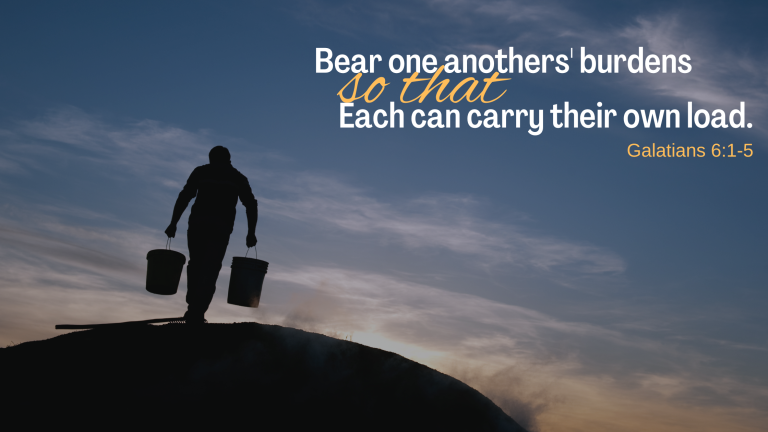
Sharing burdens and carrying loads.

May only the truth be spoken, and may only the truth be heard,
In the Name of the One True and Living God: Father, Son, and Holy Spirit. Amen.

For anyone who has been in the Church for any amount of time, the lessons assigned in the BCP lectionary for this morning will be familiar ones.

We all know, as Paul writes to the Galatians, that part of the calling on our lives as Christians is that we must bear one another’s burdens.  And many of us, I’m sure, are familiar with the healing of the 10 men with leprosy: they cry out to have their burden lifted, Christ hears and has mercy on them, all are healed, but only one returns to say “thank you”.

They’re familiar lessons, but as I sat down to read them this week, I was struck by something that, for how ever many times I’ve read it, I never really noticed before.

I was sitting at my desk, my Bible opened up to Galatians 6, where Paul writes “brothers [and sisters], if anyone is caught in any transgressions, you who are spiritual should restore them in a spirit of gentleness… bear one another’s burdens”…

“Oh good”, I thought.  “This is an easy one!” 

But then I kept reading.

“Bear one another’s burdens”, but then, two verses later, Paul writes “let each one test his own work… for each will have to bear his own load.”

Hold on…  What’s this about? 

He just told us that we have to bear each other’s burdens… and then, two sentences later, he’s telling us that we each have to bear them ourselves?  What’s up with that!?  That can’t be right, can it?

So naturally, like any student of scripture, I opened up every Bible translation I could find, reading them side-by-side.  And, amazingly, all agreed: “bear one another’s burdens, but, each one must bear his own load.” 

Then, being the nerd that I am, I left the office and ran home at lunch to get my Greek New Testament, just to make sure my mind wasn’t playing tricks on me.  And sure enough: yes, the scriptures are very clear: it is the solemn, God-given duty of every Christian to bear one another’s burdens, and, at the same time, each must bear their own load.

So what’s the difference?  What’s the difference between a burden and a load?

Calling out to God for what?

Every person who has ever lived knows what it is to have a burden.  A burden is something that weighs us down, that pushes us beyond our ability.

As I was thinking on it, a burden is something that causes our head to be cast down as we lean into the weight; it’s something that causes our eyes to be downcast and our bodies and attitudes to be come rigid and tense as we try to bear up against something that, in all reality, has the potential to crush us.

And yes, everyone know what it is to have a burden.  Your burden and my burden aren’t alike: something that might seem easy to you could be the very thing that is wearing me down, the thing that tempts me to go it alone, until finally, trusting only in myself, I find my soul crushed. A burden can be anything, but the thing they have in common is that they keep our heads down, they keep us from looking up and calling out to Christ, they make us rigid and tense as we try to brace ourselves against a weight that is too much for us to bear.

Everyone has a burden.  It could be an illness, a disease that we feel we have to battle alone as we become bitter in the process; it could be an addiction – drugs, alcohol, gambling, pornography, gossip, or an addiction to creating drama in bad relationships – that keeps us from being who God wants us to be; it could be financial, stuck at the bottom of a pit of debt, or the reality that we live in a broken world where it’s cheaper to feed your kids chips and pepsi than milk and vegetables; or, our burden could be could be pride over how well we’re doing; or, it could be a burden of shyness that makes us sit back and feel insecure; it could be guilt over something that we’ve done that we feel is just too bad to really be forgiven; it could be the burden of our own life stories, as almost everyone has some traumatic hurt in their past which causes them to put on a mask, to put on a happy face as they try to bear the burden alone. 
Everyone has a burden.

But the Good News is that we, the Church, the Body of Christ, together bear one another’s burdens.

That Gospel way of life that Jesus invites us to live calls us to lift up our heads, lift up our eyes from those burdens that are too much for us to bear; and as we lift up our heads, we see Christ lifted up, we hear the Gospel that burdens are lifted at Calvary, and with our heads lifted and our eyes set upon the Lord, we notice our brothers and sisters around us to bear our burdens, knowing that – by God’s grace – what is impossible for me might not even be a temptation for you, and all of us together, with our eyes on the Lord, and filled with the indwelling power of the Holy Spirit will bear one another up so that we can do the work God has given us to do!  Amen?

But did you hear that last part?

Bear one another up so that we can do the work God has given us to do.

Bear one another’s burdens so that we can each carry our God-given load.

Everyone has a burden.  Everyone wants it lifted.  But, once it’s lifted, are we willing to carry our own load, to do the work God has given us to do?

One of the things I’ve learned over 18 years of one sort of pastoral ministry or another is that God never blesses us for our own sake.

Blessing, or healing, or the easing of a burden is never an end in itself.

If I say “Lord, heal me, so I can get back to living my own life my own way”, that’s not a prayer prayed in faith.  That’s a prayer prayed in selfishness.

If I say “Lord, this burden is too much for me; take it away so I can go back to relying on myself”, then we’ve missed the point.  No wonder the answer to that prayer is “no”.

God doesn’t bless us for our own sake.  He heals us, He blesses us, He strengthens us for His glory, so we can be part of His glorious story of salvation which we are called to bring to all people.

We, God’s people bound together by the Holy Spirit, bear one another’s burdens so that we can get back to doing that work that God has given us to do, so that we all can get back to bearing that easy yoke and light load of sharing the good news with others who need to hear it, of discipling, taking another Christian under your wing as an apprentice, as each person learns what it means to live as a Christian, to live as an apprentice learning to share the image and likeness of our Lord and Master.

Yes, we are to bear one another’s burdens so that each can carry their own load.  We bear one another’s burdens so that each can be a productive and fruitful member of the Body of Christ, the Church.

A Lesson from Lepers

I think we see a perfect example of all of this in the story of Christ healing the lepers.

Leprosy, as you know, was an incredible burden.  It was an all-consuming disease, there was no hiding it, but not only did it take your body, leprosy took away everything.

For those bearing the burden of leprosy, it meant they were fully banished from the life of the community.  Leprosy took away their work, it took away their families.  These 10 men in the Gospel, they were sons with elderly parents who needed caring for, they were husbands and fathers with wives and children who needed food and a roof over their head, they were men with real skill, bakers, carpenters, metal workers, leaders in the marketplace, leaders in their communities, each making a living with bills to be paid and work to do as they provided for themselves and for those they love.

Their burden, leprosy, took it all away. 

They couldn’t work, they couldn’t see their parents or wives or sons or daughters, they couldn’t provide for their families, as those they loved either relied on the goodness of their neighbours, or faced homelessness.

(You know, I can’t help but notice a similarity between these effects of leprosy in Jesus’ time, and the effects that addiction has in our own day)

They have this all-consuming burden.

And, turning to Christ, their burden is lifted.  But it’s a weird story!  They aren’t healed instantly and told to go on living the way they are. 

No, not at all.  How does Jesus heal them?  He says “go, show yourselves to the priest”.

Have you noticed this before?  He doesn’t wave His hand and say “your request has been granted, now go about your merry way”. 

No.  Jesus says “go back to town.  Present yourself to the leaders of your community.  Have them declare that you’re back, that the one who was lost has been found, have them declare that yes, you used to be a leper, but your burden has been lifted, so now you can get back to doing the work you have been given to do”.

Have you noticed that before?  In healing the lepers, Jesus doesn’t answer their prayer and leave them to go about their way.  Jesus answers their prayer by saying “go back to town”.  Jesus lifts their burden so that they can get back to carrying their load, so that they can get back to being sons, and husbands, and fathers, so that they can stop being outcasts and get on with being fruitful members of the community, so they can get back to using the gifts and skills God has given them, and as they get back, they carry with them this amazing, life-changing testimony of God’s fathomless mercy, as they now live lives to God’s glory in the world.

Friends, God doesn’t bless us for our own sake; God doesn’t lift our burdens so we can go back to living our own way. 

A Challenge for Ministry

My brothers and sisters, think about how the Church reaches out to those in need?

So often we as individuals, and together as the Church, will ease the burden of those who are weighed down. 

But are we sharing that burden as an end in itself?  Or are we inviting them to lift up their head, to see Christ lifted up, to recognize us standing around them as Brothers and Sisters, supporting and inviting them to bear their own proper load, to join us in that God-given work of being the Church, of being life-long apprentices of Jesus our Lord and Master, as those who were lost join their voices to the chorus of the redeemed in every age who proclaim the Good News of salvation?

My friends, we are to bear one another’s burdens; but we are to do it in a way that enables each, that teaches each, that supports each in doing the work we have been given to do, as many members knit together into one Body under one Head, even Jesus Christ our Lord.

May God Almighty guide us and lead us as we bear one another’s burdens, not as an end in itself, but so that, by His grace, as people who know what it is to have their burdens lifted, we can together sing “To God be the Glory, great things He has done…” now and forevermore.  Amen.

The God who is More

This is Trinity Sunday, the appointed day for us to celebrate, proclaim, and – on some level – try to explain to doctrine of the Trinity.  It’s a day dedicated to that central, crucial Christian belief that there is One God in Three Eternal Persons, that the Father is God, the Son is God, the Holy Spirit is God, but there are not three gods, but one; perfectly united, existing in a way far above and beyond anything in the created world.

Now, as it happens, it’s also my last Sunday as your rector… so naturally, I guess I have to take this morning to try and teach you everything I know about the Trinity, right!? 

…Or maybe I should just copy what Jesus said in the gospel today: (just look at it – how perfect)  “I still have many things to say to you, but you cannot bear them now”.  That might be more accurate!

If there is one thing I believe we should take away from Trinity Sunday, it’s this:
our God is more. 

I could almost end it there.  That’s what Trinity Sunday is all about.  Whatever we wish God would be, however we would dream up a god in own image to meet our needs, the one true God, Father, Son, and Holy Spirit, is more.  It should really be no surprise that God more than we can easily comprehend.  A god you or I could figure out wouldn’t be much of a god at all. 

But that’s the fundamental truth of this day: our God is more.

God is more than we could imagine.

Lots of people long for a saviour.  Across all of human history, people have drempt up superhero stories, longing for a a messiah-figure to save them from the predicament they find themselves in.  It’s fallen human nature to look for help on our own terms, isn’t it?  To find a hero we can hide behind.  We want a solution that we can understand, and that doesn’t ask too much of us (it’s like me wanting to get fit but not wanting to do any exercise!). 

But one of the biggest proofs that the Trinity is real is, simply, it’s a description of God that is not self-serving.  It’s not God made in our image; it demands real humility on our part.  I mean, who in their right mind would cook up a plan to tell the world about a God whose nature we cannot accurately describe?  It’s either crazy… or it’s real.

And we know it’s real – because in God, in the person of Jesus the Son, we don’t just get the saviour humanity is longing for.  Our God is more: we find a saviour who calls us to be his apprentices, and expects us to learn from him and imitate him with our lives, to the point where the highest goal for each of us is to be like Jesus. 

But God is more.  In Jesus we don’t find a good teacher by human standards; no, when we fail we don’t get an angry note covered in red ink; when we act out we don’t get sent to the principal’s office: we get picked up and carried over his shoulder, as a good shepherd seeks out the smelly, stubborn sheep who wanders away.

A saviour who loves us; a teacher who calls us to be more; and a shepherd who picks us up and draws us back into the fold.  That alone is more than we could imagine.

But there’s more.  We don’t just have a saviour, teacher, and shepherd.  There’s a loving Father, above and beyond all the failings of human parents, who is more than everything we think a father could be… and he’s the king who owns it all. 

Lots of cultures, lots of people and nations since the beginning of time have drempt up a god who is a king, who demands their allegiance and service.  But who would dream up that the eternal king would send his only Son to save us by his sacrifice, not to demand anything from us, but so that all who were willing could be adopted into the royal family as sons and daughters?  You see, that’s the great message of this day: God is more

And He operates through his Holy Spirit, all-powerful, almighty, yet gentle and wanting to co-operate with us from within.  We serve a God who brought all of creation into being, and who will finally make all things new, and yet, scripture says, he won’t so much as blow out a smouldering wick or break a bent blade of grass; instead, he stands at the door and knocks; and if the door is opened, he moves in and starts renovating from the inside out.  And, from within, God the Spirit calls you to be more like Christ; in actions, in words, in keeping quiet when your words don’t bring life and justice.  Inspiring ordinary, broken people like you and me to do things that aren’t just pleasing to God, but which actually bring him glory. 

God is more.

But God isn’t just more than we can imagine…

God is more than we could ask for.

If there’s one thing I hope this parish remembers from our three years together, it’s this: you need to dream big, you need to be bold, you need to stop making all the right, logical, reasonable excuses, and you need to remember that, God, working in us, can do infinitely more than we can ask or imagine.  You need to remember that, if you’re seeking and doing God’s will, you will have everything you need.  But if you want to wait until you rely on your on strength and rely on your own bank account, you’re guaranteed the opportunity God has in store will pass you by. 

Trinity Sunday tells us that the God we serve is more than we could ever ask for, so let’s not limit what he calls us to do.

If anyone is hungry – anyone – whether that’s a physical hunger, or it’s that deep spiritual hunger, that ache in the pit of the stomach for those who don’t know the purpose of life and don’t know where to find that daily bread, God is the answer, who does he call to be part of the solution?  You.

If anyone is thirsty – anyone – who is parched and dry and shrivelled up, who’s the answer?  God is.  And who does he call to be part of the solution?  You.

Who knows someone who is lonely?  Who knows someone where all they long for is not to have to do life alone?  Who is the answer to human loneliness?  God is.  And who does he call to be part of the solution?  You.

If anyone is wavering, wandering, flailing around making absolutely nothing of their life, going around without direction, having a great passion but nothing to invest it in except a bottle or worse, who will give us all the opportunities we ask for and more?  God.  But who does he call to share that message?  You.

Do you know someone confused about the purpose of life?  Confused about spiritual things, looking for something that makes sense?  Sure you do.  Who is the answer to all of those spiritual searchings and more?  God is.  And who does he call to be part of the solution?  You… he wants you to invite those people to Alpha (so don’t let God and your neighbour down – ‘cause we believe you’re the solution God has sent!).

When we’re facing our own mortality, when we’re dealing with the fact that, until it’s remade by God, creation won’t last forever, that our bodies will wear out, some sooner, some later, who is the answer to all our hopes, who can drive away our fears?  God.  And who does he call to share that hope?  You.

When we’re facing our failures and have to admit that we’ve missed the mark, that we can’t stand before God face-to-face and say “I did good, you owe me”, who is that source of boundless mercy and fathomless grace?  God is.  And to whom has he entrusted that message?  You.

When we’re unsure of the future, when we’re certain our plans won’t work because there’s no sensible human reason why the least and smallest and weakest should ever succeed, who is the one who chooses the last and the least to do His work?  God is.  And who is God calling to be those through whom his glory does absolutely remarkable, unimaginable things?  You.

And, my friends, when, like on Friday night, our cup is running over, we’re joyful, we’re feasting, we’re enjoying each other’s company, and we’re echoing the Gospel as we call out far and wide and invite any and everyone to come in and share in the feast, who’s the one providing the abundance?  God is.  And who does he want to experience that abundant life?  You.

My friends, God is more.  He’s more than we could ever imagine, and he gives more than we could ever ask. 

But, as I leave you this week, as you go out into the future as those who have tasted and seen that the Lord is good, and who have heard, from my lips, time and time again, of the great opportunities that God has called you to, it’s time to take up the torch.

Be bold.  Be faithful.  Trust in God.  And don’t ever forget, that God, working in us, can do infinitely more than we can ask or imagine. 

Do you believe that? 

…now keep living it… and all to God’s glory.  Amen.

The Holy Spirit’s Gifts: Awareness, Attunement, Ability

Come, Holy Ghost, who inspires our souls with your celestial brightness; teach us to know the Father and transform us into the image of the Son, in whose name we pray. Amen.

As Christians, as those faithful people of the New Covenant living after Pentecost, we believe and we know that God the Holy Spirit is with us and in us.  We believe and we know that the Holy Spirit is – as Jesus promised – our “Helper”.

That’s part of our core doctrine, one of those things we all agree to believe if we want to call ourselves Christians. 

But what does it mean to say that the Holy Spirit is your helper

If someone who was curious about the faith asked you, maybe someone whose parents never brought them to Sunday School, or someone who showed up at GriefShare or Alpha and started to explore these things for the first time, how would you explain what it means to have the Holy Spirit as your helper?

And, if it’s true that the Holy Spirit is not just with, but is actually in you – right now – could it be that you actually have access to more divine help than you realize?

What does it means to say that the Holy Spirit is your helper?

I want to suggest three ways, three words that all start with the letter ‘A’ to help us remember exactly how the Holy Spirit is at work inside of you, even here this morning.

And those words are Awareness, Attunement, and Ability

Awareness.

Throughout scripture, the biggest work of the Holy Spirit is making God’s people aware of their situation.  Whether it’s the Spirit inspiring prophets to open people’s eyes to the path they’re on, whether it’s the Spirit enlightening kings to accomplish what God has in store for his people, or whether it’s the Spirit at work in the Apostles to give them the words to say to bring the message of hope and healing and forgiveness in Jesus to many different peoples and nations and cultures, the constant thing the Holy Spirit is doing in you is making you aware of your situation, from God’s perspective.

You know, the human mind is a wonderful thing.  As the Bible says, we really are fearfully and wonderfully made: we have incredible power to shape the world around us, but the same hands and the same tongue that can create and build something beautiful can also be used to tear down and destroy.

But even the sharpest human mind can never be fully aware of our surroundings or the effects of our actions.  Our mind is dependent on our senses, and that’s where we are limited.  I only have one set of eyes – I can’t see all sides of a situation; and like it or not, my senses are often clouded.  Relationships, desires, passions, hurts, past failures, scars, lessons “learned the hard way” are like lenses that block our senses.  It’s like coming inside with your sunglasses still on and instinctively reaching over to turn on the lights.  Our minds are only as good as the information coming in, but the shields and scars and coping strategies that we put on to make our way through the world really do prevent us from seeing things as they really are.

This is where the Holy Spirit helps us – but only if we’re willing to listen.

We believe that, right here, right now, the Holy Spirit is in us, making us aware of the bigger picture; making us aware of how things really are from God’s perspective.

…ok, so that all sounds nice, but how does this “Awareness” actually help us? 

The Holy Spirit is at work in you when you have a great plan to put someone in their place, when you have a great plan (at least from your perspective) to show how you’re right and someone else is wrong… and then you get that feeling in your gut.  That feeling that makes you say “darn” (or perhaps something more colourful), that feeling that puts you in your place; that feeling that doesn’t come from your mind, and more often than not is the furthest thing from what your mind wants; that feeling that says, “hold on now, there’s more to the story.  Yeah, what they did was wrong, yes you’re right – at least partially.  But there’s a broken person behind that action, a person that God wants to build up, a person that enough people have already tried to tear down.  …So shut your mouth and say your prayers”.

That’s the work of the Holy Spirit.  To bring that awareness, and that stinging, frustrating gut feeling that you need to open your eyes, shut your mouth, get over yourself, and say your prayers. 

Have you ever thought about the work of the Holy Spirit in those terms?  You know, speaking in tongues might be pretty flashy, or having a tongue of fire appear over your head would be pretty cool, but I’m thankful for the Holy Spirit dwelling within me to say “…shut up, Alex.  There’s more to the story.  See things from God’s perspective.  See the brokenness in that person’s action… and see the brokenness in your reaction, so now get over yourself and trust in God.”  That’s the help of the Holy Spirit – the gift of Awareness of how things really are.

Attunement

The next way the Holy Spirit helps us is what I call “Attunement”.

Now if you know anything at all about music, you know the importance of being in tune.  You can be a star musician, you can have the best technique, the best instrument, the greatest skill, but if the strings aren’t in tune, it’s never going to turn out the way it was supposed to.

But, beyond that, an engineer would tell you that poor tuning is actually destructive.  If you build a bridge and you don’t take the vibration of the cables into account, what’s going to happen when a strong wind blows?  Same thing with a skyscraper or designing a car or anything else. 

All the beautiful sounds on earth are created by vibrations – but when things aren’t well-tuned, vibrations can bring down a building or a bridge, they become not just destructive, but self-destructive.

So how does the Holy Spirit help us with being attuned to God?

Well, remember as we read through the Old Testament, and even as we read through the Gospels, all the countless, countless times when people are heading in the wrong direction, missing the point, headed for their own destruction, making their bad situation worse than it was before, and we shake our heads and say “why are they so stubborn?”. 

…and then, maybe, we look at our own lives and wonder the same thing.

A big part of the Holy Spirit’s work is to be, more or less, a sort of built-in tuner.  As we gain awareness of how things really are, from God’s perspective, He also calls us to tune in to His will.  It’s that voice of God within that says “trust me to work all things together for good; come and be part of it, don’t get in my way”. 

And that’s a tall order.  God’s ways are not our ways, and when we look back and see God’s wisdom at work, it’s rarely the way any rational human would have guessed – I mean really, it’s Pentecost; we’re here today because God sent out some Galilean fishermen to change the world!  Not a great plan by human standards.  And, like it or not, God wants to use a couple of dozen, mostly grey-haired people in this room to bring hope and healing to Fort Smith.  Again, not a great plan by human standards.  But, if we allow the Holy Spirit within us to tune us in, when the wind of God blows, we’ll work together to create the most beautiful harmony.

That’s the attunement that the Holy Spirit provides, dwelling within us to point us and call us to tune in to God’s will, to align our own wills with His, so that rather than making a dangerous or destructive dissonance, we’re working with God to create something beyond what we can ask or imagine.

And when that happens, when we have Awareness and Attunement with God’s will, the Holy Spirit brings…

Ability.

I’ve known people who’ve been really frustrated.  They want the fruit of the Spirit, they pray for the fruit of the Spirit, asking God for joy and peace, for love and kindness and gentleness and self-control.  I’ve known people who have earnestly offered themselves to be pastors and teachers and evangelists… but they hadn’t opened their eyes to that awareness that the Holy Spirit brings, and their own will wasn’t attuned to God’s, so of course a loving God wouldn’t say yes to their prayers, since they’d only end up worse off than they were before.

But when we’re aware and attuned with God, that’s when he gives us the ability to rise to the occasion.  And sometimes it’s dramatic – there are those in this room who have seen real miracles in their lives.  But often it’s much more mundane.  It’s me, having a terrible speech impediment, stuttering and being too shy to speak, to the point where half of my teachers going through school never heard my voice. 

I was a musical kid, but ask my mother, how many times did I enter the music festival or be set to play in a year-end recital, only to be crippled by fear and an upset stomach.  But when I stepped up to lead the church in singing, when I became aware of a real need and tuned myself in to God’s will, even as a child of 12, that fear went away.  God gave the ability. 

I would actually skip school when there was public speaking to be done.  But when God, through the Church, said ‘I’m calling you to ordained ministry’, and I tuned in and said ‘I don’t know about this, but if it’s God’s will, then ok’, suddenly the fear was gone.

…And you know what?  In just the three years I’ve been here, there are at least a half a dozen others in this room who have had the same experience.  When we’re aware, when we’re attuned, God will give the ability to do more than we asked or imagined, and all for his glory.

So on this feast of Pentecost, store away those three “A”s.  If you’ve been baptized and have faith in Jesus, the Holy Spirit is already in you… let him make you aware of how things are from God’s perspective; let him tune you in to God’s will; and then don’t be surprised when God gives the ability to do the work you’ve been given to do. 

To God be the glory, now and forevermore.  Amen.