Eyes wide open — to see what matters

Open our eyes, Lord… we want to see Jesus.

Scripture has a lot to say about blindness: one of the promises revealed by the prophets of old was that the Messiah would come to give sight to the blind; in fact, the whole purpose of God revealing himself through his covenant with Abraham was so that his chosen people would be a light to enlighten the nations; a great light for those who were walking, living in the dark.

Jesus Heals a Blind Man

Even if we’ve heard these readings a thousand times, though, it’s absolutely critical that we allow ourselves to hear them again with fresh ears… to read them again with fresh eyes, eyes that are opened to see Jesus at work.  After all, no apostle or missionary risked life and limb for the sake of a history text of what Jesus did… No, the good news of the Gospel is alive, and the one it proclaims – that Lamb who was slain who now reigns in glory – is not just a figure of history to teach us good moral lessons.  He’s at work, even now, as that good news goes forth into all lands, even as Christians around the world are gathered in their homes; he’s at work today, as eyes are opened and light begins to shine in the darkness.

Who Caused this Blindness?

We know how this healing goes.[1]  The man who has been blind from birth is sitting along the road, minding his own business.  Then, the disciples start to talk amongst themselves, pretty embarrassingly, wondering “why is that guy blind?”.  It’s kind of like when you take a young kid out to the grocery store… you know, the first time the child really notices someone without an arm, or with a scar on their face.  You, the parent, try to answer them as quickly and quietly as possible, hoping, praying that they’ll just be quiet and that the person in line in front of you somehow didn’t hear.

…But that’s the scene: the disciples, walking down the road, talking amongst themselves about why this guy is blind.  And, we might say, they offer some common, but childish suggestions:  ‘Jesus, he was born blind because his parents were sinners, right?’  ‘Oh, Jesus, I think he was born blind because his father broke the commandments!’  ‘Well, I think it’s his own fault; I think he sinned while he was a baby’.

And Jesus patiently settles them down, and then sheds light on the situation: ‘guys’, I imagine him saying, ‘that’s not how it goes’.  No one’s sin caused this; it’s not like he somehow got what he deserved.  Blindness, sickness, plagues, even pandemics are just part of the reality of a broken, fallen world; a world in which people have the freedom to choose love and sacrifice over pride; free to choose to worship the God who made it all, or free to live under the illusion that we are somehow in control.

No, Jesus says, this man being born blind, like so much of the illness and brokenness in the world, isn’t caused by anyone.  But, in every broken situation, there is an opportunity for God to work even the worst situations together for good for those who love him, as he works out his eternal purpose of calling us to share in his eternal life.[2]

And then, without even asking the man minding his own business on the side of the road, Jesus spit on the ground, wiggled his finger around in it, made some mud, and wiped it on this guy’s face… so much for hand sanitizer and social distancing! 

Then he tells the man to go wash his face; and suddenly his eyes were open.

It’s remarkable; sometimes God wants us to ask for healing, like the paralyzed man lying for years at the pool, where Jesus stopped and asked the man if he even wanted to get well, before telling him to simply pick up his mat and go.  But, this time, the gift of God came without any request or act of faith on the part of the man, other than washing this stranger’s spit off his face, which I’m sure he would have done anyway.

God just did it, while the man simply washed his face, as he was expected to do.

And, I think that’s the point.

The brokenness, the blindness, the illness, the pain, the injustice are part and parcel of life in a fallen world.  Any relief from physical suffering is, by nature, only temporary until that day when God restores all things and makes them new, sharing his life and light with those who have chosen to call him Lord.

Jesus never promised to protect and keep us from physical pain or suffering.  The blind man went on to have other pain and struggles.  Even the people that Jesus raised from the dead went on to die again when their bodies wore out. 

Spiritual Blindness

You see, as good as sight is, the point was never about physical blindness.

Jesus said to him, “do you believe in the Son of Man?”  Confused, the man who is just seeing the world for the first time in his life says, “who is he?  Tell me so that I can believe”.

Jesus looks him in his now-opened eyes and says, “you have seen him”.

Just like that, the purpose of this healing comes into view.  Why did Jesus open this man’s eyes?  Was it to make his life better, to ease his suffering as a beggar on the road?

No, as much as we might wish that was Jesus’ mission.

He opened the man’s eyes so that Jesus could reveal himself.  And then, coming face-to-face with the one who blessed him, who changed his life without even asking, the man says the most important words of his earthly life: “Lord, I believe”.

Suffering, pain, plagues, pandemics, and even death itself are our lot in this fallen world.  God is at work not to give us a life full of sunshine, rainbows, and lollipops; no, God, in Jesus, meets us in the messiness of this world, literally in the mud of the dirty roads, in the fear and uncertainty and masks and gloves and hands raw from sanitizer not to whisk us away, but to show us that when we say “Lord, I believe”, then, whatever we face, we have no reason to fear, for even in the valley of the shadow of death, a valley we’ll all walk, his rod and staff are there to comfort and guide,[3] and what a comfort it is once our eyes are open to see that the same Lord who meets us where we are is the one who has conquered death and the grave and even now has prepared a place for us.  (If it wasn’t Lent, I’d shout Alleluia!).

Eyes to see the Light

But that’s not all. “For once you were darkness, but now you are light.  Live as children of the light”.[4]

If you’ve ever known someone born blind, there’s something remarkable: they don’t think of themselves as being “in the dark”.  What we call “blindness” is simply all they’ve ever known, as their minds and bodies adjust in absolutely incredible ways to interact with the world around them.

Jesus is the light of the world; the whole purpose of God’s revelation is to shine light into the darkness; we’re called to be a well-lit city on a hill guiding travelers in, a lamp lifted high in a dark room to shine into every corner.

But here’s the thing about light.  Light doesn’t change what was there in the darkness.  Light just makes it visible.  Light lets us see things as they really are.

As a kid I can remember waking up, scared in my bed as a terrifying shadow with horns and claws appeared on my wall.  In the dark, it was absolutely horrifying.  But, once the light let me see things as they really are, that life-threatening monster was a pile of laundry with a Power Ranger action figure lying on top.

Jesus said, “for judgment I have come into the world, so that the blind will see and those that see will become blind”. 

In our circumstances, even in a pandemic, God gives us opportunities to let the light illuminate the darkness; to let Him open our eyes so that we can get beyond the shadows that we think we understand, and instead see things as God sees them – see things as they really are.

And, if we’re willing, it’s eye opening.

This week, with reacting to the news, the uncertainty of how things will play out, the work of figuring out what it really means to be the church when the doors are closed, God opened my eyes.

Delivering newsletters and public health notices hanging from the doorknobs of those without email, I saw for the first time just how disconnected our world has become through technology.  Having to adjust to the school, the arena, the pool, and the library all being closed, my eyes have been opened once again to just how addicted I can be to “things to do”.  And then again, with no runs to bring the kids home at lunch, to the arena for skating, to the pool for swimming, my eyes were opened to realize that it isn’t the activity that I miss… I’m not missing my swim; I’m missing running into friends and neighbours, chatting to the guy named Danny at the rec centre counter for even 2 minutes.  In the midst of a pandemic, the fault of our fallen world, God has opened my eyes to see what really matters; and, like the blind man, face to face with the one through whom all things were made, at a time like this when — without our permission — everything changes, Jesus stands across from us, looking us in the eyes. 

And, as the light pierces through the darkness, letting us see things as they really are, not as we in our blindness think they might be, the time comes for us to say those most important words that we can ever utter:  “My Lord, I believe”.

He doesn’t need our permission to open our eyes… he’s doing it even now.

And, for those with eyes opened, this is an opportunity:
this is the time for us, too, to realize ‘I once was lost, but now I’m found; was blind, but now I see.’

To God be the Glory now and forevermore.  Amen.


[1] John 9:1-41

[2] Romans 8:28

[3] Psalm 23

[4] Ephesians 5:8-14

Motivated by Hope

Endurance produces character, and character produces hope, and hope does not disappoint us, because God’s love has been poured into our hearts through the Holy Spirit…[1]

This morning we find ourselves gathered for worship, following through on a number of wise, science-based precautions, while many Christians in the United States, Europe, Asia, around the world, and even in our own country are unable to worship in person because of how very easily this new virus spreads when people are close together, and because of the overwhelming strain our health system would face if even one or two percent of the population required hospitalization.  Though the World Health Organization says that most cases are mild, in our case, if even 1% of our town’s population needed oxygen to help them breathe, that would be 25 people, well beyond the beds available in our little health centre.  We’re right to be vigilant.

We gather today, following the advice of the experts in public health and disease control; experts who say that we, in our corner of the world, do not need to panic and hoard supplies, and are still low risk until cases of the virus arrive, though public events drawing large crowds with people who may have returned from infected areas out-of-town are wisely being cancelled.  We gather today knowing that, depending on how things play out, this may be our last large gathering for a while, though no matter what happens, daily prayer will continue here in God’s house, even if it means that your priest is here alone, ringing the bell to call this town to remember Almighty God, and faithfully praying for each of you on behalf of us all.

We’re right not just to be cautious, but to be concerned, and for that concern to lead us to be vigilant in caring for our families, for our neighbours, for the elders and those with health concerns, and for ourselves.  We follow the best advice and serve Christ in one another, even if it means inconveniencing the healthy for the sake of the weak. 

But, as Christians and together as the Church, there’s one thing that should not be found in our response: fear.

What’s our Motivation?

You see, as we find in scripture, sometimes our actions are simply neutral – they’re not good or bad in and of themselves.  Sometimes it’s our motivations, our intentions, our heart that makes an action right or wrong, good or bad, sinful or righteous, depending on whether not just the action, but the motivation, make us better imitators of Christ, or if they seek to protect and preserve ourselves, and thus miss the mark.

For example: we’re told to honour our parents.  But, if a child helps their aging parent because they want to protect their future inheritance, that help isn’t honouring them at all; the action of helping their parent becomes self-centered and sinful.

Or, as we heard in the Gospel on Ash Wednesday, we’re told to be generous and faithful in prayer, but if we write big cheques and come faithfully to church only to be seen by others, then those good actions are no longer faithful, and as Jesus says, “truly I tell you, they already have their reward”.[2]

And so, we must ask ourselves: as those who profess faith in Jesus, as those who know and firmly believe that trials produce endurance and endurance produces godly character, as those who know that the gates of death have been destroyed, and for those who die in faith, death itself is the start of a better, fuller life in Christ’s kingdom: what is our motivation.  What is driving our concern, our vigilance in these days?

If our actions are motivated by, and founded firmly upon wisdom, sober-mindedness, truth, and true love for the common good, then we’ll find that when faced by trials, that house built on the rock will stand firm.

But, that doesn’t come naturally.

The Problem with Fear

Rather, if we look around, and perhaps even if we look within, we find that all too often our actions aren’t built on a firm foundation, but on the shapeless constantly-shifting sand of fear.  And no matter the effort, any shelter built on shifting sand can only ever collapse, hurting those very loved ones it was meant to protect.

Fear, of course, is nothing new.  In Exodus 17 we heard once more of God’s chosen people who find themselves crippled by fear.

Of course, God had provided for their escape from slavery and had kept them safe and blessed them along the way, and God had just provided the sweet grain of manna to eat in morning and the tasty meat of quails to roast at night, but once again, they find themselves doubting and afraid.

Did they have reason to be concerned?  Yes.  They were travelling bit by bit through the desert, and now find themselves camping at an area without water.

But, did they have reason to be afraid?  No – after all, the Lord had provided everything they needed, and even more practically, it’s not like this was their destination… this was just a stop along the way.

But, as always happens with fear, rumors started to fly.  The rumors turned to mumbling, the mumbling turned to doubt, and then, like an angry mob fighting over toilet paper for fear of a lung infection, they lost their minds and were ready to stone the one person who was able to help.[3]

And, I have to be honest, there’s something in this story that I never noticed before today: of course, this lesson is about God’s provision.  But, in this case, Moses prays to God and says “what am I to do?  They’re ready to stone me!”, but God doesn’t reply with “I’ve heard your prayer” or “I’ve heard your grumbling in the wilderness… I’ll take care of you now that you’ve prayed”. 

No – remember, this wasn’t their destination; they were just stopped along the way. 

And God’s response is simply – ‘Moses… keep walking!’  Take the leaders of the people, keep walking on the path that you’re on, and you’ll find the water I’m providing for you. 

Was God leading them into the desert to die of thirst?  No!  Had he provided all that they needed, and would he provide water too?  Yes, of course.  But, what if the only reason they hadn’t found that water was because they had become bogged down, crippled by fear.

They were journeying, then rumors started to fly, then murmuring, then a mob-mentality took over, and the only thing that was accomplished by fear was stopping them from reaching the spring of water from the rock that was just up ahead on their path. 

If only they had kept walking, not slowed down by fear, God would have revealed it – but, motivated by fear, they expended a whole lot of energy accomplishing nothing of any benefit whatsoever. 

The same is true with us. 

Yes, fear is a natural response, but what hero has ever accomplished anything of any benefit with fear as the motivation?  No, we’re called to overcome fear, and as those baptized and commissioned to be the mouth, hands, and feet of Christ in a confused world, we’re called to act as those whose faith is built upon the solid rock, the source of all wisdom and truth, as we must believe and proclaim that even the most recent medical advice – if it’s true in any sense – is built upon the one source of truth that is Jesus Christ our Lord.

And we must be vigilant, because fear is contagious.  And worse still, fear is addictive.  Once we’ve become fearful, we become addicts, who can’t get enough.  You only have to watch the news: it becomes all we can talk about, all we want to talk about, and suddenly we’re committed to finding new things to be afraid of under every rock and in every dark corner.

At times like these, we are to take to heart the words of St. Paul to Timothy during a time of great difficulty and confusion: “I remind you to fan into flame the gift of God … for God gave us a spirit not of fear, but of power, and love, and self-control.”[4]

Not fear.  No, be not afraid.  Even in the valley of the shadow of death, I will fear no evil. 

So, then, what does it look like not to be motivated by fear in times like these?

The Christian Alternative

Well, God gave us a spirit not of fear, but of power, love, and self-control.

With wisdom and truth as our motivation, our concern and vigilance in this pandemic will be confident.  We don’t worry about tomorrow because we know the one who holds tomorrow in his hand. Does that mean we don’t take preparation seriously?  No – the opposite; we prepare as those who know that God is with us, to strengthen, to guide, and to comfort, no matter what happens, even when the day comes that each of us will breathe our last and meet him face to face.

And, in that confidence, we have hope.  Our epistle from Romans 5 said it perfectly: we’re not crippled by fear; rather, we can even “boast in our sufferings, knowing that suffering produces endurance, endurance produces character, and character produces hope, and hope does not disappoint us, because God’s love has been poured into our hearts.”[5]  God is in control, so much that, in spite of our rebellion and sin, before you were even born, he sent his Son to redeem not just the world, but you, personally.  God will see us through… but, if we’re stuck mumbling and fighting on the path, we’ll miss out on the great provision God has for us just up ahead.

And, fundamentally, in times like these, a Christian response, motivated by wisdom and truth, is one that is not self-serving. 

And that looks different depending on where we are on our journey.

The best wisdom that we’re receiving from medical professionals – by the grace of God, I’ll add – is that, once the risk of infection becomes moderate or high, there are further precautions we must take, not just for ourselves, but for the common good.  And the Christian response is to serve the common good, to serve God in all persons, even when it limits ourselves.

Those who are 70 and older, or who have health issues or weakened immune systems will be told to stay at home at some point.  We should do that.  Not out of fear, but out of wisdom, as even those of us who think we’re strong need to heed the truth, for the sake of those who might need a hospital bed or oxygen tank.

Those who are low risk, for whom the symptoms wouldn’t be much more than the common cold, might also be told to stay home.  We should do that, not out of fear, but because if just being angry and holding a grudge is, in God’s eyes, equivalent to murder, how much worse is it if, by our stubbornness, the vulnerable in our community become infected and die.

For all of us Christians, this is a time of sacrifice.  The time may come when this congregation sets up a phone tree to check on those living alone; the time may come when those who are healthy and low-risk are called to pick up groceries and do errands for those who, for the common good, must stay home even if they are well.  We’re all called to sacrifice: those older or at higher risk will sacrifice their pride and independence, while those who are younger will be called to sacrifice their time and strength. 

This is the Church’s moment.  This is when, each of us, in our actions as appropriate to our place in life, acts in such a unified way that the world around us says, “see how they love one another”.

And, finally, if we live as those who turn from fear and walk in truth, who live in the confidence and hope of a sure and certain faith, together with confidence and hope, we’ll be faithful.  Faith overcomes fear.  Turn off the news, and pray.  Lay down your phone, and pray.  When the virus reaches our community, pray.  When your friend becomes infected, pray.  If a state of emergency is declared, pray.  When the first death is recorded, even in the isolated North, pray.  And pray not as those who have no faith; but pray that our wills would be conformed to the image and likeness of Christ, so that each of us will be at peace, and will have the grace to do what is best not for ourselves, but for this Body of which we are all members, and for the world which we are called to serve.

Endurance produces character, and character produces hope, and hope does not disappoint us, because God’s love has been poured into our hearts.  Amen.


[1] Romans 5:4-5

[2] Matthew 6

[3] Exodus 17:1-7

[4] 2 Timothy 1:4-7

[5] Romans 5:1-11

Ye must be born again?

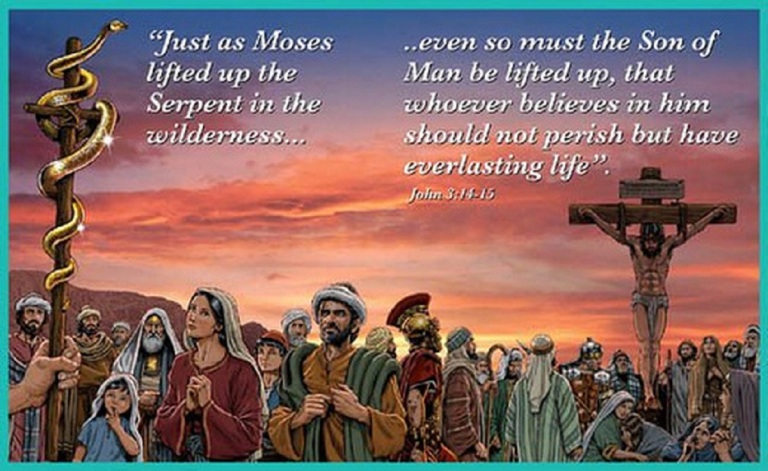
“…Very truly I tell you, no one can see the kingdom of God unless they are born again...” John 3:1-17

“Born again”. 

Few phrases receive such an immediate and silently emotional response as “born again”.  For Christians, as people who are supposed to be united in the truth of the Gospel, united in our mission in the world, and united in our hope of the resurrection, it’s a phrase, taken from the lips of Jesus, which more often than not divides rather than unites us as his Body.

What do you think when you hear those words, “you must be born again”?

For some, proclaiming that they are “born again Christians” is a way of saying that their church and their pastor are real Christians, meant to distinguish themselves from both the comfortable, wishy-washy forms of self-help religion, while also announcing proudly that their real, old-time religion has cut itself off from the faith handed down by the apostles as guided by the Holy Spirit; cut off from the same faith that united us in the Apostles Creed of baptism.

For others, and I’ll admit that I spent a long time in this camp, hearing someone use the words “born again” caused me to think, “ok, good to know… you’re one of those Christians… note to self: stay clear!”.

It’s a phrase that makes people uncomfortable, not least because our culture, in movies and shows, uses those words, usually shouted and accompanied with a fiery message about hell and damnation, as a broad brush to paint an unfortunate picture of Christians on the defensive.

But, like any phrase or verse taken out of context and turned into a motto, those silent, emotional responses put us at risk of glossing over what is actually being said.  After all, like it or not, Jesus – the same Jesus that we claim whether we’re Anglicans, Presbyterians, Methodists, Baptists, or King-James-Only fundamentalists – was the one who said, “very truly … you must be born again”.

It started with a compliment…

Here, in today’s Gospel, we have an expert of the Law given to Moses, and a leader in the Jewish government; Nicodemus was his name.  This Nicodemus was paying attention – he knew that God sent the prophets, and he believed that the promises of God would be fulfilled, that God would send the Messiah to redeem his chosen people, that, through Israel, the nations of the world would come to worship God in spirit and in truth.  Now, Nicodemus was being careful – after all, there were many eyes on him as a government official, and many of his colleagues were more than a little skeptical about this son of a small-time rural carpenter. 

Yet, quietly, after dark, Nicodemus came to Jesus to present him with the very claim that many of the skeptics of our own age would bring: “We know you’re a teacher who has come from God, and God is with you”.  Or, to put it in today’s language: “That Jesus is a good man.  Sure, he’s one of many wise teachers.”

And what does Jesus do with this compliment?  Does the kind, gentle, polite, blonde hair and blue-eyed Sunday School Jesus look at him with a gentle smile and say, “thank you for noticing; you’re not far from the kingdom”; is that how it goes?

No, Jesus, hearing this complement from a respected Jewish leader, ignores the niceties altogether.  Jesus looks him in the eye and says, ‘as sure as you’re standing there; mark my words: no one can see the kingdom of God unless they are born again.’

Huh.  Quite a greeting, isn’t it.

Nicodemus, not your average working man like the apostles, but a faithful expert who knows the scriptures inside and out, doesn’t recognize what Jesus is talking about.  After all, the Jewish religion, faithfully tracing its roots back to God’s promise to Abraham, is firmly founded on birth.  Each child born is a fulfilment of God’s promise that Abraham’s descendants would be like the sand of the sea, and birth – being born to Jewish parents – is the normal, expected way to become a Jew.  Sure, some people take their faith more seriously than others, but as long as your parents brought you to the priest after you were born, and as long as you bring a socially-acceptable amount to place in the offering plate, you’re in… right?

And then, provoked only by the claim that Jesus was a good teacher, Jesus proceeds to do the least socially-acceptable thing possible: to point out, how very wrong this guest actually is.

…And, in doing so, if we take the time to read it, he challenges us too, right to the core.

A Lesson from the Old Testament

If we think back to Genesis 12, yes, God chose Abraham as the one through which he would bless all the peoples of earth; yes, God chose Abraham to receive a land of promise, and to be the father of many.

But, right there in the midst of that, is something remarkable, a first.

We know that Abraham wasn’t the first that God chose.  Before Abraham came Noah.  And Noah, we’re told, was chosen because he was the only faithful, righteous person to be found.  In that respect we might say that Noah, through his actions and manner of life, earned God’s favour.  God made Noah a promise, and you know how the story goes.

But, once life was back to normal, what become of Noah?  Well, as soon as there was a crop of grapes, he made a mighty batch of wine, drank it, took off his clothes, brought terrible shame to his family, and all the good works of this righteous man went to hell in a handbasket. 

So much for choosing the brightest and best.

But why was Abraham chosen?  Surely, this forefather of the proud nation chosen by God was a great hero to be celebrated?

No.  By the grace of God, and St. Paul would say in Romans, to make an important point, Abraham is just a guy, a normal guy raising his father’s sheep, a guy whose name is destined to be forgotten, as his wife is childless.

And it’s to this childless couple that God says, “go”.  Leave your land, leave your family, leave your inheritance, and follow me.  Abraham didn’t do good or live righteously to earn God’s promise; rather, God’s offer came first, as St. Paul would say, his righteousness came by faith: the faith to give up what he had and take God at his word.

So much for being “born into” the faith of their fathers.  Turns out the very founder of the faith was called to leave his father’s house, and that was the only thing that counted him righteous in the eyes of God.

As Moses lifted up the serpent…

So then Jesus, speaking to Nicodemus, brings up Moses – that greatest teacher of the law, the one whose writing Nicodemus and the Pharisees knew inside and out.

Of course, it’s through Moses and the law that Jews could know if they were being faithful or not, if they were righteous in the eyes of God.  

But where does Jesus go with this?  He cuts straight to the heart of the misunderstanding: “Just as Moses lifted up the snake in the wilderness”.

After God had miraculously freed his people from slavery, after Moses had given the law, after God had forgiven them for the idolatry of bowing down to a calf, after God had led them through the desert and defeated the leader of the Canaanites, Numbers 21 tells us that God’s chosen people were, and I quote, “impatient”.  They were sick of the desert, and though God had provided manna and quails to eat, they cried out, “we detest this miserable food”.

And that very day, poisonous snakes slither into their camp and many of them die.   

It’s then that people realize that they need to repent, and God tells Moses that he must make a snake out of bronze, hoist it up on a pole. God doesn’t take away the snakes.  Instead, those who are bitten can turn and look at the snake on a pole – can come face-to-face with death itself – and live.

But wait, do they have to offer two pigeons?  Do they have to offer a lamb without blemish, or the blood of a bull?

No.  They must turn, look upon death itself hoisted onto a tree, and that act of faith is accounted as righteousness, and they are saved.

Yes, God gave the instruction that children should be brought to the priests.  Yes, God requires the offerings of the people.  Yes, God provided rituals to remind the people of his goodness toward them, to train them in righteousness, and to give them the words with which to call upon his name.  But, as much as those are God-given, it’s faith that enacts the promise of God.

Born Again?

“You must be born again.”

This isn’t about being born in the right faith tradition, but it also isn’t about a “right” set of works, so that any can boast before God.

Rather, we must be born again

“Who can enter again into his mother’s womb?”  Nobody.  And that’s the point.

No one chooses to be born.  Actually, the one being born has very little say in the matter, and certainly, no one can be born twice.

But, how can one who was born, who has a family, a people, a name, be born again, given a fresh start?  Is it a special prayer prayed after one reaches some arbitrary age of maturity?  Is it the good work of baptism in a river?

No – one who was born can be born again by adoption.  It’s in adoption that one who was born receives a new name, a new status, a new family – not on account of their own action, but by the free gift of the adoptive parent.

Or, as St. Paul puts it, God chose us, before the foundation of the world, to become holy and blameless in his sight.  Out of His Love, he prepared us for adoption as sons and daughters through Jesus Christ.[1]

Jesus said, “you must be born by water and the Spirit.”  As St. Paul says, “For those who are led by the Spirit of God are the children of God. The Spirit you received brought about your adoption to sonship”, so that we call God “our Father”, and if we are children, then we are “co-heirs with Christ, if indeed we share in his sufferings in order that we may also share in his glory”.

Born again, adopted as heirs by faith, being willing to leave all and follow, like Abraham.

Born again, adopted as heirs if we share in Christ’s suffering, or, as Jesus says, like the snake-bitten Israelites, if we turn, come face-to-face with that which kills us, look to the Son of Man on a tree, and live.

This was a challenge to Nicodemus.  It’s a challenge to all Christians today.  To those who proclaim themselves “born again” by their right words and actions, it’s a call to repentance and humility, as no baby chooses to be adopted; the only choice is if we will live by the family rules, or if we will run away.  To those who, like me, cringe at the phrase, it’s a call to remember that the God-given, Spirit-led worship of the Church handed down from the apostles trains us for righteousness, but that nothing but God’s grace, God’s call to look to Christ means anything.  Not to glory in an empty cross, but to accept and live into his invitation to adopt us as his children as we turn in faith, look death in the face, and trust him as Lord.

For God did not send his Son into the world to condemn the world, but that the world through Him, might be saved.  And this is the gift of God, our Father by adoption, so that none can boast, so that none have any glory, apart from the glory of the cross, the glory of the Son of Man lifted up for the sake of the world.

To God be the Glory forevermore.  Amen.


[1] Ephesians 1:5

The Terrible Lie

There is a terrible lie going around.

A dark, evil, truly terrible lie.

After all God has given us, and all the safeguards he put in place to guide us back to himself, that ancient, terrible, original lie persists: God is holding back.  God doesn’t want us to be happy.

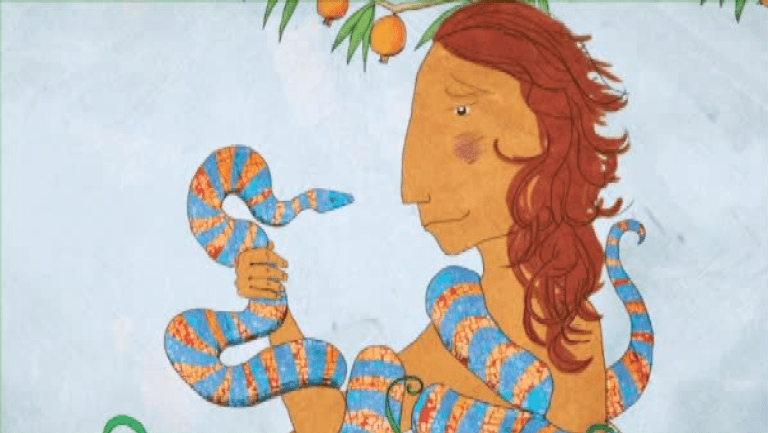
At the end of the day, that was the message of the serpent in the garden. 

God, desiring to share his love with his creation, and to make us his sons and daughters by adoption – allowing us to share in the glory of his presence – created a paradise where every need was met, and we were free to be ourselves without shame.

And God, wanting our love for him to be real – to be freely chosen, as true love is – gave the simple instruction that we should choose to stay away from the things that harm us, from the knowledge of the dark, isolated alternative that is a life built solely around itself, isolated even from the God who created all things.

But then came the lie.[1]

“Did God say, ‘you shall not eat from any tree in the garden?’, came the crafty message.

“No, we can eat all sorts of fruit from all the trees… except one.  There’s just one tree that isn’t good for us; he warned us that it would hurt us – it would even kill us – if we touched it.”

“…Oh, my dear, you actually believe that?  Come on.  Your Heavenly Father didn’t give you that rule to keep you safe.  He’s holding back.  He doesn’t want you to be like him.  He doesn’t want you to be truly happy.”[2]

That’s the dark, terrible, ancient lie that has infected all of human history.  It’s the lie that all of us face each and every day.

The truth, from the beginning is clear – the signs revealed in creation to every people and nation, the truth revealed in the law and the prophets, the deep truth spoken by the Word made flesh, is just the opposite: God’s not holding back, he’s reaching out, continually with a free gift of grace.  He’s holding out his hand, and would even send the Son to seek out us lost orphans, to bridge the chasm between death and life, to adopt us as his children, to make that relationship with our Father possible once more.

God’s not holding back – he held nothing back, even humbling himself to become like us in every way except sin.[3]

The truth, revealed in part to all the great religions of humankind, and found in the person of Jesus Christ, is that God wants nothing more than for us to be like him. 

The serpent was wrong.  The lie of the world, the flesh, and the devil is wrong.  God wants us to be like him; he wants to make us his own children, heirs of eternity.

And, in that, he wants us to be happy.

…But this is where the lie becomes attractive, even irresistible.  We have a hard time understanding what true happiness is.  For us, happiness is pleasure, and as we move through our days, it seems we need a constant supply.

This is precisely why God asked us to trust him in the first place, though the serpent’s lie was no surprise.  Once we’ve experienced isolation; once we’ve experienced pride and jealousy; once we’ve experienced the pain of going without or being outdone, we lose sight of what really makes us happy, and we’re left thinking that this mess is all there is, that our purpose, our goal, is just this.

Our happiness is fickle.  As Paul says in Philippians, our god is our belly; it’s our appetites that drive us, and even a little indigestion or a toothache can turn my happiness into self-pity, or worse, bitter jealousy of those better off.

God’s call to us, God’s instruction isn’t to keep us from something good; the invitation to follow Christ, to learn to love what is really good, is the opposite: it’s so that we can experience what is truly good, and to keep us from the pain and isolation that is the alternative.

But the lie persists.

When I was young, we lived in Sibley’s Cove, a small fishing community in Newfoundland.  Our house was the last one out on the point, just up over the hill from the wharf and the fish plant. 

There were benefits – this meant that our road was the only side-road that was paved.  But there were drawbacks, as the large, dripping fish trucks would come and go several times each day.

Now, across the road from our house was, from my perspective, a beautiful, lush field of chest-height grass to run through, leading to the little brook where dad would take us fishing, and where you could jump across the rocks to get to our friends’ house.

As young kids, 4 or 5 years old, we had a lot of freedom – we could wander all the garden behind the house, we could go up over the hill and pick berries, we could go up to the vegetable ground or play on the mossy rocks behind the shed.  …But there was one rule: we could not cross the road.

…But that ancient lie persisted.

Even with the wide open space we had behind us, even with the swingset and the large driveway to ride our bikes, my sister and I would stand for what seemed like hours, imagining the fun we could have if we crossed the road.  Mom and Dad are so mean.  We won’t get hurt.  They just don’t want us to have fun.

Sound familiar?

Well, one day, I crossed the road.  As it turns out, chest-high grass in summer isn’t as fun as it looks… it’s really just full of bugs.  And, when I turned, ready to come back, the large, dripping fish trucks were leaving the plant.  Mom and my grandmother came running, screaming from the house, and the driver stopped, the loud rumbling of the engine and the cloud of early 90s diesel smoke adding some drama to the tears running down my cheeks. 

The rest of the day is a blur; but I knew one thing – Mom was angry.  …Or, at least, I thought she was.

The Lie has a Twin

That old lie, that something good was being withheld, has a twin: that God is angry.  Now, sure, my mom was angry: but even that which, from my perspective, was pure anger was, from her perspective, sadness and disappointment that I would disobey, and shock, even grief, at the danger I had put myself in, and the unspeakable harm that could have come.

But, no matter how things might look from our perspective, don’t give into the lie, and especially in this season of Lent.  God, by nature, is not angry.  God, by nature, is pure, unbridled joy, and his desire, from the foundation of the world, is to welcome us into that joy.  He’s looking at all of eternity, at the trajectory each of us has chosen, to move closer to what truly satisfies us – Himself – or to choose the dark, sarcastic world of isolation and contempt.[4]

But, if we buy into these lies – that God is withholding something good, and that he’s angry with us for wanting it – then, from our perspective, things change.

Perhaps you know someone who is bitter, or maybe you’ve been bitter yourself.  You see, there is nothing worse to a bitter person than someone who is joyful, someone who is truly happy, someone who is unphased by the minor setbacks along the way. 

From the perspective of a bitter person, joy is infuriating; it makes their skin crawl.  Joy mocks the very existence of a person who has chosen to be bitter; from their perspective, the warm, life-giving fire of joy hurts to be around; it burns.

But, to the one willing to receive it, joy, and the love that lets us flourish is contagious, and leads to life itself.

There’s a terrible lie going around.  Don’t listen to it. 

God is not holding back.  God wants you to be like him, even though that means, for now, taking up your cross and following Christ on what is, at times, a hard, hungry path through the desert.[5]

This Lent, through study, and self-denial, prayer, fasting, and works of mercy, learn to love what lasts instead of what fills our bellies.  Learn to love what truly leads to happiness, what is truly good, instead of what feeds our appetites.

For it’s through obedience that we experience God’s joy.  And that’s no lie.

Amen.


[1] “The Terrible Lie” is from Sally Lloyd-Jones’ remarkable theological paraphrase of Genesis 3 in The Jesus Storybook Bible (Zondervan, 2007).

[2] Genesis 2:15-17; 3:1-7

[3] Romans 5:12-19

[4] I’m not suggesting that God does not detest sin, but that where human joy is dependent (“I’m happy if…” or “I’m happy when…” or “this made me happy”), following Augustine, God’s joy is fundamental to his Triune being, and following Nehemiah 8 and Hebrews 12, our joy is found in God.  I commend this article by Tony Reinke, and this from John Piper.

[5] Matthew 4:1-11

The Transfiguration: Unbridled Power and Consuming Flame

Exodus 24:21-18; Matthew 17:1-9

Our Gospel lesson today invites us to follow with Peter, James, and John to the top of a high mountain, for what, on the surface, is perhaps one of the weirdest events recorded in the New Testament.

We’re familiar with healings – God demonstrating his power in Jesus over the brokenness and disorder of this fallen world.

We’re familiar with mighty miracles – Jesus calming storms, as nature itself remembers the voice that spoke at creation.

But today, on the top of a high mountain, something different happens.  Jesus, it says, is transfigured before them.  Jesus is changed or, literally, in the Greek, Jesus undergoes metamorphosis before their very eyes, as his face becomes bright as the mid-day sun, his clothes become dazzling bright, and Moses and Elijah, the prophets of long ago, appear with him, in conversation as three old friends.

It’s a situation unlike anything else we’ve read… or is it?

A surprisingly familiar situation

While this mountain-top experience may be difficult to wrap our heads around on first glance, and many a preacher has created all sorts of theories about why or how this happened, if we acknowledge – as we have throughout this season of Epiphany – that God is, fundamentally, in the business of revealing himself to the world, then perhaps we can bring these gospel events into focus.

And, together with that, I believe this is one of those occasions where one of the richest gifts of Anglicanism to the Church shines through – our basic belief, though we sometimes forget it, that God has given us the entire scriptures, and that it’s not acceptable to mine out the scriptural jewels that support our arguments, but that, simply put, the best tool to interpret scripture is scripture itself.

So, we read, after faithfully leaving their worldly occupations and committing to follow Jesus, and just a few verses after Peter confesses that Jesus is the Christ, the Messiah, the Son of the Living God, we’re told in Matthew 16:21 that Jesus begins to teach his followers about the way of the Cross – that the Glory of God is revealed not in worldly power, but in “denying yourself, taking up your cross, and following him”.

And then, some time passes.  But not just any amount of time — according to today’s lesson, six days pass.  This is now the seventh day; a point that should ring a bell and pique the attention of any faithful Jew or Christian well-versed in scripture.  After all, it was the seventh day, after the work of Creation had been accomplished, that God declared holy, and on which God revealed the intended glory of his creation: a peaceful garden that provided for all who lived in it, and in which humanity and all of nature were united in his presence.

But, for anyone who knows the Old Testament, this isn’t the first mountain-top experience on the seventh day.  As we heard today in Exodus 24, after God had led his chosen people into the desert, teaching them to trust in him for their daily bread, and teaching them not to serve themselves, but to be a people of justice and mercy, it was the Lord who said to Moses, “come up to me on the mountain”.

Moses, obedient, went up the mountain. 

And, as we heard today, he was there 6 days.  And then, on the seventh day, from within a bright cloud upon the top of the mountain, God revealed Himself to Moses.  And what was revealed?  Well, the next 7 chapters of Exodus told God’s chosen people how they were to worship, and the details of how they were to build and worship in God’s House.  The house, the tabernacle, which, the Book of Hebrews tells us, is a copy of the heavenly sanctuary.[1] 

Moses, after six days, heard the voice of God in the brightness of the cloud on a mountain, and, we read this morning, he stayed on that mountain forty days and forty nights, receiving the Lord’s instruction, His message to be delivered to the people, and ultimately, the message, the light to enlighten the nations of the world.

But, if we know our Bibles, we know that as good as those 40 days were for Moses, they didn’t go so well for those whom he was supposed to lead. 

They, like many of us, think 40 days is a long time to wait for something; sure, God gave us literally everything we have, and sure, with him a thousand years is like the twinkling of an eye, but to commit to be faithful for a whole 40 days?  I don’t know…  So what did they do?  Well, they gathered up as much shiny gold as they could find – gold, after all, they had worked hard for – and made an idol that they could worship instead, and proclaimed a great festival to celebrate the work of their own hands.

Finally, after Moses goes back down the mountain to clean up that mess, God invites Moses up to the mountain once again, and Moses sees God’s glory revealed.  And, we’re told, that in the eyes of those wayward followers, those who had forgotten God’s goodness so quickly, those who were so quick to bow down and worship their own possessions, the skin of Moses’ face appeared to be bright like the sun, to the point that they were afraid to even come near him.

Now, fast-forward to the Gospel.  The disciples, after six days, go with Jesus to the mountaintop, and a bright cloud surrounds them.  Jesus, the light of the world, the source of life that enlightens every person, the light that pierces the darkness, is revealed to those who, while still sinful men, have denied themselves and have committed to following him.

And the light is dazzling.  The various Greek versions in the Gospels point to just how bright this was – it’s brighter than they had words to describe.  Not just a brightness that makes you squint, but a brightness that knocks you backward. 

One preacher[2] said the best analogy for us today is that it’s like the brightness of an arc welder, if you’ve ever seen one welder at work.  It’s the brightness of pure, unbridled energy; energy that, for those who are prepared with the proper equipment, can join mighty metals, building machines that literally move mountains.  But, brightness that, for those unprepared, without the proper mask, will actually burn your eyes; in Exodus, it’s that brightness described as a consuming fire – enormous power and energy that does wonders for those who are ready, but burns up those who approach unprepared.

And what happens in this cloud?  Well, we see that the God who is the same yesterday, today, and forever, the God who is outside of time and holds time itself in his hand, reveals that the eternal Word, the eternal voice of God, the Word that was God, and through whom all things were made, is Jesus.

Moses and Elijah, the great giver of God’s covenant, and the great prophet who revealed God’s promised future return, appear with Jesus, talking, chatting, as old friends.  It’s here that those who follow Jesus see God’s glory, and see that Jesus is the very Word of God from the Beginning.

And, from the cloud itself, comes again the great Epiphany: “This is my Son, whom I love; with him I am well pleased”.  And, as God’s glory is revealed, as they see that inescapable power and light that either works wonders or utterly consumes, they hear the eternal message, the sound that has gone out to all lands says, simply: “listen to him”.

Listen to him.

Our God is in the business of revealing Himself.

God wants you to be part of that, revealing Himself to the world around you though word and deed.

The incredible truth of the Gospel is that God wants to show you his glory – he wants to show you his great mercy, his incredible power to heal and to save.

But he won’t do it unless we follow him up the mountain.  And it’s a good thing, too.  All of us – every person – will one day see the glory of God.  If we’re prepared, if we’ve followed his lead along the narrow mountain path, if we acknowledge that all our strength and health and the blessings of this life are gifts to be used in his service, then we encounter his glory as the remarkable, dazzling, life-giving power that it is, and like the disciples who fell down to worship, Jesus reaches out his hand and invites us to stand in his presence.  But, for those who stay in the dust on the broad, easy plains below the mountain, those who rely on their own strength, who bow down to their own wealth or pride, that same glory of God isn’t life-giving, but all-consuming, just as the experience of an arc welder depends on whether or not you’re prepared.

We’re invited up the mountain.

Jesus invites us to experience his glory up on the mountain, the glory of his resurrection power revealed on the Cross on Good Friday and in Easter’s empty tomb.

But, first, we need to be willing to follow.

Just 40 days of obedience in the desert was too much for those whom God had rescued from slavery in a foreign land.  40 days of patient faithfulness was too much, as they molded an idol of gold.

Jesus calls you to follow him all the days of your life.

And as we learn that together, the Church invites you to 40 days of repentance and obedience, just 40 days of Lent, 40 days of preparation to experience the glory of God at Easter.

One day we’ll all see that glory face to face. 

Will we be ready?  Do we have what it takes to deny ourselves and follow Him?

Or is even 40 days just too long to lay aside the idols and excuses we have made?

May God have mercy on us all.  Amen.


[1] Hebrews 8

[2] The analogy is my own.

Biting off more than we can chew.

Our lectionary – the set of lessons assigned to be read and preached on each Sunday – is already looking forward to the season of Lent. 

In Deuteronomy, we hear the clear call to God’s chosen people to persevere in following the Saviour, even after 40 years – practically a lifetime – of following through the desert, they once again are presented with a decision: here, on the banks of the Jordan River, with the promised land coming into view, they once again need to choose to follow or to stray, to choose what is really good over what merely makes them happy, to choose the abundant life that God has in store over the death and decay that awaits them if they follow their own devices.

And as if that wasn’t a strong enough warning, did you hear what St. Paul said to us in First Corinthians?  They were some pretty strong words.  In fact, if someone walked up to me and spoke to me like that, I’d be downright insulted.  Did you hear it?  Let me read it again.

“My brothers and sisters,” he writes – “I can’t even speak to you like adults.  You’re a bunch of babies.”

Ouch.  …But there’s more.

What’s he saying here?  ‘You think you’re so sophisticated, solving the world’s problems, and choosing the denomination or the worship style that fits you best’… but what does he say?

‘You babies are still drinking from bottles’.  I can’t even give you solid food, I have to give you milk in a sippy cup.  You’re no where near mature enough to discuss the things that matter.’

Now, as someone who has spent years studying the scriptures and learning theology, those words hit where it hurts.  And, I think, that’s the point – after all, the wisest minds and the purest hearts will tell you that, as long as we think we’ve got all the answers, we’re unable to learn anything of any value at all.

Rough lessons: even after a lifetime of obedience through the heat of the desert, choose this day whom you will serve; and then the stern message to grow up, to get over ourselves.

Well, you know what, maybe we can look to the words of Jesus in the Gospel to find something a little more encouraging. 

…but what do we find there today? 

Jesus says, ‘you think you’re doing alright because you aren’t a murderer?  Guess what,’ he says, ‘if you’ve ever been angry at your sibling, you’re as bad as a murderer, and if you’ve ever called your neighbour or that politician or that cashier at the store a fool, you’re fit for eternal punishment and utter separation from God.’

Well, I don’t know about you, but I’ve done alright this week with the murder bit, but – and confession is good for the soul – there’s not much easy encouragement for me here: I was dealing with CRA again this week, and let’s just say the words “you fool” crossed my mind more than once.

Well, let’s keep reading and see if it gets any better: Jesus says, “you think you’re doing alright because you haven’t committed adultery?  Just thinking about it is as bad as the act itself.” 

…Harsh words this week.

And what does this have to do with Lent?

Well, thanks be to God, Lent is meant to be an annual opportunity to hit the reset button on our journey as followers of Jesus.

Over the past few weeks, we’ve talked about how we are to be shaped, conformed to match the pattern of humble obedience and sacrificial love set by Jesus.  And we’ve talked, at length, about how that isn’t a one time thing, but like arrows sent on a flight towards the target, when we land in the dirt, what we need is for God to pick us up, dust us off, gently bend us back into shape, and send us forth once again.

And, in that same vein, the inescapable point in today’s lessons is this: there is no “set it and forget it” option for our faith.  The journey is life-long, and indeed, continues even after death as it’s only then that we’ll fully know ourselves, as we are made fit to share in the perfect life of God in the new heavens and new earth that He is preparing for us.

More than a decision.

Or, to put it this way, the message this morning is that, “I have decided to follow Jesus” is great, but not if it stops there.  Jesus is leading us to share in that perfect love and obedience of God Himself, and after that decision to follow Jesus – even after a lifetime of following Jesus through what feels at times like a parched desert – the journey means committing daily to pick up our feet and follow. 

“Deciding” is just the first step. 

I can decide right now to go on vacation down South.  (Surprise, Kristina – you can come too!).

But that decision isn’t going to do me much good unless I buy a ticket.

But just having that ticket in my hand isn’t going to get me to Mexico unless I actually go and get on the plane.

But even that isn’t going to do me much good if I haven’t first gotten my passport in order, gone to the bank to get the right kind of money, and packed my bag with the stuff I’ll need.  And, though I don’t enjoy diet and exercise, and sometimes it even hurts in the moment, the destination will be more fun if I can actually fit in my swimsuit.

There’s more to a journey than simply deciding to go.

Childish rather than Child-like

And this is why Paul addresses us as spiritual babies.

When you’re a kid, your parents say “we’re going on vacation”.  And what does the kid say?  Does the kid say, “oh, well there’s a lot of work to be done first!  Make sure you get our passports and refill our medications, and call the credit card company… oh, and make sure you find someone to feed the cat, water the plants, and check the mail while we’re gone”.

No, the child says, “oh, a trip, I’m excited!”  And then goes back to drawing or building with Legos, and thinks only about the destination, perhaps bragging here and there to their other young friends about why their vacation is going to be the best one ever.

…But St. Paul tells us to grow up.

A child-like faith is sufficient, but we’re to imitate Christ as we grow in wisdom: we’re called to be wise as serpents, but innocent as doves.  We’re to move from our spiritual milk in a sippy cup to become mature, eating a healthy diet of solid food.

…But to do that, we’ve got to have a plan, a sensible progression.

Or, as we heard this morning, we’ve got to have a firm foundation in place first, and then and only then can we get to work building the rest of the house.

Now, I’ll be the first to admit, laying a foundation is tedious and sometimes boring compared to the higher-level stuff.  Children like to tell stories, and have great imaginations.  No child enjoys sitting at a desk and tracing their lower-case letters.  But you’ve got to learn how to write your letters before you can write a story.

Sadly, all these years later, the Church isn’t much better at following St. Paul’s instruction to us.  We find ourselves in a Church, in a world, that wants to gobble down solid food, though we haven’t yet been weaned off our milk.  We’re literally biting off more than we can chew: we want to discuss what justice looks like, and the nature of love and marriage, and how differing religions can co-exist peacefully side-by-side; but, how many of us, if an unchurched stranger asked us to explain something as basic, as fundamental as the Apostles’ Creed, the Creed of your Baptism, would be able to do so?

And, so, Lent is an invitation.

No matter how long you have been in the Church, whether you’ve been worshipping Almighty God ever since you were a baby in your mother’s arms, or whether you’re a new member preparing for baptism, whether you’re a committed pillar of this congregation, faithful in daily prayer and study of the scriptures, giving generously of your time and resources to care for your brothers and sisters in Christ, or whether this is the first time you’ve heard this invitation, all of us – all of us – are invited to grow. 

Those who followed through the desert 40 years were invited to grow closer, to learn again what it means to choose good over evil. 

Those who had become experts in the law were invited to grow deeper, to go beyond commandments to learn what it really means to love someone, to wish and work for their ultimate eternal best.

Lay a firm foundation

And if you’ve ever built something – whether it’s a house or a shelf from Ikea – you know how important that foundation is.  If that first corner isn’t square, then there’s no hope for anything else to fit together and stand the test of time.

For there is no foundation that can be laid other than Jesus Christ, that stone which the builders rejected, but which has become the cornerstone, that sure foundation that can never be shaken.[1]

And no matter where we are in our journey, Paul’s message is for you and for me:  “grow up.  Get on with it.”  We have a destination, we have a story to tell to the nations… but there’s work to be done, and our bags aren’t going to pack themselves.

To God be the Glory. 

Collect:

O God, the strength of all who put their trust in you:
Mercifully accept our prayers; and because in our weakness
we can do nothing good without you, give us the help of your
grace, that in keeping your commandments we may please
you both in will and deed; through Jesus Christ our Lord,
who lives and reigns with you and the Holy Spirit, one God,
for ever and ever. Amen.

Prayer over the Gifts:
God of unchanging glory,
accept all we offer this day as a token of our lives which we
offer in your service. 
May this sacrament be our manna in the wilderness as we
commit to follow where you lead, this day, and forevermore.  


Prayer after Communion:
Almighty God, you have fed us with the spiritual food of the
body and blood of your Son Jesus Christ. 
Conform us to his likeness as we follow him in our earthly
pilgrimage.  This we ask in the mighty name of Jesus Christ
our Lord.  Amen.

An Exhortation to a Holy Lent
(Based upon the 1979 BCP, to be read before the final blessing)

Dear People of God: The first Christians observed with great
devotion the days of our Lord’s passion and resurrection, and
it became the custom of the Church to prepare for them by an
annual season of self-examination, works of mercy, prayer,
study, and fasting.

Each year, the whole assembly of the faithful
was put in mind of the message of pardon and absolution set
forth in the Gospel of our Savior, and of the need which all
Christians continually have to renew their repentance and faith.

Our Lenten Observance will begin on Ash Wednesday, the 26th
day of February, on which all the faithful will gather unless
prevented by illness or other grave necessity.

I invite you, therefore, in the name of the Church, to the
observance of a holy Lent, by self-examination and repentance;
by prayer, fasting, and self-denial; and by reading and
meditating on God’s holy Word. In the coming days, consider how
you may best use this opportunity to grow to maturity in the faith;
and, if, in your preparation, there are weighty sins, the guilt of which
is too heavy to bear, then go and open your grief to a discreet and
understanding priest, that you may receive the benefit of absolution,
spiritual counsel and advise, the assurance of pardon, and the
strengthening of your faith. 

And the blessing of God Almighty, the Father, the Son, and the
Holy Spirit, be with you this day, and remain with you forever more. 
Amen.


[1] 1 Cor 3:11; Psalm 118:22; Isaiah 28:16

Resistance in the face of Rebellion

Paul writes, “I did not come proclaiming the mystery of God in lofty words or wisdom … so that your faith might not rest on human wisdom, but on the power of God”.

My friends: we’re in the midst of a war.

We’re in the midst of a civil war.

It’s not a new war; it’s the same rebellion that has been brewing since the dawn of time, since that first time that men and women thought that they knew better than God Himself, and like rebels throwing out the rightful king, tried to replace his authority with our own.

We’re in the midst of a war.

Isaiah, one of the messengers of the rightful king, sent behind enemy lines to proclaim the truth and call the rebels back to repentance, said this very clearly this morning:

“Cry out”, he said, “do not hold back!  Lift up your voice like a trumpet!  Announce to my people their rebellion, announce where they have missed the mark.”

You see, deep down at the heart of all our troubles, all the injustice, all the pain, the grand drama proclaimed by the scriptures all comes back to a simple point: we rebelled against the rightful king, and now find ourselves in rebel occupied territory; and God, the rightful king, patiently sends messengers to win us over to the truth, so that when he comes in glory to reclaim his throne, he finds us ready and willing to proclaim him king and share in the glory of his reign.

At the heart of our problems, at the heart of human suffering, is our rebellion; at the heart is our proclamation that we, not God, should be the masters of our lives.

And, as we’ve heard these past few weeks, God, the rightful king, has actually made the expectations pretty simple, so simple perhaps that we have a hard time accepting them.  As we heard last week, what does God require of us?  Does he want you to claw your way to the top?  Does he want you to worry and stress about tomorrow?  Does he want you to store up riches so you can trust in your wealth?  No!  You know what the Lord requires: to act justly, to love mercy, and to walk humbly with your God.

Does God have some complicated secret plan for our lives that we need to somehow discover?  No!  There’s one plan: to follow Jesus, to become Christ-like, to faithfully follow that path that hits the target, and when we go off course, to repent and try again.

We’re in the midst of a civil war.

And sometimes, it’s important for us to be reminded of that.

We need to be reminded because, throughout all of history, rebellions and civil wars all have one thing in common: they depend on misinformation.  Or, to use the up-to-date term, every civil war, including humanity’s age-old rebellion against God, is absolutely dependant on fake news.

Think about it: right back to the story of Adam and Eve in the garden, it’s misinformation, propaganda that sparks the rebellion.  “Don’t worry”, was the lie, “there aren’t really any consequences for tasting that one single tree that you were specifically told not to touch”.

Isaiah, too, is sent with his message to correct false reports and misinformation. The people had bought into the rebel propaganda: just go through these motions and all will be well.  But outward expressions are only effective if they reflect inward change. As Isaiah says, what’s the point of putting on sackcloth as a sign of humility if you’re going to strike your neighbour and, in your humility, trample down those who are oppressed?

No, throughout history, the messengers of God have been sent, in the midst of this rebellion, to remind us of the truth.

St. Paul, throughout his epistles, makes this point clearly:  worldly wisdom, “the wisdom of this age”, is an insufficient response to faith.  Worldly wisdom, the propaganda on which our world attempts to run itself, says that says that you need to work harder, to prove yourself, to seek revenge when someone does you wrong; worldly wisdom says that we need to keep up with our neighbours, and, at the end of the day, this rat race is all that there is, so eat, drink, and be merry, no matter who gets hurt in the process.

But, in the wisdom of God, true strength is made perfect in weakness.  In the wisdom of God, the strongest love is found in one who would lay down their life for another. 

God demonstrated his ultimate, unmatched power by taking on our flesh and destroying death itself, and then freely offering the same to us: a stumbling block to Jews and foolishness in the eyes of the world, though we all know, deep down, that real power can’t be built on pride in relation to others.  Power that depends on keeping others weak isn’t true power at all.

We’re in the midst of a civil war, and we, St. Paul says, are those tasked with counteracting the misinformation of our age.

The Resistance

As many of us have been reading through Mere Christianity by C.S. Lewis, this idea of a civil war is one of his central images woven throughout the book.

As Christians, we find ourselves in enemy-occupied territory, as the world around us has gone along with the age-old rebellion against God.  And in the words of Lewis, our task is to be the loyal underground resistance, preparing the way for when the rightful king reclaims his throne.

Lewis was writing during World War II, and he uses the image of the French Resistance.  France was invaded by Nazi forces and, for any number of reasons that ultimately boil down to pride and promises of power, France surrendered and let Nazi rule reign. 

But, even as that happened, the Allies had a plan to drive back those forces. And a crucial part of that plan was the Resistance: normal, everyday people, living everyday lives, who were willing to hold on to the truth in the face of the propaganda and lies; people who were willing to work behind the scenes, freeing prisoners, providing food to the hungry; people who were willing to take risks in order to sabotage the destructive plans of the oppressors; people who were willing to work carefully so that, when the forces of freedom landed, they found faithful friends who had prepared the way for them. 

Now, it’s just an image, not to glorify a brutal human conflict. 

But if it’s true that our conflict with the world, the flesh, and the devil is an epic rebellion against the rightful King, and that the powers of this world are those who have gone along with the propaganda and lies, then it’s a great image nonetheless.

Our work as the Body of Christ is to be the Resistance. 

We, like the prophets and apostles, are to speak the truth in love, confidently contradicting the propaganda of the powerful.  But, like the Resistance, we’re to speak the truth knowing, like St. Paul, that no amount of public debate or worldly philosophy is going to make sense to those who have bought into the worldly conception of power: it’s not loud debates, but a humble, steadfast life of justice and mercy that wins ground and proves the truth of our cause.

And, like the Resistance, we’re to sabotage the ways of the world.  Where the world teaches us to serve ourselves, we’re to sacrificially serve the needy.  Where the world teaches us to seek revenge, we’re to show mercy.   Where the world lives as though what you see is what you get, we’re to live with the confidence that we were created for more; that we were created, by God’s grace, to live with him, forever, and that the trajectory we set in this life – whether we’re following toward the target set by Christ, or whether we’ve set our own rebellious course – that trajectory set now leads us to our destination when the rightful king takes his throne, welcomed by those on his side, while the rebels are driven away.

You are salt and light.

This is a civil war, a rebellion, in a broken world.

And we, the Resistance, are to be salt and light.

But lest we be caught up in our modern world, let’s remember that salt isn’t primarily about flavour.  You don’t have to go back far – if you asked our grandparents and great-grandparents about the purpose of salt, the answer isn’t about flavour, but preservation.

Salt keeps your meat from spoiling.  Salt dries and pickles your produce to keep it over winter. 

We, the Body of Christ, are the salt of the earth: our mission, during this rebellion against God and his truth, is to keep it from spoiling.

And we’re the light of the world, a city on a hill: a signal fire defiantly burning in the night, showing the rightful King that we’re here, that we’re ready; and as we live, as our faith produces good works, that light invites those around us to join our side, to turn from the prideful propaganda, and lay down their rebel arms.

For, as Isaiah said, when this conflict is ended, when the Lord reclaims the throne and welcomes those who prepared the way, he’ll rebuild what was lost: paradise will be restored, and as the temples of greed and power tumble, the ancient ruins of justice and mercy will be rebuilt, and we, the faithful resistance, will be called the repairers of the breach, and the restorers of the city.

We’re in the midst of a civil war, a rebellion built on misinformation and pride.  We’re gathered here to be strengthened by God’s grace, to receive our marching orders.  The question is: will we have the faith to carry out our mission, to confidently contradict the prideful propaganda around us?  Will we have the faith this week to sabotage the works of injustice and oppression? 

We are the salt and the light: and, by God’s grace, this mission depends on us.

To God be the glory now and forevermore.  Amen.

What does He expect?

He has shown you, O Mortal, what is good.
And what does the Lord require of you?
To act justly, and to love mercy, and to walk humbly with your God.

As we continue through these Sundays after Epiphany, we ought to be reminded that one of our primary tasks as Christians is to be an epiphany for those around us – God not only invites us, but wants to use us to reveal Himself to our friends and neighbours.  And that revelation, our task of bringing the message of God in Jesus Christ to the ends of the earth, is something we’re all expected to do, both in word and in deed; really, one of the questions we should ask ourselves before, during, and after every interaction with another person is, “are my words, are my actions, revealing God’s truth right now?  Are they showing God’s mercy?”  That’s our task, whether we’re having small talk at the grocery store or whether we’re hearing a bit of juicy gossip; are my words revealing God’s truth and mercy, even when I’m arguing about garbage disposal fees over at town hall?

We are to be epiphanies to those around us.

And, as we heard a couple of weeks back, the work God is doing is to make us as polished arrows in his quiver; arrows made to follow the pattern of Jesus, arrows that are able to fly straight and true and hit the target set in front of them.

After all, sin, as we know, is “missing the mark”, falling short of the target.  And the work of the Holy Spirit, by the grace of God, is to pick us up when we repent and ask for another shot, as we’re slowly bent back into shape so that we can fly as we were intended.

So this morning, that brings us to the question of how.

We’re to be an epiphany, we’re to hit the target set by Christ, but how do we do that?  What does that look like?

The surprisingly simple response:

A beautifully simple answer comes to us this morning from the prophet Micah, chapter 6.  Micah is speaking to the people of God who, once again, have misunderstood their task.  The people came to worship, they sang the good old hymns, they recited the prayers, they brought the right offerings just as their parents and their teachers taught them, but in spite of doing all the right stuff, there was a problem.  Their religion wasn’t working.  The God-given religion intended to put things right between humankind and God, the God-given religion intended to be a light so that all the nations of the earth would be drawn in to experience God’s glory, wasn’t doing what it was intended to do.

In Micah chapter 6, the prophet lays out the case against the people.  The Lord God kept his side of the bargain, his end of the covenant: he freed his people from Egypt, he led them into the promised land, he protected them when their enemies plotted against them.  Yet, while his people kept the outward demands of the law, their obedience ended there; the law, the discipline which was supposed to shape their hearts and minds so that they could be polished arrows in God’s quiver wasn’t working because their obedience was limited to the outward physical actions, it wasn’t allowed to sink in.

Now, it’s important that we don’t fall into the trap that many Christians have fallen into over the ages.  Some Christians, some great Christian minds, have looked back and said, “oh, the problem is that they were being outwardly obedient; God doesn’t care about the outside, he cares about the heart”.

And, I mean, I suppose that’s a nice thought; except that the whole of the Bible, both Old and New Testaments, totally disagree.  Nowhere are we taught that we’re to toss away outward actions in favour of a purely mental or “spiritual” religion – quite the opposite, it’s our bodies, not our minds or hearts, that are the temple of the Holy Spirit, and we don’t believe in the resurrection of the mind, but of the whole person, body included.  “Heaven”, the New Jerusalem where Christ is even now preparing us a home, is described as a city, with streets, and doors, and rivers, and trees, and tasty fruit on those trees. 

God made us, body and soul, and the whole point of the empty tomb at Easter is that our bodies, this physical world, matters.  After all, God made it and declared it good, and is restoring it so it will be made perfect.

The problem is not that God’s people were engaged in their God-given physical acts of worship; the problem is that they were stubbornly going through the motions without their outward obedience shaping their hearts and minds into the people God desired them to be, a people that revealed himself to the world, in thought, word, and deed.

It’s about alignment

True obedience means that both the outward and the inward are aligned.Like the arrow, being repaired and re-worked to hit its target, the whole thing needs to be aligned for the arrow to stay on course.  And when your trajectory, when your journey, is spread out in front of you, even the smallest change in that alignment is going to have a huge impact on where you land.

Let me tell you a little story.  The other night, Kristina and I went out to play a round of darts.  Now neither of us are darts champions by any stretch, and she’s much better than I am, but it’s all in good fun.  I gave her the little case of darts, hers have a French flag on the flight, mine have the good old Union Jack.  We went in to play, and somehow, two of mine fell out in the van on the way.  It was cold, and our coats were off, so instead of going out to get them, I borrowed some darts, and the first thing I noticed is that they were way lighter.  And, you know what?  It doesn’t take much to change your trajectory.  We started playing – I hit the wall, one ended up on the floor. 

It doesn’t take much, even a small change, can change how that arrow flies. 

Even a small change on our part can be used by God in incredible ways.

So how, exactly do we conform ourselves to that pattern set by Christ? 

In Micah we read, “he has shown you, O Mortal, what is good.
What does the Lord require? 
to act justly, to love mercy, and to walk humbly with your God”.

Act justly, love mercy, walk humbly.

Now let’s be clear – these aren’t three boxes to check: it’s not about doing some just actions, enjoying the thought of mercifulness, and staying humble and kind. 

Act justly, love mercy, walk humbly are not actions, but the trajectory, the course, that we’re on.  Those describe our journey, our race to run, our flight toward the target.

And the problem and challenge is that, if we do one or two of those, without doing all three, we’ll miss the mark.

Examples of this are easy to find.  Even in the Church today, there are those who work tirelessly for justice in our society and strive to show mercy to those on the margins, but if that’s done without humility, if that’s done without the recognition that we’re all sinners in need of that mercy, then it misses the mark.

If you’re humbly preaching the message of God’s mercy, but you leave out the justice that God requires – if you leave out right and wrong, and repentance – then it misses the mark.

If you’re the humblest person in the world, and like the people to whom Micah wrote, you do all the right and just actions, but in your heart you refuse to show mercy, to really, truly forgive as you’ve been forgiven, then in spite of everything looking right on the outside, it misses the mark.

As we recited together this morning in the Psalm, who can actually stand in the heavenly city, who can actually stand in the dwelling place of God?

The one who leads a blameless life and does what is right; who speaks the truth and means it; the one who loves his neighbour, yet rejects those who are wicked and honours those who fear the Lord; those who give their money regardless of if they’ll get something in return; one who keeps his promises.  One who is on a trajectory, on a path, on a journey through life that is defined by just actions, a love of mercy, and humble obedience to God.

The vision:

And, what would happen if we managed to do this?  What would happen if God’s people to whom Micah wrote were, by God’s grace, able to live as God required?

Well, in short, they would live as God intended – not for their own sake, but as a revelation, an epiphany to the world: they would be a light to enlighten the nations, drawing the world to God.

If we lived as God intended – act justly, love mercy, walk humbly with God – then, in short, we would look different.  We would look different from the world around us.  We would be a people, a church, that stood out, that attracted attention, like a city on a hill, or a lamp in a dark room.

If we lived this way, not as boxes to check, not saying “two out of three ain’t bad”, but combining justice, mercy, and humility, then we would be a Church, a community, that reflected the Beatitudes, we would be a community where those whom the world despises – the poor, the meek, those who mourn, those hungering for righteousness, the pure, those striving for peace, those who are persecuted – are not despised, but are known to be blessed, not just because they have favour with God, but because the Church, the Body of Christ, is gathered around them, blessing them, carrying their burdens.

What does the Lord require?

He wants you to be an epiphany.  He’s shaping and re-shaping you to hit the mark.  And he wants us to fly the course marked by justice, mercy, and humble obedience.

And… like those darts.  It might take some practice, but even the smallest change you make today can totally change where your arrow ends up. 

To God be the Glory, now and forevermore.  Amen.

It’s not a plan to fit you; He invites you to fit the plan.

The Lord called me before I was born, while I was in my mother’s womb he named me. Isaiah 49

One of the constant themes carried throughout scripture is the simple truth that God has a plan, that each of us has a role to play.

From the first chapter of Genesis, the point being made is that, no matter how things may look from our limited perspective, this universe didn’t spring into being by chance; that, no matter how we understand the details, life and being and even our consciousness don’t just spring up within ourselves, but are gifts that we receive.

And, even life itself – all the joys and all the struggles and pains – doesn’t just exist by chance; no, we believe, we confess, that we’re here, ultimately, because God desired to make a creature in his Image, a creature capable of reason, and real, true love; the only sort of real love that is found in freely putting someone else ahead of yourself.

We’re not here by accident; and God has a plan.

But, it’s important not to hear that the wrong way.  It’s easy to suggest – and certainly there are shelves and shelves of “Christian self-help” books that say – that we should just get on with being happy: “don’t worry, God has a great plan for your life, and he’ll reveal it in His time”.

And I can certainly see why that’s a popular idea.

But it simply isn’t true – it isn’t what we find in the scriptures.  Not at all.

We’re not taught by God’s Word that God has an infinite number of individualized plans tailored to make us happy.  That’s the stuff of pop psychology, that’s the stuff of the easy, no-strings-attached, fake “love” that offers momentary happiness but requires no sacrifice, but it’s not what God has revealed through the ages, through scripture, and through his Church.

God has a great plan, but it’s not a plan with my fleeting feelings of happiness in mind.  How ridiculous, how small-minded, how pridefully arrogant to imagine that out of the history of this 4-and-a-half billion-year-old earth, whether or not I feel happy at this moment of my 70 or 80 or 90 short years is the sum total of “God’s plan”.

No, what scripture teaches us, and what the Church needs to recover and remember is that God most certainly has a plan – an eternal, unchanging purpose, from the foundation of the world, to draw men and women into loving relationship with himself, made possible as our sins and the disobedience and fallen nature of the whole world are made right by the free offering of Christ made in love upon the cross.

That’s the one plan.  There’s no guesswork required.  That one plan, to be in relationship with Him and restore creation is exactly what God is doing as he works through the ups and downs of our lives in this messy world. 

It’s not that God has some individualized plan for each of us to discover, some plan which happens to fit our desires, our likes and dislikes, a personalized plan that pats us on the back and tells us to just be ourselves.

Rather, God’s plan is eternal and universal, and instead of telling us to find a plan that fits, he invites us to fit the plan.

That’s a much deeper message, but even a moment of thought should prove it’s truth: the God who created us to experience true love, the love that only exists in sacrifice, in offering our own will and our good for the sake of another, it’s He who invites us to experience that love, to grow into that love, by offering ourselves for His sake.

The God who knew you while you were still in your mother’s womb, the one unto whom all hearts are open and from whom no secrets are hid, invites you not to “discover his plan for your life”, but to take a part, to play a role, in his one, eternal and unchanging plan of drawing the world into relationship with Him through Jesus, his Son.  That’s quite an invitation.

Arrows have a purpose.

In that wonderful lesson from Isaiah 49, we hear the prophet speak in wonderfully poetic terms about how God has fitted us, before we were even born, for the work he would give us to do.

In the second verse of that passage, he uses the image of an arrow.  God, pictured as a mighty warrior breaking down the forces of evil, carefully and intentionally prepares his kit for battle. 

This warrior doesn’t stumble into battle unprepared and wonder what he can use as a weapon, hoping to find something that will do the job.

No, before the battle begins, he’s prepared.  “He made me”, the prophet says, “like a polished arrow; and he put me in his quiver”, ready for the day of battle.

And each arrow has a role to play in that battle plan. 

And, contrary to popular belief, it’s really not as though each arrow has to think too hard to discover its’ purpose.

The purpose of an arrow is simple – to fly straight and true, to fly far and fast, and to hit the bullseye. 

That’s the purpose for which it was made, for which it was taken out of the quiver, loaded into the bow and shot forth.

It’s not as though certain arrows were built with a different purpose in mind.

No, God has prepared us, all of us, as arrows in his quiver, carefully and skilfully aimed toward the target.

The question is, once the archer releases the arrow, will the arrow stay on course?

Missing the mark.

The word which we translate in English as “sin” has a pretty mixed history in the church – some even today still have the false idea of “sins” as bad deeds put into a big old fashioned balance, where we must hope that we have enough good deeds to outweigh the bad we’ve done. 

What foolishness. 

The word we translate as “sin” is άμαρτια, and it’s an archery term.  Literally, “sin” is defined as “missing the mark”.  Sin is when the arrow, aimed and released, fails to hit the target, not because the archer didn’t aim, but because the arrow was defective, or blown off course.

In this world where moth and rust eat away and destroy, all of us miss the mark.  And, all of us, we believe, will remain as useless, defective arrows unless and until we align ourselves to the pattern set by Jesus.  It’s in living a Christ-like life, in bending our will to match his, that we’re able to properly live into our role in that great, unchanging plan; to reach the target, to cross the finish line, and hear that great “well done, my good and faithful servant”.

God has a role prepared for us in his plan; and it’s not something hidden for us to discover; it’s something for us to step into as we bend our wills to match the loving example of sacrifice set by Christ.

What about my purpose?

Sometimes, sadly, people let their whole life pass them by while searching for some deep “purpose”, when it was there all along, when, every day, God was calling us to faithfully fulfil the work he had given us to do, to conform ourselves to the pattern he gave, and to simply hit the target ahead of us.

For Andrew and Peter, it was as simple – and as life changing – as responding to Jesus’ invitation: “come and see”.  That was an invitation to follow the path towards the target.

They could say, “no thanks, we’re good”, they could say “sorry, we’ve got plans – it’s the weekend and I need some time to unwind with the guys”; they said yes, they hit the target, and as they walked with Jesus, yes, they missed the mark again and again, but repented and returned to the Lord, and as they were dusted off, reshaped, and sent forth again, they became the arrows which carried the piercing message of forgiveness and peace to the ends of the earth.

God has a plan, and it’s not a mystery.  It’s an unchanging plan to restore creation and draw the whole world to himself. 

God has invited you and me to play a part.

We, all of us, have missed the mark. 

Now we have a choice to make; we can lie in the dust beside the target, rationalizing why we’re here, inventing a reason why we should stay in the dust; or we can accept the offer to be picked up, dusted off, reshaped and refashioned, and have another shot at following the path set by Christ, and by his grace, this time hit the target, and on the way, bring his message to the ends of the earth.

May God grant us grace to live according to his purpose.  Amen.

The God who saves through water

Jesus came from Galilee to the Jordan to be baptized by John. But John tried to deter him, saying, “I need to be baptized by you, and do you come to me?” Jesus replied, “Now, let it be so; it is proper for us to do this to fulfill all righteousness.” Then John consented. As soon as Jesus was baptized, he went up out of the water. At that moment heaven was opened, and he saw the Spirit of God descending like a dove and alighting on him. And a voice from heaven said, “This is my Son, whom I love; with him I am well pleased.” Matthew 3:13-17

The Baptism of Jesus

This week the Christian Calendar used by the Church around the world brings us to the celebration of Jesus’ baptism.  We began in Advent with the promises that the Anointed One – that God’s Son – would come into the world, we celebrate that first coming at Christmas, and then last week, with Epiphany we celebrated God’s revealing of himself not just to the Jewish nation, but to the world.

Now, today, we fast forward some 30 years to the start of Our Lord’s public ministry, where he’s revealed not just to prophets and scholars, to his parents and shepherds, but is revealed publicly to all who were there to hear “This is my beloved Son” echoing through the clouds.

And, of course, it’s a significant day for us, too.  After all, baptism is our entry into the Body of Christ; it’s the sacrament that sets us apart and identifies us as Christians – together with a life that cooperates with the Holy Spirit to live a Christ-like life, asking for forgiveness when we mess up.

But, if we stop to think about it, the baptism of Jesus raises some questions.

Baptism for Repentance of Sin

John the Baptist, Jesus’ cousin on Mary’s side, was a very strange man by any account.  He lived in the desert wearing a cloak of camel skin and eating only grasshoppers and wild honey: I’m thinking he’s the kind of guy who turned heads and probably left a bit of a stench when he walked by.

Now, he started his ministry a couple years before Jesus, announcing that he was preparing the way for the Lord, the Anointed One of God.  And, with that, he called people to confess their sins and to be baptized – to be washed – in the waters of the Jordan River.

And, the bulk of his message as recorded in Matthew’s Gospel is that it simply isn’t enough to claim to belong to God’s family without living a life that is in accordance with God’s will.

So, one day, Jesus comes to be baptized.

But wait a second.  Jesus is the Son of God.  Jesus, scripture assures us, is like us in every way except for sin.  If there’s one person ever who didn’t need baptism, wouldn’t that be Jesus?  In our Gospel lesson today, even John the Baptist is confused: it says, “John tried to deter him, saying, ‘No, it is I who need to be baptized by you; why are you coming to me?”

To find the answer, I want to suggest that maybe there’s more to baptism than meets the eye.

Saving through water: not just a New Testament idea.

You see, if we study the whole story of God’s salvation as one continuous action, rather than picking and choosing what we read, we find that this isn’t the first time God uses water to save his people. 

As we said last week, our God is in the business of revealing himself those who seek him – that’s something he’s done throughout history, and it’s something he wants to use you and me to do even today.  (Which reminds me: how have you done being an Epiphany, a revelation of God to someone who is searching this past week?)

But, together with God showing himself to those who seek him, from the beginning, he’s in the business of offering himself to be in relationship with his creation.  He does that, we’re told, in covenants – in promises made – in which the Almighty God of heaven and earth offers us his boundless blessing and mercy in exchange for our recognition that he is Lord; in exchange for our trust and loyalty, but more importantly, our acknowledgement that when we don’t trust him, when we forget that he’s Lord, we’re in the wrong, and we need to ask for forgiveness.

We see this even from the very beginning.

On the very first page of our Bibles, in just the second sentence, we see God the Holy Spirit working through water.  God, wanting to make a creature in his Image, a creature capable of true love and sacrifice, a creature capable of choosing good over selfishness, created a home for us, a home – even the most worldly of scientists would tell us – is special, not because of rock, or an atmosphere, but because it has been shaped by the water that sustains life as we know it.

From the beginning, God is at work, “the Spirit of God hovering over the waters”, to create a home for us to live in relationship with Him.  And, from the beginning, he reveals himself to those first people, and offers himself to them, reaches out to them, inviting them into a covenant: ‘you can live in this paradise if you trust me as God, and you’ll show your trust by not touching that one tree – the rest is yours.’ 

Of course, we know how that chapter ends: we’re not happy with the 99.9% we were given, but broke that one simple rule, even though we knew that choosing to live apart from God would cost us dearly.

Time goes on, as some choose to live for the one true God who revealed himself in creation, while most others choose to live for themselves.  Then, God reveals himself and offers himself in relationship to us in a man called Noah, and his family.

Humanity, we’re told, had become murderous, obsessed with killing for power.  God offers himself to Noah, and tells him, and his sons, and their wives to be fruitful and multiply and fill the land, on the condition that they remember that each life is made in God’s image, and therefore no person should kill another.[1]

And how did God enact that covenant?  How did God offer salvation to Noah, and bring he and his family to their promised land?  He saved them through water; mighty waters of death that destroyed all in their path – except, for those whom God had called and carried through, those same waters became a fresh start, a new life, a new chance to live according to God’s will.

Time goes on, thousands of years pass, and God has chosen Abraham and his descendants to be the chosen people through whom he will reveal himself to the world.  This chosen family find themselves in Egypt where, over generations, they become enslaved. 

Again, God reveals himself – this time to Moses – and God offers himself to be in relationship with them; offering freedom and blessing and mercy in exchange for their trust and loyalty.  The people set off on their journey of trusting God, and find themselves trapped, with the sea on one side and an angry army on the other.  And, once again, God uses water to save his people: his chosen people are those who walked through the sea on dry land, while the army is drowned as the tide washes over them.

Of course, we know how this chapter goes – those chosen people saved from slavery were particularly bad at keeping the “trust and loyalty” part of their covenant.  In the desert they were afraid that they would starve, even though God provided food and water for them, and then they had the gall to complain about the food they were given!

God promised them a land overflowing with crops and cattle and milk and honey, but they hadn’t trusted; after 40 years, God raised up Joshua to take Moses’ place and lead his people to the promised land.  But there was a problem; the river – the Jordan River – was in their way. 

This, we read in Joshua 3[2] was an opportunity: an opportunity for God’s people to consecrate themselves, to make a fresh start in choosing to live according to God’s will for their lives, to live as his chosen people.  And, once again, God is saving his people through water.  They consecrate themselves in accordance with the Law, the priests enter into the flowing water and stand there, as the water dries up as everyone – toddlers, old men and old ladies – crosses the river without harm, arriving in the promised land.

Our own Baptism

God works through water.  And, in Jesus, we’re all invited into those waters of baptism.

But, what is offered is no mere bath, nor a simple “symbol” for a fresh start, nor even just the washing away of sin, of which Jesus had no need.

Our God, the one in the business of revealing himself, calls people made in his Image to enter into covenant with him; the covenant in which we receive his blessing and mercy in exchange for our trusting him as our Lord, and repenting when we live as though we’re lord of our own lives.

Jesus had no sins for which to be forgiven.  But, as he responded to John’s objection, his baptism is necessary, not for Jesus’ sake, but for ours – to fulfill all righteousness, as he shares our humanity.

As Jesus rises from the waters, he is revealed as God’s Son, as the perfect Son of Man, the one who succeeds in keeping God’s Law where all others have failed, the one who death cannot hold, and whose destruction of the gates of death opens the path of life; and he invites us not to a mere symbolic bath, but to enter into covenant with him, to enter into covenant with the God who, from the beginning, saves through water.

In baptism we are buried with Christ and raised to share in his resurrected life; in baptism the bonds that hold us to the fallen world are cut free and we are given a fresh start – just as with Noah, and Moses, and Joshua. 

But, it isn’t magic.  It’s a covenant.  And covenants, like any relationship, have expectations.  Blessing and mercy – boundless, unending mercy from Christ’s sacrifice of himself – offered in exchange for our trust and loyalty – a trust that knows that, when we’ve broken that loyalty, we need only to ask for forgiveness to receive his grace.

Christ’s baptism, paving the way for our baptism, joins us to God’s covenant people, the Church, the Body of Christ.

…And, maybe, in the years since your baptism, you, like the people of Israel, have lost that trust, or at times forgotten that God is to be Lord in your life.  The good news, though, is that God is unchanging – he’s the same yesterday, today, and forever – and even if we let down our end of the deal, even if we forgot our promises made at baptism, even if our parents or godparents broke their promises made on our behalf, God is still keeping his: he’s standing, arms wide open, waiting to receive back the one who turns to him for mercy.

God saves through water.  You’ve been washed, made a new creation in Jesus.   God stands ready to keep his end of the bargain, to forgive and bless and call you a son or daughter of his kingdom – all that’s left is for us to really, truly, confess our sins, and live for our Lord.


[1] Genesis 9

[2] Joshua 3

Cover image: Baptism of Christ by Daniel Bonnell