Called to be an Epiphany

Today we celebrate the Epiphany of our Lord Jesus Christ; that occasion over two thousand and twenty years ago when non-Jewish astronomers and philosophers from Persia read the Hebrew scriptures and took note that the God of Israel had promised to send a king to sit on David’s throne, who would be a great priest and anointed one who would save his people from the consequences of their sin and disobedience.  Then, these scholars of their day noticed a bright light in the sky – one theory suggests that what they saw was the conjunction of Venus and Jupiter on August 12th in the year 3 B.C., a pattern that repeated 10 months later on June 17th, perhaps coinciding exactly with the time it would take to prepare for a journey, travel 800 kilometers across the desert, and then wait for an audience with King Herod.

The Epiphany – a word that means “a life-changing discovery”, a great insight, or a big “eureka” moment – is the realization that God’s promise that he would work through Israel to reveal himself to the entire world had happened with the birth of Jesus.

All of the Old Testament promises that God would bless the whole world through Abraham; that Jerusalem would not just be a holy city for the Jewish nation, but would be a beacon on a hill shining forth light and life for all the world to see; that the true glory of Israel would be in enlightening the nations with the truth of God’s mercy and love.  This is the “eureka” moment, the realization that all of this is finally happening, that this Holy Child is indeed God’s Son, uniting God’s nature with human nature so that he can blaze a new path for humanity, a path of humble obedience that leads to life in place of the age-old path of pride that leads to death.

Who knew a bright light in the sky could mean so much?

Epiphany is a big deal.

For much of the Christian Church around the world, ourselves included, today marks the beginning of a season of Epiphany, a season from today until the start of Lent in which we focus on how Christ is revealed for the world to see, and how we are to respond.

And Epiphany is a big deal – especially for us gathered here today.

We probably never stop to think about it, but Christmas – that major celebration of the promised Messiah, God’s own Son, coming to earth – only applies to us because of the Epiphany.  After all, as far as I know, none of us in this room are the biological descendants of Abraham, members by birth of the Hebrew people in accordance with the law given to Moses.  It’s only by the grace of God, and his revelation of himself to the whole world and not just the Jewish nation, that we’re invited to be included in God’s great work of redemption! 

It’s only by the grace of God… and that’s a key point we read in today’s Gospel as we hear of the wisemen coming to King Herod at Jerusalem – our relationship with God, our status in God’s covenant community, is not something that we can take for granted.

Just picture it: There in Jerusalem you have the beautiful, carved stone palace for the king, sitting on a hill on the western side of the city, almost directly across from the great Temple on the mountain of the Lord on the city’s east side.

Statues and art and tapestries depict the king’s greatness, while by this point, all the trappings of the Roman Empire are also displayed, while the soldiers in their blood-red tunics and bronze armour stand guard. 

The king sits surrounded by the highest ranking priests and the expert teachers of the Old Testament law, those who see themselves as the exclusive keepers and interpreters of God’s will for the world.

And then, a messenger comes in and says “Your Majesty, there’s a group of foreign scholars here to see you.”

And this is where it gets interesting. 

I’m sure they make an appointment and then enter in with all the pomp and circumstance you would expect in a royal palace; King Herod is sitting on a platform, I’d say he’s surrounded by his high-ranking advisors, and then what do these wisemen say?  “Your Majesty… what a splendid palace you have, and thank you so much for your hospitality to us.  Now, O King, please tell us where is the one who has been born King of the Jews?”

Can you imagine the look on Herod’s face?

The lesson we read this morning says that he was “disturbed, and all Jerusalem with him”, but I think that’s putting it politely.  Imagine a foreign contingent arriving at a royal palace to celebrate the birth of the heir to the throne, except the king and his wife haven’t had a baby.

I’m sure they were politely removed from the room as the King totally lost it.  Yelling at his advisors, “what do they mean?  I’m the king of the Jews!  What’s this star they’re talking about?”

The chief priests and the legal experts come together, perhaps shaking in their boots, embarrassed and now fearful of the King’s notoriously short temper.  Trying to save face, they say, “oh yes, of course, we know what they’re talking about… there are some old prophecies that we forgot about while we were going about our business and trying to get by in the modern Roman world – a ruler would come out of that farming town about 9 kilometers south of the city, the town of Bethlehem.

A great revelation with a solemn warning.

With the Epiphany comes an embarrassing warning for all of us.  God is in the business of revealing himself.  You would think that these chief priests and experts in the Old Testament law would be the first to notice and recognize when the prophesies are fulfilled, and how embarrassing that it’s not just people outside the royal household, but foreigners – those who aren’t even Hebrews – who are now teaching them their own religion. 

And it’s a warning to the Church, too.  When we, like them, become too caught up in the business of day-to-day life, when we become too worried about how we make our religion fit in a changing society, without being too costly or overbearing, lo and behold, the proud chosen ones are left behind as God carries on revealing himself to whoever is searching for him.

What happens next?  Well, Herod begins to weave a web of lies, feeling threatened that he may lose his worldly status – threatened to the point that he would lie and even kill innocent children to protect his so-called God-given right to rule.

Meanwhile, it’s foreigners, Gentiles, who fulfil the Old Testament prophecies with their gifts.  Gold, a gift fit for one who would be King of Kings and Lord of Lords; Frankincense, the incense burned by priests in the temple and still used by millions of Christians around the world in their worship today, demonstrating that Christ is the Great High Priest, the one foretold by prophets who is able to enter the heavenly sanctuary and offer the blood required for the price of sin; and myrrh, the perfumed oil of anointing, the oil used to anoint kings and prophets, the oil used to prepare bodies for burial, proclaiming that he is the Messiah – a word that literally means “the anointed one”. 

This is the Epiphany – the life-changing eureka moment that proclaims that Christ is the one who fulfills the Promises of God.

The Epiphany Challenge

But, we have a problem.

The anointed saviour of the nations, the light to enlighten all humankind has come into the world, but so many haven’t recognized him.  So many, like Herod and the priests, were so busy with their goals and priorities that they forgot what they had been taught; many more, I’m sure, were just worn down with the struggle of everyday life that, if they even noticed Venus and Jupiter lining to make a bright light in the sky, they thought “oh, that’s nice” and went on their way.

But God is in the business of revealing himself.

And one of his great revelations – a great epiphany – is that he doesn’t want to use lights in the sky or the movement of planets and stars, but now wants to use us instead.

Every person who is baptized, whether we realize it or not, is called to be an epiphany – a revelation of God to the world.  We are called to speak the truth and reveal the good news of God in Jesus just as that light in the sky called wisemen to cross the desert.  We’re all called to do that – some of us do it well, some of us really need to work on it, but, if you’re baptized, there’s no escaping that duty to reveal Christ to the world.

And as we start this new year together, this is an opportunity for each of us to reflect on how we’ve done.  God wants each of us to be that star that shines for those who are searching for truth, not pointing to ourselves, but leading the way to Jesus.

And how have we done? 

I can guarantee you that there are many who are searching.  Each of us rubs shoulders each week with those who have no direction in their lives, who are searching for meaning and purpose; each of us knows someone who is silently struggling, putting on a strong face to mask frustration, and disappointment, and pain; we’re all surrounded with people who, at the end of the day, feel like they don’t belong anywhere, like they don’t have anyone to really share their burdens. 

And how have we done with showing them the way?

When they look to us, do they find a light inviting them out of the darkness, or do they find us silent, or perhaps worse, do they find us bewildered ourselves as we, like the priests and teachers of the law, have missed the point of our own religion.

You are to be an epiphany; you are to be a revelation, a “eureka moment” for those you meet.  How many have we invited to church this year?  Or invited to Kids’ Club, or offered to pray with, or even offered for them to talk to your priest in their time of need?  Or do we only invite our friends to share our worldly concerns, to give us money for fundraisers, without inviting them to share in the benefits of belonging to a church family that cares?

These are big questions, but a new year is always a good time to start.

The point of Epiphany is that it’s only by the grace of God that we’re here; and that, one way or another, our great God is in the business of revealing himself to the world, and he wants us – he wants you to be a part of that. 

Now, are you willing to be that light, to be that Epiphany for those around you?

May God help us to respond, as with all our promises at baptism: I will, with God’s help.  Amen.

The Song of the Angels: God with us, even in our mess.

This Advent we’ve been focusing on the songs of Christmas – not “Jingle Bells” or “Deck the Halls”, but those ancient Christian hymns as found directly in the pages of scripture itself.

We looked at the great proclamation sung by Zechariah, that God can do the impossible for those who fully trust in him.   

Then we looked at Mary’s dramatic solo, where she, our Lord’s mother, proclaims her unshakable faith that God will keep his word to right the wrongs of the world; that unshakable faith that God will make all things new, beginning with breaking down our own pride.

And today we come to the most well known hymn of the scriptures – the song of the Angels: “Glory to God in the highest heaven, and on earth peace to those on whom his favor rests.”

There are two things for us to notice in the angels’ song.  First, it’s “glory to God”.  Christmas, our salvation, and indeed all of creation is intended not to be an end in itself, but to demonstrate God’s glory and power. 

This is an important reminder as we contemplate our Lord in a manger.  This – this humble scene – is the One through whom all things were made stepping into his own creation. 

And it’s glorious – complete with animals, and stables, and jam-packed guesthouses.

Sometimes, we’re ashamed of our mess – and, to be sure there are times when we just need to roll up our sleeves, get our hands dirty, and clean up our act.  But, part of the glory of Christmas is that, while we might be ashamed of our mess, God isn’t.  Our God is so great that he’s content to be found in a noisy, smelly stable, making even that lowly place beautiful; and he’s content to enter into the noise and mess of my life, and, by his grace, make it a dwelling place fit for a king.

That’s the point.  “Glory to God in the highest” they sing, and “God finds glory” is the message, “even here”.

Peace on Earth

“Peace on earth to those on whom his favour rests”, we read.

This is one the world – and the popular Christmas songs – don’t get quite right. 
“Peace on earth, goodwill to men” is the message we hear.

But the angels sang “peace to those on whom his favour rests”, or, perhaps a more accurate translation of the Greek, “peace among those with whom he is pleased”.

One of the constant, and constantly shocking, phrases we hear on the lips of Jesus throughout the gospel is when he says “I have come not to bring peace, but division”.  One of the absolute promises of Jesus is that, until he returns, we will be divided – mothers against daughters, fathers against sons, daughter-in-law against mother-in-law, nation against nation, and faithful Christian against the unbelieving world. 

Yes, peace is our goal.  But to simply proclaim peace where there is no peace is the sign of the worst kind of deceit; the prophet Jeremiah likens it to a doctor who, seeing a patient with a mortal wound, slaps on a band-aid and says “you’ll be fine, go on your way”.[1]  The prophet Ezekiel says that one who says “peace” when there is no peace is like a contractor who puts up drywall without any studs and says “you can move in, the house is finished”, knowing full well that when it rains, the house will fall down.[2]

The message of the angels is specific: it’s a message of peace for those with whom God is pleased. 

It’s not talking about contentment or putting up with one another.  No, the Peace of God, true, lasting peace, passes all understanding, and is powerful enough to keep our hearts and minds in the love of God.  And the message brought not to kings or priests or the exalted leaders of the people, but to lowly shepherds in the fields, is that God declares “peace” for those with whom he is pleased. 

…And who are those with whom he is pleased?  Those who stay the course, who finish their race, repenting when they lose their way, and trusting Christ, the one in whose footsteps they tread; it’s to those that God says “well done, you good and faithful servant”. 

It’s those, his faithful servants, to whom he declares the peace which passes understanding.

God with us – even in our mess.

In the next 10 days, as we do all that needs doing before Christmas, as we get flustered with last minute gifts, , and keeping anxious kids occupied after the last day of school, and re-doing that baking that doesn’t go right, and remembering loved ones no longer with us, and dealing with the family drama that always seems to rear its head this time of year, lets remember the angels’ song.

God finds glory, God wants to be with us, even in our mess.

And peace, true peace springing up inside regardless of whatever is swirling around us, is a gift; and it’s a gift that God will give to his people who commit to be his servants.

In these 10 days, find time, make time, to prepare ourselves to welcome him in; because, where he comes, even the mess becomes beautiful, and the chaos becomes peace.


[1] Jeremiah 6:13-14

[2] Ezekiel 13:9-12

The Song of Mary: Proclaiming Faith in Things Unseen

And Mary sang: My soul proclaims the greatness of the Lord, my spirit rejoices in God my Saviour.

Today we pick up where we ended last week, looking at the four songs – four of the earliest hymns of the Christian church – which make up the story of Christmas as we read in the Gospel according to St. Luke.

Last week we looked at the Song of Zechariah, the old man with his wife Elizabeth who, by God’s grace, were given a child in their old age; a child who would be John the Baptist, the great prophet preparing the way for the Lord.

In that song, that first act of this great musical, we saw how this birth was connected to so many other “impossible” births before it, as so many of the crucial turning points in God’s plan to save his people depend on God providing a child in an impossible situation.

We also saw that this theme of childless couples proves a point – that God’s mighty intervention doesn’t come for those who “sort of” depend on God, but is for those who realize that they’re out of options, that there is nothing that they can do in their human strength, to change their situation.  It’s in those situations that we see God keeping his word to defend the powerless.

A Hymn of Praise

Today we hear another great hymn of the Church, this time on the lips of a more familiar character in this Advent drama: Mary, the mother of Jesus.

If we look at that text, the text we recited on page 86 of the BAS, we see that this triumphant song of praise has three parts.

It begins as all good hymns should begin – by praising God.  “Deep in my soul – with all that I am – I proclaim the greatness of the Lord”, why? “Because, as he promised through the prophets and has displayed throughout the Old Testament, he has favour on his lowly servant.”

Then, from that opening full of praise, we hear that this, indeed, is part of God’s plan unfolding.  Just as generations before had known God as ‘the God of Abraham, Isaac, and Jacob’, just as the entire nation of Israel knew God as the one who spoke through Moses, as the one who established the throne of David, so, “from this day,” says Mary, “all generations…” will know that our God, the One True God, is the one who brought forth his Son Jesus Christ from the Blessed Virgin Mary, something that we proclaim every time we gather.

“The Strength of His Arm'”

Then the song takes a different direction. 

“He has mercy on those who fear him; he has shown the strength of his arm; he has cast down the mighty from their thrones; he has filled the hungry with good things.”

…but wait now.  Here we have Mary singing this great song about God’s power and might… but who is she?  She’s a pregnant teenager from an unimportant, practically unknown village, engaged to be married to a common tradesman.

And she’s singing these words as a person whose government has been overthrown, and who is now subject to a vast military empire, and empire in which the mighty sit quite happily on their thrones, and the poor are taxed heavily even on what little they have.

By any objective worldly measure, “the hopes and fears of all the years”, the hopes and dreams of freedom from oppression and justice for the lowly aren’t all delivered as Mary sings her song; not even close, as St. Matthew tells us it won’t be long until her own little family, Mary, Joseph, and the young Jesus, flee to Egypt to escape a proud, conceited ruler on his throne.

And, certainly as Christians gathered to sing this song in the generations that followed, their experience wasn’t better, but even worse than when Mary first sang these words.  These earliest Christians were ridiculed, dragged before the rulers of their synagogues, beaten and at times even stoned to death by the powerful rulers; yet, gathering in homes, or hiding in caves, or meeting in fields outside of town they sing that God has shown the strength of his arm, that he has scattered the proud and cast down the mighty.

What’s going on here?  How is it that this becomes one of the popular, universal hymns of the Early Church when it clearly doesn’t reflect the persecution and real pain experienced by these early Christians?

Well, the thing that persecuted Christians remember while we who enjoy our freedom so easily forget is that we, all of us who are part of the body of Christ, hold dual citizenship.  Persecuted Christians remember, and we so quickly forget, that our Lord’s Kingdom is not of this world.

Yes, we have a God-given duty to work for justice; to remove oppression, to feed the hungry, to clothe the poor, to put hats and mitts on those cold heads and hands whose parents – for whatever reason – cannot care for their children.  But, even if we created a perfect country, even if we somehow got our act together and managed to live in harmony as so many popular Christmas songs say over and over, still, crowns and thrones will perish, and the kingdoms of this world rise and wane.  Though it’s our duty to do what is right, no amount of good deeds or happy thoughts can correct a world that is fundamentally bent towards pride.

The Paradox

And that’s why this song, and the whole Christmas story, the birth of the promised saviour, appears to be so great a paradox:  the greatest king of all kings is laid in a manger, and God himself is nailed to a tree that he created.

It’s such a great paradox that it’s a stumbling block to all who think they’ve got the world figured out.  But, either Jesus is God incarnate or he isn’t, and there is no in-between that makes any sense. 

If he’s God, then this lowly birth is proof that his mission, his purpose, is not to patch up this broken world with its rulers and empires, but to re-make it, to make all things new.  If he isn’t God, then this is simply a poor, unknown family giving birth to their poor son; a son who will be unknown for most of his life, and then after three years of teaching, be crucified for political crimes.

But, if he’s God, if we trust these words, then what we have here is proof that God’s plan is to get right to the root of the problem.  If it’s the humble – those who know that God is God – who inherit the kingdom, then the greatest glory, the place of greatest power, is found in the greatest lowliness.  Exaltation and true strength are found in complete obedience and humble service.

The Grand Solution to the Fundamental Problem

So we look at this ancient hymn, these great words about God’s display of strength not as a battle song for an earthly ruler, but as the national anthem about the Kingdom of Heaven, these words first sung as God joins himself to our humanity so that we may join Him in the place He is preparing for us, just as He promised.

And to do that, to make us fit to dwell with him, takes a complete overhaul of that humanity.

The solution for our sin of disobedience is not for God to give up and start over – after all, God delights in his relationship with people, and we were created to be the crowning jewel of creation, made in God’s own Image and declared “very good”.

It was a disobedient man and woman who caused humanity’s problem, corrupting the world itself, and in the process, making it impossible for us choose humility over power, and right over wrong.

But the glory of this hymn – and the entire story of our salvation – is that, with God, all things are possible.

If no mere mortal can overcome this bending of our wills toward selfishness, if there is no other good enough to pay the price of sin, then the truth is that God loves us so much that God himself would take on human flesh and be born as a lowly baby to show us the way to God, blazing the path and trampling down the gates of death so that we can follow where he leads.

And, for our humanity to be set on that path, it took the humility of a lowly teenage girl.

Where Eve in the Garden chose disobedience and gave birth to fallen humanity that lost its access to God, now Mary offers complete humble obedience; in the face of a birth sounds impossible, where many earlier players in this grand drama would laugh, Mary responds simply “I am the Lord’s servant; so be it”.

And it’s in this act of obedience that God is reunited to us – that Emmanuel, God-with-us, comes here, as Christ himself becomes the new Adam, the first-born of the new creation, and the head of the body to which we may be joined in the ultimate show to strength as death itself is defeated, as the offspring of woman finally crushes the head of the serpent as the strongest worldly powers are confronted with the thing that they fear most – the truth that, in spite of all their wealth, strength, and glory; in spite of the victories they appear to have won through conniving and ridicule and oppression; in spite of all of that, they will pass away.

Just as God promised.

For he has remembered his promise of mercy, the promise he made to our forefathers, the promise from the beginning, that we would be his people and he would be our God, that he would reconcile us to himself, that when this world has passed away, when the mighty have fallen from their thrones and the wealth of the rich is worthless, those who fear the Lord, who walk humbly with their God, are lifted up, filled with good things, and dwell in that kingdom where the lion and lamb lie together, where there is no pain or fear.

My soul proclaims the greatness of the Lord.  My spirit rejoices in God my Saviour.”

These words – this conviction of faith in things that we do not yet see – have been true for Christians in every age.

Will they be true for you?

Four Songs of Christmas: “Blessed be the Lord God of Israel”

Blessed be the Lord, the God of Israel;
he has come to his people and set them free.
He has raised up for us a mighty savior,
born of the house of his servant David.
Through his holy prophets he promised of old
that he would save us from our enemies,
from the hands of all who hate us.
He promised to show mercy to our fathers
and to remember his holy covenant.
This was the oath he swore to our father Abraham:
to set us free from the hands of our enemies,
free to worship him without fear,
holy and righteous in his sight all the days of our life.
You, my child, shall be called the prophet of the Most High;
for you will go before the Lord to prepare his way,
to give his people knowledge of salvation
by the forgiveness of their sins.
In the tender compassion of our God
the dawn from on high shall break upon us,
to shine on those who dwell in darkness and the shadow of death,
and to guide our feet into the way of peace.

Luke 1:68-79, ICEL translation.

I don’t know about you, but I’ve always enjoyed a good musical.  Growing up, I have great memories of watching the Sound of Music and Mary Poppins, back when Disney movies used to come on TV on Sunday nights.

I’m of the generation that was raised on The Lion King and Pocahontas, with hit songs that made it off the screen and onto the radio, and I can remember riding the school bus, screaming along as Elton John belted out “The Circle of Life”.

I’ve always had a soft spot for musicals.

Part of it, I’m sure, is the musician in me, appreciating some well-written tunes.  But part of it, I think, is that music, as an art form, communicates meaning in such a special way.  A good song can summarize a thousand words of complex feelings in just a few memorable lines.  …and memory is part of it, too: one of the realities facing any preacher is that you can come to church every Sunday and hear sermons your entire life, but you will probably never remember even one sentence of a sermon word-for-word.  But, each and every one of us, even the youngest children who cannot read, have memorized the words to our favourite hymns.

Music, too, across cultures, has a way of communicating those things that are too deep for words.  Think back to a Remembrance Day ceremony: the speakers can read poems and deliver speeches about the meaning of remembrance and sacrifice; but nothing makes it sink in like those first blazing notes of that solo trumpet playing the Last Post; it’s a sound that gives goosebumps and calls us to focus in a way that words never could.

This Advent, as we prepare ourselves not only to celebrate Christmas, but to make ourselves ready for Christ’s coming, his advent into our hearts and lives both every day and at the last day when he comes in glory, we’re going to focus on a wonderful but often-overlooked musical.

That musical is the first two chapters of Luke’s Gospel, Luke’s telling of the birth of Jesus.

A Grand Production: More than a Christmas pageant

If you sit down and read the start of Luke – something I encourage you to do when you go home today, it’ll only take 5 minutes – you’ll see that this account of Christ’s birth is no dry news article or history book. 

St. Luke, as the apostles were entering old age after long lives of preaching and teaching by word of mouth, was called by God to record, to write down, their teachings so that they could be carried to the ends of the earth.  And as you read about the birth of Jesus, you’ll see that he included the oldest Christian hymns that we have; hymns sung by the earliest Christians, summarizing exactly what the birth of Christ means, and, like all great songs, saying in the most efficient and memorable way possible how it is that this unlikely birth — an unwed teenage mother giving birth to a helpless baby in a shed in a forgotten farming town — is, amazingly, exactly how God intended to keep his promise to restore and redeem a broken world.

So today, we zoom in on the first song from that musical: the Benedictus, on page 88 of your BAS. 

The Setting

Luke starts us off in his wonderful account of Christ’s birth, not in Bethlehem, but in Jerusalem.

It isn’t Mary and Joseph on the stage, but the story begins with an old priest and his old wife.  In art this priest, Zechariah, is shown as a kind, old man: a long beard, a warm smile on wrinkled cheeks, with a once-strong body now slightly hunched over by the weight of time.  By his side, centre stage in the Gospel, is his wife, Elizabeth, her rosy, wrinkled cheeks framed by her gray hair.

They were faithful believers in God’s promises, and Zechariah was a faithful priest, serving in the temple in Jerusalem. 

But, in spite of their faithfulness, in spite of their faith in God, they were childless.

And that’s an important point – and, if we think back to the Old Testament, it’s a familiar point.

In the days before Old Age Pensions and RRSPs, without welfare or income support, your children were your retirement; your children were your insurance policy for when your body became too weak to work.

Children are a blessing from God, not least because it’s their God-given duty to honour their father and mother, to care for them and provide for them in that great role-reversal of each generation, as the one who once cared for, fed, and changed a helpless baby is now the one being cared for by that child.

Elisabeth is barren; this faithful couple, entering old age, has accepted that they are entirely dependent on God and the good will of others for their survival.

And that should sound familiar, if we look at God’s plan of salvation.

Abraham and Sarah were childless.  They were practically ancient, and God says “your descendants will be like the sand of the sea”, something so ridiculous that Sarah laughs in the face of the angel.

God gives them Isaac, who marries Rebecca.  Clearly, it’s up to Isaac and Rebecca to produce these great descendants, but guess what, Rebecca is barren too. 

God gives them Jacob and Esau; Jacob is to inherit the promise of God, and God changes his name to Israel and says he will make a mighty nation through whom the knowledge and saving truth of God will reach the whole world… except, guess what, Rachel can’t have children either, until God intervenes and she becomes the mother of the tribes of Joseph and Benjamin.

Hannah, too, is unable to conceive until God intervenes and she gives birth to Samuel, the prophet who is responsible for anointing David as King of the Jews, as we know God’s ultimate plan was that that earthly throne would be united with God’s throne in Jesus, who reigns as both Son of Man and Son of God.

The Message

And that’s the first important point that this song teaches us about the message of Christmas: God’s mighty intervention isn’t for those who are “sort of” dependent on God.  God’s outstretched hand and mighty arm doesn’t flex his muscle for those who are faithful but who are “getting along just fine, thank you very much”.

No, God’s promise to lift up the humble and meek, is, throughout history, for those who reach the realization that there is nothing they can do to ‘fix’ their situation. 

God doesn’t want a chosen people who can look back and say, “wow, look how great we are”.  He doesn’t choose mighty heroes, models of human strength.  No, he chooses to raise up a people out of those who are barren. 

That’s the point: God does the impossible for those who love him and have a holy fear, the fear, the awe that comes when you recognize that you are powerless but he is powerful; he does the impossible not when we’re “trying their best” or when we think we’ve “got this under control”, but he does the impossible when those who love him admit that they’re in an impossible situation.  When we admit that He is God and we are not.

This is the story that Luke is proclaiming as he opens the Gospel with this great song: “Blessed be the Lord, the God of Israel, for he has come to his people and set them free.  He has raised up for us a mighty saviour, born of the house of his servant David” – a house built, not on might, but on unlikely people lifted out of impossible situations by an almighty God.

…Just as He promised.

And that’s the second point being made as Luke opens with this great musical number, this great hymn of the Church.  This – what we’re about to see – “is the oath God swore to our forefather Abraham”. 

The message of Christmas, the message of the Gospels, is that God keeps his word. 

Now, it might not be as we expect – and that’s part of the point.  In our Bibles we just need to flip a few pages to see where God’s promises were fulfilled.  But, for the people of Israel, for Zechariah and Elizabeth standing here on centre stage, it’s been 700 years since the prophets said the Messiah would come.  700 years.  That’s like someone making a promise to your great-great-great-great-great-grandmother in the 1300s; it would take a lot of faith for you today to wait for that promise to be delivered; but that’s where we have to remember that God’s timescale isn’t ours; as we sing, a thousand years for Him are like an evening, as the ever-rolling stream of time carries its’ sons away.

But God swore an oath.  Have you ever sworn an oath?  Have you ever made the declaration that your very life and freedom depend on what you’re about to say?  Now, imagine, God, the very Creator of life, has such a plan for our Redemption that He, the Eternal One, swears an oath – swears on His Life – that his people, the holy and righteous, will be free.  Free from the hands of our enemies; free to worship him without fear, all the days of our life.

As we begin the Christmas story, as the first characters walk onto the stage, we sing “God will do the impossible”, and why?  Because this, this birth in a manger, as unlikely as it seems, is God keeping his promises – just wait and see.

And then the song closes with a surprising twist: Zechariah says “you, my child” speaking of John the Baptist, the baby that God sent to this old man and his barren wife, “You will be the prophet of the Most High”. 

That’s the twist: in each of these situations where God has intervened, where God has done the impossible, the end is the same.  Your life is not your own.  When you admit you’re powerless; when you accept God’s promises, you become part of God’s plan.

This child from this barren womb would be the last of the Old Testament prophets, born to prepare the way for the Lord, to preach salvation by the forgiveness of sins.

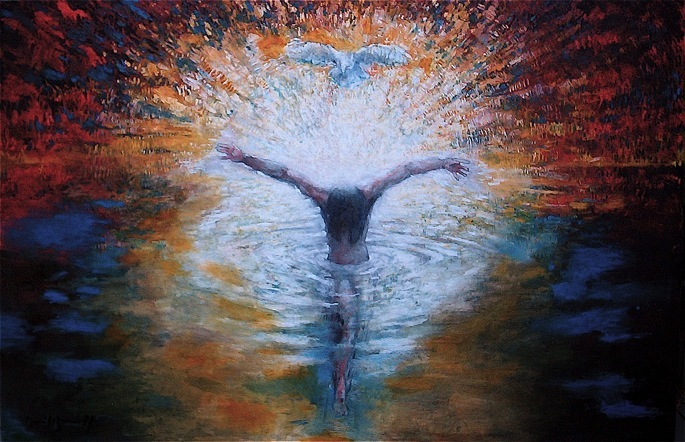
John the Baptist is no hero: he’s a strange man living in the desert wearing camel skin and eating locusts; he’s not what you want your child to be when they grow up.  But, by the grace of God, he’s an essential part: it’s through Him that God reveals Jesus as his beloved Son when he is baptized in the River Jordan.

Do you ever wonder about your purpose? 

I’m not talking about work or ‘success’ – after all, by all accounts, John was a madman in the desert. 

But, as we prepare for Christmas, as we prepare for Christ to enter our lives in our own day, once we accept that we are powerless and depend on God for the impossible; when we finally come to believe that God will keep his promises, then the clear message of Christmas is that our lives are not our own; that each of us has a purpose, each of us, as we acknowledge God as Lord, has a part to play in God’s plan, a part in this great musical, this great drama playing out from the foundation of the world.

That’s why a wrinkled old man and his wife will hold the baby that baptizes Jesus. 

That’s why a teenaged mom lays the Saviour of the world in a bed of hay

That’s why you and me have been called to bring the Good News of healing, and forgiveness, and freedom from the past and fear of the future to a world …and neighbours… who don’t know that God will do the impossible; who don’t know that God keeps his promises; who don’t know that they, if they’re willing, have a part in this story too.

This is the first song of Christmas, and it’s no “Walking in a Winter Wonderland”, but it’s more than a classic – these are words to live by, words to teach our children, words to bring to the ends of the earth, as we prepare, one day, to see our Saviour face to face, when, like the shepherds and the angels above, we fall on our knees and veil our faces as we come and adore Him, as we worship Christ, our Risen King.

Notes:
Gospel Lesson: Luke 1:5-24a
Hymns: “Let all mortal flesh keep silence”
and “Lo, He comes with clouds descending” (Easily sung to the tune Regent Square (“Angels from the Realms of Glory”) if the traditional tune is unknown).

The general idea for this series — but not the content — is borrowed from Alistair Begg’s book The Christmas Playlist

Remembrance: A Call to Duty

925 years ago, the Church, entangled with kingdoms and governments, called for crusaders, saying it was a Christian man’s duty to fight for the name of God in the Middle East.  About 2 million died.

401 years ago, the Thirty Years’ War erupted in Europe, a war between Catholics and Protestants.  Each church and country declaring that it was a man’s duty to fight for their understanding of God.  About 5 million died from fighting and famine.

105 years ago, clergy in pulpits across this country proclaimed that it was a person’s Christian duty to defend the global empire that secured our prosperity, as the “war to end all wars” erupted, and some 24 million combatants and civilians lost their lives, and 214,000 Canadians – then over 2.5% of our population – were killed or wounded.

80 years ago, once again, the Church declared that it was a person’s duty to take up arms, not in the name of God or Empire, but for the cause of “Freedom”, as a full 10% of Canadians entered the armed forces, as upwards of 100 million people worldwide lost their lives directly or indirectly in that war.

Then, as we entered the Cold War, opinions changed.  The Church, and society at large, was unsure of its position, until, around 1985, when the churches of North America generally agreed a Christian’s duty was, as we recited last week in our Baptismal Vows, a duty to “strive for justice and peace among all people”, while “persevering in resisting evil”.  Tens of thousands of Canadians still answered their country’s call to serve in Korea, then the Gulf, then Yugoslavia and Somalia, returning home broken and bruised, but now without the heroes’ welcome or widespread support that helped their parents’ generation return from World War II.

And, the story continues, as our country and her allies deployed again to the Middle East, and even today, our Armed Forces list 33 ongoing peacekeeping and other operations at home, in Central and South America, Africa, the Middle East, and Asia.

There’s no question.  War is a difficult and complex matter.  And there’s also no question, as we look back, that whenever the church forgets its purpose and identity and simply becomes a shadow or echo of the state, our fallen humanity, our temptations to pride and greed lead us, over and over again, down the dangerous path of thinking that God is on our side, as though we were the ones with the eternal plan.  We forget so quickly that the good news is the opposite: that God calls and invites us to be on His side.

Why we Remember

On this Remembrance Sunday, the Church calls us to gather with several intentions. 

First, as the People of God have done since Issac told Jacob about God’s Covenant with Abraham, we gather to recite the story of how we got here; a story that includes both great blessings at God’s hand, as well as great atrocities in the name of ‘empire’ as certain regiments were deemed less valuable based on their heritage, and sent to their doom. 

As the prophets of old recounted both the good and the bad to call God’s people to obedience, it’s our duty to remember the good and the bad, as we look back and see that there is no “war to end all wars”, and until Christ returns, no amount of deterrence or rational debate can save a distraught people from following the rantings and calls to war of a crazed leader.  We gather to remember our story.

Second, we remember not just our history, but the great sacrifices of those who gave so much.  And perhaps we serve their memories best if we don’t romanticize it too much.  They were brave, they were courageous, they fought for the cause of freedom against oppression and evil.  But they were also curious, in search of adventure, excited to leave their small quiet town and see the world; young men and women – even boys lying about their age – who, serving their country, traded youth for the horrors of war, as many never came home, and all came home changed, wounded by the physical and psychological scars of warring humanity.

And, having remembered our story and having recalled the sacrifice of those who died, thirdly, this is a day of prayer.  This is a day of longing, as we pray that these sacrifices will not be repeated.

Church and State:
‘Already’ and ‘Not Yet’

War, it seems, is an inevitable fact of life in our fallen world.  And it is good and right for us to honour those who serve, protect, and defend us from threats foreign and domestic.  As we are taught by the scriptures, the worldly authorities are a part of the God-given order – even though crowns and thrones may perish and kingdoms rise and wane.

And if there’s a lesson a Christian today can learn from the long, sad history of the church and state as strange bedfellows in support of war, it’s that the Christian position, the Gospel position, our position, doesn’t fit well in any worldly camp.  In no way can the Body of Christ justify marching out in the name of worldly empires: after all, we must remember that our conflict is not against flesh and blood – our fellow humanity; no, our conflict is against evil and the spiritual forces of wickedness.

At the same time, we neglect our Gospel call to be a city on a hill, a light to enlighten the nations, and to be the messengers of peace if we bury our heads in the sand; and our task to bring the Good News of peace in Christ to the ends of the earth means that we, like those first apostles, must find ourselves on the dangerous frontlines between justice and injustice, between peace and the evils of war.

And there’s an important theological idea that explains this difficult position in which we find ourselves.  It’s summarized in three simple words: already… not yet.

As we proclaimed last week, Christ has already defeated death and the grave… but we are not yet able to see that defeat on this side of the veil between time and eternity.

God has already built that kingdom where swords and weapons of war are beaten into plows to provide for the needy, that land where lion and lamb, men and women, slave and free, of all races and languages and nations live peaceably side by side, where wars and rumours of wars are no more… but we are not yet there to experience it.

We, here today, are by baptism already made full members of the Kingdom of God, that one true kingdom that endures while all the others, like every nation in history, rises and falls, as one day, even our own great nation will pass away.  But, we are not yet present in that Kingdom, and as such are called to live as resident aliens in this land, subject to its laws, and active in its society.

And that Kingdom, the Kingdom of God, of which you and I are already citizens, has a crucial difference.

In this world, the call comes to serve our country, for patriotism: to serve our fatherland, to serve and protect the crown, the structures, the institutions, and the government.

But the Kingdom of God doesn’t ask for patriotism.  Patriotism is for the kingdoms of this world.

…In junior high English class, we read the classic poem “Dulce et Decorum Est pro patria mori” – it is sweet and proper to die for one’s country; what the poet and World War I veteran William Owen described as “the old lie”, preached from pulpits as young men shipped off to war.

But the message of the Lamb of God, our Lord, is this: “This is my commandment, that you love one another as I have loved you.”  But, my friends, it doesn’t stop there, for this is no airy-fairy love; this isn’t about positive thinking or happy thoughts.  For he continues, “Greater love has no one than this, that he lay down his life for his friends”.[1]

This is no catch phrase.

No, the very Kingdom of God – the new Jerusalem, the new Heaven and the new Earth, that country where the lion and the lamb lie side by side – is built around, founded upon, the man who laid down his life for his friends – even Jesus Christ our Lord.

Our eternal hope, our very faith, is founded on the one who willingly, without compulsion, entered a battle that was not his own – but which would never be won without him – so that those who were oppressed by the forces of evil could know the freedom of justice and peace.

And, if we are to be included ourselves, then “friends” isn’t just those with whom we like to spend time; the word there is companions, associates, those who choose to be on the same side.

Greater love has no one than this.

Our Duty

So, even in 2019, with church and society having learned so much about the horrors of war, we as Christians are called to duty.

Not to fight for the name of the God of Peace, as though that’s what God desires. 
Not to fight for the prideful divisions that keep the church divided in ministry and witnesses.
Not to fight for empire, or even for the political ideals of freedom or democracy, as every empire one day passes away.

Our duty, as those already citizens of the Kingdom of God, is to love this hurting world so much that we are willing to lay down our life, in imitation of our Lord.

Our duty, as those blessed with God’s provision, is not to hoard what we have been given, but to sow from our freedom and bounty so that others, even those under oppression in foreign lands, may reap what we’ve sown.  That, as we read in the Gospel, when that great harvest comes, we may all rejoice together in what the Lord has done.[2]

So, this day, let us commit ourselves to remember: to remember the great story, the honourable and the horrific, that has brought us to this day, and let us pledge never to forget God’s goodness to us through it all.

Let us commit to remember those men and women, from every walk of life, who sacrificed for the freedoms we enjoy; those freedoms that, if we’re not careful, we and those who come after us can so easily take for granted.

And, as those citizens of the Kingdom of God, living – for now – as foreigners in this world and, by God’s grace, as citizens of this great land of Canada, let us long for our promised peace, yearning for an end to our divisions, and living as those who, when called, would take up our cross and bear it to the end for the sake of our brothers and sisters.

Will you persevere in resisting evil…?
Will you strive for justice and peace among all people…?

To which we responded: I will, with God’s help.

Lord God of Hosts, be with us yet,
Lest we forget – lest we forget.


[1] John 15:12-13

[2] John 4:31-38

The Cheering Crowd of Saints

Therefore, since we are surrounded by such a great cloud of witnesses, let us throw off everything that hinders and the sin that so easily entangles. And let us run with perseverance the race marked out for us, fixing our eyes on Jesus, the pioneer and perfecter of faith.  Hebrews 12:1-2

Once each year, Christians around the world observe the Feast of All Saints, an opportunity for us to stop and think about what it is that we believe when we recite our faith in “the communion of saints” in the Creed.

All Saints, or in the older English, All Hallows, which comes each year on the first of November, is a Christian celebration going back to the late 300s, when Christians would remember the great heroes of the faith, the God-given examples of men and women who were not afraid to stand up for what they believe in, who were not ashamed to serve the weak and the poor, and who were not afraid to be rejected by those who are powerful in the eyes of the world.

The Church, from an early age, celebrated these heroes as inspiration for our own Christian pilgrimage – ordinary, imperfect men and women from all walks of life, who followed in the footsteps of our Lord, and in whose footsteps we ourselves now walk along that narrow path of discipleship.

For centuries, All Saints, or All Hallows, was a major high-point in the year.  In fact, the celebration lasted over three days, and even now, if you visit France, Spain, Portugal, or pretty much anywhere in South America, you’d encounter a public holiday with parades and special family meals. 

For many Christians around the world, there are two parts to this celebration: first, we remember those heroes who are examples that we can follow as we also strive to imitate Christ; then, as we did last night, we remember before God those who have died, praying for the repose of our loved ones, as we entrust them to the mercy of God in the hope of the resurrection. 

Sadly, in this country, that deeply meaningful custom is largely forgotten. 

For centuries, in England, Portugal, and parts of Northern Europe, on the eve of All Saints or All Hallows – that is, Hallow’s Eve or Halloween – children would go door to door, singing hymns or even praying litanies, knocking on doors to pray for the departed relatives and loved ones of each family, and in exchange, receive little sweet treats, “soul cakes” they were called.  In some places in England, groups would even dress in costume and perform a short play about death and resurrection, where those representing the saints of God would defeat an actor playing the Devil, reminding the audience of Christ’s triumph over death and the grave.

That, of course, was the root of Halloween, which has lost it’s Christian mooring altogether – if a child knocked on your door asking to pray for your family and your departed loved ones, I doubt many of us would even know how to respond!

On this day, as we remember and celebrate the Saints of God, I think there are two questions for us to answer.  First, who are the saints?  And secondly, why does it matter?

Simply put, the saints are those who are “set apart” for Christ.

The saints are the holy people of God, and the whole idea of “sacredness” means someone or something that is dedicated and set apart for the work and service of God.

Of course, there are those saints known to all Christians around the world – Peter, Andrew, James, Thomas, Paul and the other apostles, those first messengers who founded and were the first bishops of first churches in Rome, Greece, Jerusalem, India, and the cities around the Mediterranean.  The evangelists: Matthew, Mark, Luke, and John.  Those biblical examples of faith: St. Mary, St. John the Baptist, Sts. Mary and Martha of Bethany.

But it’s also important not to limit the definition of “saint” too much – after all, the great news of the Gospel is not that God calls perfect people, but that God calls and equips everyday people, the only requirement being that they’re willing to follow: if Peter, who sank in the sea and publicly denied Christ not once, but three times could be a Saint; if Paul, who persecuted the Church and held the coats of those who stoned Stephen the Deacon for his faith in Jesus could become a Saint, then there’s hope for all of us if we’re willing to follow.

God raises up saints in every age – not that any of them are perfect in their own right, but that they are examples of what it means to live a life that is sacred, that is “set apart” to the service of God.

In each generation, the Church looks to those who have gone before, who have finished their race, and sees that God has given us examples of what it means to be a disciple in our own age, of what it looks like to love your neighbour as yourself, to offer yourself in the service of others, to repent of sin, and to take up your cross and follow Christ.

The saints are not perfect – only God is perfect.  But the saints are important examples to encourage us to persevere in following Christ.

Holiness is contageous

There’s another important idea, from the Old Testament, about who the saints are.  Going back to the book of Genesis, there is the idea that sacredness is spread by coming into contact with something that’s holy.  The People of the Old Covenant built altars – sacred sites – on the mountains where God revealed himself. 

In a way, the holiness of the presence of God is contagious – in Exodus God tells Moses that the altar in the place of worship must be set apart for no everyday use, and that anything that touches the altar becomes holy in the eyes of God.[1]  The same goes for the sacred vessels used in the worship that God directs,[2] and in Ezekiel, God directs that the priests should have special garments reserved for their ministry at the altar, which become holy by their use in the holy place.[3]

It’s this idea that St. Paul has in mind when he refers to all the baptized – to you and to me – as “saints”.  By the grace of God, we’re made members of Christ’s body; through the gift of the Holy Spirit, we’re invited to approach the throne of God boldly, as we receive the holy food and drink of Christ’s body and blood – and as we all know, you are what you eat.

Who are the saints?    The saints are those who have answered the call to follow Christ, and in doing so, are examples to us in our journey. 

Now, to be fair, there are some who are uncomfortable giving much attention to the saints; and certainly, there are entire denominations that at times have gone overboard.  But, if the way is narrow, and Christ is the one name by which we are saved, then to follow in the footsteps of those who follow Jesus is to walk in Christ’s own footsteps as well.  And it’s by the grace of God that our faith isn’t some distant memory in a far-off culture; but God gives examples and heroes of faith to every generation and every language and culture, that we may follow where he leads.

The Role of the Saints in our own Pilgrimage

So, if we know who the saints are, we might still ask, why does it matter?

Well, first, I’d say that an understanding of the communion of the saints is essential because it proves and even requires that “my faith” cannot be about ‘me and Jesus’.

Now don’t get me wrong: it’s important that each of us decides to follow Jesus, that each of us has a relationship with God.

But the Christian faith is anything but personal in the sense of being individualistic. 

There are those who believe that we have to search for Jesus, to “find him”, as though he’s been hiding.  There are those who teach that we are to read the scriptures and come to our own conclusions, as though there isn’t 2000 years of continuous, unbroken teaching and preaching that has come before us.

When we decide to follow Jesus, it’s not as though we’re walking through a food court picking what we might have for lunch.  When we follow Jesus, we join a family, as we receive the inheritance of those who have gone before us, and are entrusted with the great responsibility of handing that inheritance down to those who come after.

The whole idea is not that me and Jesus are now best buddies, but that I am joined to the whole family of those who, across space and time, have joined themselves to God’s covenant community. 

Or, think about it this way: baptism isn’t just about you being washed from your sins.

Baptism is about us, together, being led through the Red Sea, from death and slavery to the land of life and freedom, though the one offering of Christ for the life of the world.

In our baptism, we join ourselves to Christ, and as we allow ourselves to come into contact with the Holy One and to follow where he leads, that holiness is contagious, and we ourselves become holy.

The other side of it is this: as we proclaim on All Souls Day and really every time we gather, death is not the end.  Our eyes don’t close when we die. It’s the exact opposite: when we die, the veil is lifted and, for the first time, we see God as he truly is, and we are fully known.

The Book of Hebrews describes the saints as this “great cloud of witnesses” – but I don’t think that’s the best translation of the Greek.  The word translated there as “witnesses” also means a crowd of spectators in the arena, watching a sporting event.

Now think about it: as we heard last week, St. Paul in his second letter to Timothy describes the faith as a race that we run, a race where we are to keep our eyes on the prize that is Jesus, as we run with endurance the course that lies ahead. 

This “great cloud of witnesses” – the saints – are those who have finished the race ahead of us, and now, with Christ, stand at the end of the course, cheering us on.  In the book of Revelation we read that these witnesses cry out around the altar of God, saying “how long”, praying for us to finish the race.

In just a few minutes we will renew our baptismal covenant.  All Saints Day is the opportunity for us to remember our own baptismal covenant, and to recommit ourselves to live as the holy ones of God, and to reunite ourselves with the Body of Christ, that great and wonderful family that extends across all nations, across all times, in which we are all brothers and sisters, and those who go before cheer on those who follow after, just as we, running the race today, pick up those who stumble, carry the burdens of those who mourn, freely give even the shirt off our back to the one who needs it, and pass the torch to these little ones.

The Lord is glorious in his saints.  Let us live as those who are part of this family, let us live as those who are being made holy, even as we this morning are invited to recommit ourselves, to approach the altar, and to receive the body and blood of Christ.

To God be the Glory, now and forevermore.  Amen.


[1] Exodus 29:37

[2] Exodus 30:29

[3] Ezekiel 44:19

The Thin Veil that Clouds our Vision

For I am persuaded that neither death nor life, nor angels nor principalities nor powers, nor things present nor things to come, nor height nor depth, nor any other created thing shall be able to separate us from the love of God which is in Christ Jesus our Lord.

Today the Church invites us to offer our bounden duty and service of prayer and praise to Almighty God, but with particular attention to those whom we love but see no longer.

Every one of us here has been touched by the death of a loved one, and while on the one hand the Church tells us that we are to rejoice in the knowledge that Christ overcame death and the grave, this day reminds us that grief – that sadness and even that deep longing that we feel in the pit of our stomach because of separation from those whom we love is not just legitimate, but is part and parcel of life in this fallen world, marred by sin and corruption.

That longing, that desire to remember those who have died, as painful as it sometimes might be, is actually a gift.  It’s a gift that points us through the pain to the deep reality that every one of us is created for immortality; that while our bodies perish and memories fade, life continues in the nearer presence of the merciful, righteous, and loving God, who alone is the source of life.

Life and Death

We live in a time that is more confused about life and death than ever before.  Confused by conflicting teachings mixed with shreds of science and fear of our own mortality, it seems many of us come to understand life and bodily death as infinitely separate, as categorically different manners of being.

In the eyes of the world around us we’ve come to believe that, once that last breath is drawn, existence itself is somehow cut off.  This plays out most clearly, and is most sad, in the language of our fellow Christians: perhaps we can speak plainly about the life of faith in Christ Jesus, and perhaps we can even speak plainly about the eternal life that comes after future judgment, but the Church has largely fallen subject to the wider culture, in being unable and unwilling to speak with confidence the truths that we proclaim at Easter: that Christ is risen, trampling down death by death, and winning victory over the grave. 

And, if that’s the case, if death is defeated, then our longings to be reunited with those we love are not wrong at all; instead, they’re a foretaste of the eternity that God is calling us to share.

You see, life and bodily death are not categorically different; they are not separated by some chasm of our imagination or even by eternity itself.

Rather, it’s quite the opposite.  Death and life are imminently close.  The veil between our mortality and eternity is infinitely thin, separated at all times, and for all people, by nothing more than a single breath.  There hereafter is not far off, but imminently close.

And, on this side of the veil, we see things dimly.

The Church, as a bride prepared to be united on that long-awaited day, looks to Christ, our loved ones, and our eternal home with vision obscured by the gauzy veil of time.

And, when that last breath, that last beat of temporality is ended, it’s not as though we close our eyes.  No, it’s quite the opposite.  With that last breath, the veil is lifted and it is then that we see fully what we have longed for, it’s then that we ourselves are fully known, and as partakes in the death and resurrection of Christ, it’s then that we are born to eternal life.

What of those who weren’t model Christians?

Of course, there remain hard questions, for the veil – though thin – is real.

We proclaim in our Creed the truth of resurrection and of judgment, and the hope of everlasting life.  But what of those fellow pilgrims through this fallen world for whom, for whatever reason, we don’t feel as though we can boldly claim the assurance of God’s forgiveness.  Those – perhaps even those we love dearly – who had real struggles and real failings; perhaps even hurting those around them.

In times like these, it is of the utmost importance that we remember that none of us earn God’s mercy through good deeds; none of us can earn eternal life.  All who are saved are saved by grace, by Christ who loved us first.

Of course, it’s God’s will that we would grow in the likeness of Christ in this life, that we would follow in the steps of Christ leading us to the new heaven and the new earth, to the very throne of God in the new Jerusalem.  But, lest we prove our own unworthiness, we must remember that, when that veil is lifted, we stand as equals inasmuch as we stand only by the grace of God.

And, of course, as Christ himself tells us, we are called to be faithful, but it’s the master – not us – who will weigh the faithfulness of the servants.  Some are entrusted with only a little with which to be faithful, while some are entrusted with much; whether we lived in faith from birth, or turned to Christ as adults, or whether a wretched soul reached for that extended hand of mercy as the darkness of death itself was falling over their eyes, the reward is not ours, but Christ’s, offered freely as we accept his invitation to share in the victory over death, the resurrection, and the ascension of the very Son of God.

Prayers for those we love but see no longer.

So, tonight, we remember the dead; but not just recalling the happy memories.  Tonight we remember them before God in our prayers and in our worship. 

We pray for them because we still hold them in our love, and because we trust that in God’s presence those who have chosen to serve him will grow in his love, until they see him as he is.[1]

True, when those we love pass through the veil, we see them no more; but that’s when the people of God, throughout history, have confidence that those who have gone before will be caught up with Christ, even those whose faith was unknown to us, or who received the gift of faith at the final hour like the criminal on the cross, who, even that day, was with Christ in paradise.[2]

And, by the mercy of God, we believe that the process of sanctification, the process of being healed and conformed to the image of God, does not end with the wearing out of this frail flesh.  Indeed, how sad would it be if, once the scars and weight of this sinful world are healed, and our vision is unclouded, and we can finally know things as they truly are, how sad would it be if we did not then have the opportunity to go from strength to strength as those redeemed by Christ, growing in grace and love to become more like Christ our Saviour.

Tonight we pray for ourselves, acknowledging our grief and pain, just as we trust that those saints who have gone before are interceding even now for all of us those who are still in their pilgrimage.  And, our prayers for the faithful departed are nothing short of us proclaiming our faith, and our assurance that Christ has destroyed the power of the grave, and has made us partakers through our baptism in that death and resurrection; that we, like them, are united with the whole people of God, so that we, too, may come to that unspeakable joy in that place where nothing, not even death, can separate us from the love of God in Christ Jesus our Lord.

So let us proclaim that faith with true hope and full assurance for all who die in Christ, not in sadness, but as those who know that our merciful God has won the victory.

            May the souls of the faithful departed rest in peace.
            And may light perpetual shine upon them.  Amen.


[1] The Catechism of the 1979 BCP.

[2] For a fuller exploration, see N.T. Wright, For All the Saints: Remembering the Christians Departed (Morehouse, 2004).

Humble, not Humiliated

Luke 18:9-14

“Humility” is not a very popular concept.

On the one hand, those writing the history books of the future might look back at the past 100 years and declare that this was the century of “equality”, as it became the lens through which we view each modern controversy: from women’s suffrage in 1916, to civil rights movements leading to the Charter of Rights and Freedoms, as we’ve attempted to deal with issues from land claims and self-government to the decisions to redefine marriage and definitions of the family in Canadian law, with each movement claiming “equality” as its goal.

But, for all the talk of equality, we continue to create new and different ways to distinguish ourselves from our neighbour.  We all do it – and it is so ingrained that it’s almost sub-conscious.  You know, those quick, fleeting thoughts that flash across our minds when we encounter someone who, for whatever reason, we’ve categorized as “other”: it might be that warm flash of pride when we see our shiny new car parked between two old jalopies; it might be that silent “good heavens” when we see someone still in their pyjamas with a couple of unruly kids hanging off their shopping cart at the store; it might be that splash of dopamine, that moment of pleasure that we’ve learned to crave as we check our Facebook again and again to see how many likes that post had – or, depending on our mood, perhaps even clicking to see who has liked it, and who hasn’t.

As a society, we’ve made great strides in the name of “equality”.

But, in a world bent towards corruption by the effects of sin, we simply cannot help ourselves from creating division.


From the start, the chief effects of sin are division and separation.  Separation from the God-given blessings of the land, divisions between parents and children and peoples and nations,
and separation from life in the presence of a holy God, as we choose darkness over light and death over life.

We’ve come a long way from our great-grandparents, whose society built dividing lines based on race or gender; but where one dividing line falls, it seems a new one is built.

Humility is not a very popular concept.

It was Karl Barth, the great Swiss theologian of the 1900s who wrote that, above all else, ‘pride is the chief sin of the religious person’.[1] 

Now, if we’re living our lives as disciples, as apprentices, students of Christ, and our call is to follow where he leads, we’ll find ourselves moving from strength to strength as grow in the imitation of Christ, as we increase in charity and love for each other, as we become able to speak the truth in love, following that narrow path of obedience.

But the problem with this narrow path carved through the mountains alongside the valley of death is that, if you stop to look around, to see where you are compared to the others, if you lose track of the footprints of the one leading the way, you risk losing your footing, and then you fall.

Yes, pride is the chief sin for a religious person, precisely because it only springs up after we’ve avoided the more public, the more visible sins.

No good Christian would boast that you have lied, or committed murder, or dishonoured your parents.  You wouldn’t boast that you sat down and carved a false God, or lost your house and livelihood to addiction. But how easy is it for any one of us to see those sins in another, and suddenly feel that warm rush of sinful pride as we thank – not God, but ourselves – that we aren’t like those people.

The Pharisee and the Tax Collector

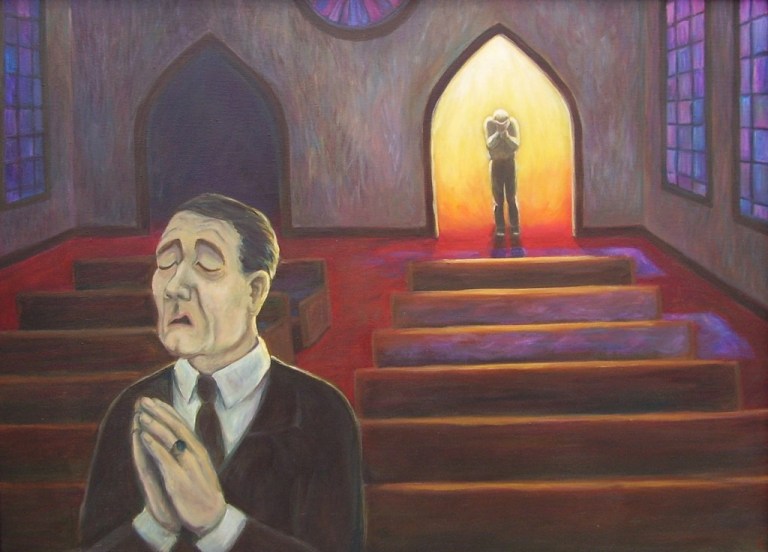
In the Gospel today, we hear the Pharisee saying his prayers: “God, I thank you that I am not like other people: thieves, evildoers, adulterers – or even like this tax collector.  I fast twice a week and give a tenth of all I get”.

Now, I hope we all recognize that there’s a problem with this prayer – standing up and telling God how great you are.  But that’s not the lesson for us.

The reality, you see, is that the Pharisee is right

Everything he’s saying is true.  The Pharisee’s concern above all else was keeping the laws of the Old Covenant as strictly and carefully as possible.  By the objective religious standard, he is a better Jew, a more observant God-fearer than thieves, evildoers, adulterers, or tax collectors.  The law required a fast once per year on the Day of Atonement, but he offered God a fast twice each week; the law required that you offer back to God a tenth of your living expenses and farm profits, but he offered back a tenth of every thing he received.

According to the law, according to the cultural and religious expectations of his day, the Pharisee is right.

The problem – and the lesson for us – is that, for as right as he certainly is, the second his “rightness” became a badge of honour that he could show to the world, it loses its value.

Sure, he’s no less right.  But, you know what the scriptures say: if you announce your good works, sure, they’re still good works, but “truly, I tell you, you have received your reward”.[2] 

After resisting the temptations to disobey the law, the Pharisee falls victim to that more sinister, chief sin of pride, which makes all of his obedience and religious progress worthless.  All the effort of following that narrow path becomes worthless if, in your looking around at others in their journey, you lose your footing at fall.

What is Humility?

There’s a lot to think about there.  Pride and humility are big ideas.

Unfortunately, we aren’t helped by what “humility” has come to mean in the way we speak.

We think, before anything else, of “humiliation”, when you’re made to feel ashamed or foolish by an attack on your dignity: that’s not humility, and as sons and daughters of God and members of Christ’s Body, humiliation is the furthest thing from what God wants for us.  After all, we’re made in His image, and he loves us so much, we’re worth so much, that before the foundation of the world He would offer his own son to redeem us.

Humiliation – an attack on your dignity by someone else – is not humility.

Humiliation – feeling humiliated – is an emotion, and a highly negative one at that, the feeling of responding to a public attack by another.

Humility, on the other hand, is not an emotion, but an attitude. 

Where humiliation is reactive, responding to what someone else has done, humility is a direction, a course that we set for ourselves.

Humility – having the quality of humbleness – means that we have become intentionally aware of our status, of our strengths and weaknesses, and our relationships to others.

Too often, we’ve allowed everyday speech – the same speech that, just under the surface, is building walls to divide “us” from “them” – to define “humble” as a polite way of saying “poor”, or as a kind way of saying that someone is weak or passive. 

But that’s not the point.  A person who is humble is aware of their status before God.  The word itself comes from a Latin word meaning “of the earth”, as our faith itself tells us that our entire existence depends on God, and as the dirt will one day be sprinkled on the earthly remains of every one of us, we are called to remember that we are dust, and to dust we shall return.

Confidence in Christ

The Pharisee, proclaiming how much better he is than the others, is certainly not humble.

But, let’s take a moment to hear again the words of St. Paul, the blessed Apostle to the Gentiles, and see if we hear the difference in his speech:

“As for me, I am already being poured out as an offering, and the time of my departure has come.  I have fought the good fight, I have finished the race, I have kept the faith.  From now on there is reserved for me the crown of righteousness, which the Lord, the righteous judge, will give me…”[3]

Is this a humble speech?  Yes.

St. Paul knows his worth in the eyes of God as a sinner forgiven by grace, even as he awaits his trial in a Roman prison.

Like the Pharisee, St. Paul knows he has done what is required of him, and when he has messed up, he’s asked for forgiveness and started again.  Again, St. Paul, like the Pharisee, has full confidence in the reward that accompanies a life of faith.

The difference, though, is the attitude, the direction of their gaze.

St. Paul, a student and follower of Jesus, followed the narrow path; and now, nearing the end of what he describes as his earthly race, what does he do?  Does he stop and turn around to see how big of a lead he has?  No.  He keeps his eyes firmly fixed on Christ, knowing that, whatever he may face, his worth, his identity is secure as a child of God.

The Pharisee is also running the race of obedience, but instead of keeping his eyes on the prize, he’s focused instead on the others that he thinks he has left in the dust; but no one wins a race by focusing on how much better you are than the others; and the surest way to lose a race is to assume that you’ve already won.

And what about that tax collector?

Well, there’s no question: this man was a sinner.  Tax collectors were those who cooperated with the Roman oppressors, and were authorized to charge as much as they liked and to collect the debt by any means, even violence.  There’s no question, he robbed those in his own community to line his own pockets, and was probably personally responsible for widows losing their homes.

He was certainly universally hated; he had hurt everyone around him.  He came to the temple, but wouldn’t dare even enter, but stood out in the porch with his head down so people wouldn’t recognize him.  And while everyone else was performing the daily rituals of prayer, he bent down and said “God, have mercy on me a sinner”.

…And here’s the scary bit: that criminal – he’s the one who went home in a right relationship with God.

Is Jesus telling us to follow the example of the tax collector?  By no means; Jesus doesn’t condone the sin; and whenever Jesus encounters people in the Gospels he tells them to go and sin no more, making right what they have done wrong.

But it’s a matter of attitude: the tax collector knows where he stands; he knows he needs God’s mercy, and he makes no excuses.  He doesn’t stand there and say, “well at least I didn’t murder someone, or at least I’m not a homeless drunk”.  He needs mercy.  He asked for mercy. And he received mercy.  The Pharisee, as right as he was, didn’t receive anything, for he had already received his reward.

How, then shall we live?

Humility is not a popular concept.  But, it was St. Cyril of Alexandria who said “no true soldier who has seen battle brags that they came out alive while others fell”.[4]

We’re all on this journey.  The temptations may look different, but “there, but by the grace of God, go I”, and the moment we take our eyes off the prize to see how much farther ahead we are than those who are struggling is the moment we fall. 

But, from a place of humility; with the knowledge that we are all God’s children, and with our course set as followers of Christ, everything changes.  When you know who you are, as a forgiven Child of God, the dividing walls are no longer necessary.  When you know where your value lies, puffing ourselves up with pride no longer gains us anything.  When we are honest with ourselves about our own struggles, then we realize the mercy we’ve received, and can extend that grace to a world that is desperately hurting.

For, truly I tell you, all who exalt themselves will be humbled, but all who humble themselves will be exalted.  To God be the glory forever and ever.  Amen.


[1] Volume IV.1, 60.2 of Church Dogmatics.  Barth begins by saying the chief sin is “unbelief”, which he explains as the pride of man in believing that we can be god, being our own law-giver, judge, and saviour.

[2] Matthew 6:2

[3] 2 Timothy 4:6-8a

[4] Cyril of Alexandria’s Commentary on Luke, Homily 120, para.

Featured Image: “The Parable of the Pharisee and the Tax Collector”, Acrylic on Canvas by Rebecca Brogan.

Thanksgiving: Check your privilege

It’s probably no surprise that, on this long weekend when many of us will be joining friends and family to celebrate Thanksgiving, we find that our lessons this morning share the theme of thankfulness.

After all, thankfulness – gratitude – is important if we’re going to share our lives with those around us.  In fact, I’m willing to bet that for most of us, one of our first lessons in using our manners was to say “please” and “thank you” when we asked and received what we needed.  Even this week, I had a great conversation with someone about the simple act of sending a thank-you note, and how, in this age where communication is quicker and easier than ever before, we rarely take the time anymore to thank someone for what they’ve done for us, other than a quick “thanks” on the way out the door.

There’s no question: gratitude is important.

Yet, as many Canadians sit around the thanksgiving table for a feast this weekend, I wonder if our gratitude has become somewhat shallow.

Thankful for What?

If we were to hold up a mirror and really unpack what we think and say on this weekend meant to give thanks for food, shelter, clothing, freedom, and family, I wonder how often that gratitude goes beyond “me”.  After all, it takes hard work to keep food on the table, a roof over our heads, and toys in our kids’ hands, and those freedoms that have been won by those who have gone before us are now our absolute rights to which we are entitled.

It’s a tough question, but one worth asking: if we scratch below the “good manners” that we’ve been taught, how much of our thankfulness stops at “I’m thankful for me”, or “I’m thankful for what I’ve done”.

Privilege

We live at a time when we are constantly being reminded in the media and in public discourse to “check our privilege”.  Maybe you’ve heard the phrase.  In younger circles, it’s becoming a phrase to live by when engaging in the discussion of politics or religion or beliefs about society.  The idea is simple, but for those who have adopted the phrase, it’s meant to cut deep: before you say something, or before you enter a discussion with someone with a different viewpoint, before you argue for what is “rightfully yours”, you “check your privilege” – you step back and consider if what you believe, if what you bring to the conversation, is universal, or if it only appears to be universally true based on your own experience; you step back and ask if your position and your actions would be true if the “privileges” you enjoy were removed – privileges that reflect the uneven playing field on which we are born: a world bent and tilted towards pride and selfishness, with race, money, status, level of family support, and opportunities either as privileges that give us a leg up, or as pitfalls which hold us back.

This idea of “privilege” is popular in public speech today, but it’s really an ancient idea found in philosophy: if God is eternal and unchanging as we believe him to be, if the One True God is the same yesterday, today, and forever, then for anything to be really and truly Good, True, or Beautiful in God’s eyes must be equally Good, True, or Beautiful in every time and place, and for every culture or situation.

Of course, every culture and society needs rules and customs and systems to operate, but for something to be ultimately Good, and Good in God’s eternal eyes, then it has to be as true for the wandering nomad in the desert as it is for us; for something to be really True or Beautiful, it has to be as true and beautiful for the 7-year-old slave girl working in a clothing factory in Pakistan as it is for me.

So, this Thanksgiving, let’s check our privilege.

The truth is that every one of us here has had struggles, requiring real work for us to get to where we are.  The food on our table hasn’t been manna appearing overnight, but has taken effort to put there.  All of us, at some point, have had worries and anxieties about work or our homes, often requiring hard and costly decisions, even uprooting our families and leaving loved ones to make our living.  Many of us, at some point, have had to make hard personal decisions, reaching a decision point when we reached the end of the rope and had to decide if we would keep going the way we were going, out of control, or if we would turn our lives around and get on the right path.

Perhaps you, like me, have a lot to be thankful for.

But if we check our privilege, if we take the opportunities that we were given through no effort of our own out of the equation, we find that “I’m thankful for what I’ve done” doesn’t hold true.

All of us have free will and are responsible for the moves we make, but none of us chose where we started out.  The privilege of a supportive family; the privilege of skin colour or an accent that doesn’t stand out; the privilege of that connection to get a foot in the door for a good job; even the privilege of access to education, of access to loans and funding, even the privilege of having someone to teach you how to speak kindly-yet-assertively to people and to make yourself look presentable so that you earn someone’s trust. 

When we take these into consideration, “I’m thankful for what I’ve done” is a most privileged statement, only true from the vantage point of those who have been given much.

Looking Back: An Older Model

So where do we go from here?

In Deuteronomy 26, God’s chosen people under the Old Covenant are given instructions for what we might call the first Thanksgiving. 

“When you have come into the land that the Lord your God is giving you as an inheritance to possess … you shall take some of the first of all your harvest, and bring it to the house of God.  You shall go to the priest who is in office and make this declaration: “Today I declare to the Lord that I have come into the land that the Lord swore to our ancestors to give us”.[1]

Then, the people were instructed to make an account of the blessings their ancestors had received, which brought them to that point: that God saved Israel out of Egypt, provided for them in their time of need, and brought them into this pleasant and fruitful land.

In the Biblical narrative, Thanksgiving isn’t about our effort and what we’ve each achieved.  It’s the exact opposite.  Thanksgiving is about acknowledging our inheritance.  It’s about acknowledging all of those God-given things outside of ourselves that have brought us here.

Now don’t get me wrong: there’s no question, these people worked hard for their food.  They tilled the land, they woke up early and worked late; this was the work of human hands.  But, the were called to acknowledge that it was by the grace of God that they were in their position.  It was by the grace of God that they had strength, and health to work and freedom to enjoy their leisure.  It was only by the grace of God that they, at harvest time, found themselves in a position to celebrate.  After all, not one of us can add even one breath to the span of our lives.

And celebrate they did – but God had instructions about that too.

You’re to celebrate with all the bounty that God has given you – a true feast with all of God’s good gifts of wine and meat and maybe even a second plate of dessert.  But, verse 11, you’re to celebrate with the alien who is in your land.    You’re to celebrate with the person who isn’t privileged; the person who has no family, the person who doesn’t have the same opportunities and connections to get a decent job, the person who doesn’t have the support structure they need to turn their life around and build bridges to get back to where they belong.

Acknowledging what we have

Thanksgiving calls us not to look at the things around us and be thankful, but to think upon and appreciate those things that paved the way for us, and to thank God. 

We thank God for that which is really Good, True, and Beautiful.  As we heard from Philippians, we’re to rejoice always, with prayer and thanksgiving, thinking on whatever is true, whatever is honourable, whatever is just and pure and pleasing and commendable.  This Thanksgiving, think on these things.

And, we think back to the manna from heaven.[2]  God’s inexplicable provision, that came with the caveat that whenever you tried to store it up so that you wouldn’t have to trust  God for tomorrow, it spoiled and grew maggots.

And maybe that’s the point: when we check our privilege, when we’re honest about what is really the fruit of our labour, and what is really just the skewing of the playing field through sin, anything that we think we’ve stored up is actually rotten.

It’s by grace that we’re here.  Not one of us, no matter how anxiously we worry, can add a moment to our lives or an inch to our stature: it’s the Lord who provides.

So, this Thanksgiving, I want all of us to remember that first Thanksgiving in scripture.

Today or tomorrow, take a moment, and consider all that you have.  But, take a moment and consider all those who God has put along your path to help you get here: those friends and loved ones who went before you, who shared what they had, who helped you get to where you are. 

Think on, rejoice in, those things that are Good, True, and Beautiful.  And declare – truly declare – that “these are gifts from God”.

And then, whether it’s today or tomorrow, or whether it’s one day this week, follow through: share your celebration with someone in need.  Whether it’s an invitation to dinner, a visit to someone who is lonely, supporting someone who is going without, or coming alongside someone who is at the end of their rope and needs a hand to turn their life around, a true celebration, a real Thanksgiving, is one that takes what God has given you and offers it freely to one in need.

For you never know what mighty tree God might have in mind for that small seed of kindness that you sow for your brother or sister, and Christ says, whatever you do for the least of those in need, you’ve done for him.

To God be the Glory forever and ever.  Amen.

This sermon was paired with the hymn “My Worth is Not in What I Own” by Graham Kendrick and Keith & Kristyn Getty

Note: “Privilege” as a framework has its limits, as does any attempt to subjectively categorize the complexities of human interactions in which each individual perceives different advantages and disadvantages from their individual vantage point. This is behind my shout-out to “the Trancendentals” — universal Goodness, Truth, and Beauty — which are used in Western Christian theology as truly universal descriptors of God’s Being, and as interchangeable or intertwined (that which is Good must also be Beautiful and True, etc.).

My use of “privilege” is intended to expand the horizons of this discussion at a holiday during which when family, traditions, and worldly gains are increasingly front and center.


[1] Deuteronomy 26:1-11

[2] Exodus 16:1-36

What happens when we die?

This is perhaps the oldest and most fundamental of human questions.  Every culture, every society that has walked the earth has sought the answer to this question. 

Every person ever born has, at some point, felt the tug of the Holy Spirit drawing them toward the questions of eternity.  Every person has looked at the frailty of life, the loss of loved ones, the declining health of a parent, or the tragedy of a life cut short and, as we were created to do, we all look up and say “there must be more than this”.

What happens when we die?

That is the age-old question that unites all people; a question – a longing – that itself is a part of God’s revelation to us, as he created us for relationship with himself and has revealed his plan for our future through his covenant with Israel, through the prophets, and ultimately in the death, resurrection, and ascension of the Word made Flesh, our Lord.

There is much that has been said about what awaits us after death. 

We live in an age where, as the world grows ever smaller, we come into contact more and more with ideas from other times and places.  Unfortunately, it seems that instead of giving us greater understanding, we find ourselves with a jumbled mess, where in the well-intentioned name of peaceful coexistence, our modern culture finds itself not more at peace, but caught up in whatever crisis finds itself trending on Twitter this week.  And the only framework we have left to decipher our fears and concerns is an inconsistent mixture of popular and positive ideas from here and there, ideas that sound good, but in their inconsistency, ultimately fail to answer our deepest questions as this jumble only succeeds in disrespecting and misrepresenting the very cultures and viewpoints they claim to include.

One friend of mine put it this way: replace the hard questions like “what happens when we die”, with what should be an easier question: “what kind of cookies should we make”.  In the past, we knew with confidence where we could find our recipe book, with the answers to the “cookie question”, tried and tested recipes that have been handed down in the family for generations. 

Today, though, it’s as though our eyes have been opened to the vast varieties of cookies possible, but instead of actually committing to any single recipe to try it out, our culture invites us to throw the parts that appeal to us from of all the recipes together into one. 

The obvious problem for anyone who has ever baked is that recipes exist for a reason: baking is a science as much as it is an art.  Recipes exist precisely because, no matter how nice the ideas might be on their own, you cannot simply throw shortbread, chocolate chips, oatmeal, ginger, molasses, peanut butter, dates, marshmallows, raisins, and lemon juice together in a bowl and hope for the best. 

To make a cookie, we need the recipe – a consistent recipe with all its parts, a tested recipe, where the ingredients work together to produce what was intended.

We wouldn’t bake cookies haphazardly.  Yet, for so many, that’s exactly how we attempt to answer the hard questions that life throws at us.

A Recipe

What happens when we die?

The Church, the Body of Christ and his messengers in the world, have been entrusted with a recipe – a tried and true recipe, handed down from one generation to the next.

If we were to read and study our scriptures faithfully, we would find that God has been revealing his plan for us from the beginning.

Unfortunately, and disgracefully, some leaders, claiming to work in the name of Christ and his Church, have hidden the answers to these questions for selfish purposes; it’s no secret that, at various times in human history, the Church has relied on fear of the flames of hell and the unbiblical image of an angry judge to scare people into submission instead of truly addressing that God-given longing for eternity.

What happens when we die?  I’m inviting us today to “stick to the recipe” handed down to us, and appreciate what it actually says as the answer to that question.

No cartoon pitchforks or wings and harps to be found.

The parable we heard today is the most extended teaching of Jesus specifically about what takes place after death. 

It’s a parable, meaning that it is an illustration specifically used for teaching those ideas that would be hard to grasp on their own.

In Luke 16, beginning at verse 19, we hear of two men. 

One is rich – well fed, very well dressed, lived for lavish parties and opportunities to enjoy and display his wealth.  He’s also safe and secure: we’re told his house has a gate, and we can imply from the context that also means he has gatekeepers among his several servants, the poorly paid workers who grow and process his food, who sew and mend his clothes, and who build the things in his house.

The other man is poor; not just living from paycheque to paycheque, but poor.  His name is Lazarus.  He’s suffering from an illness that cripples him and prevents him from working, and he’s now living on the street with the stray dogs as his only companions, but even they betray him as they gather the scraps from the rich man’s trash before Lazarus can get there himself.

Both die – but neither ceases to exist. 

As Christians, we believe that God created humankind for immortality.  That’s what we mean when we say that we were created in God’s Image, that his Likeness is imprinted on our souls.  We believe God created everything that is – and modern science shows us each day just how much more wonderful that creation is, with space extending beyond our wildest imagination, made up of particles so small that we only know they exist by their effects on the world around them. 

And, we believe that, out of that vast creation, God created us to be different – to exist in relationship with him, to have free will rather than raw instinct, so that we could experience the free giving and receiving of Love, which is God’s Nature. 

Both the rich man and Lazarus die – their bodies wear out – but that’s far from the end of the story.

As Christians, we confess every time we gather that we believe in the resurrection of the body.  We believe, as taught by the scriptures, that our bodies, and all creation, matters

This is one of those places where, especially in the modern era, some have been mixing ‘recipes’.  The resurrection of the body was counter cultural in Jesus’ time, and runs counter to the many Greek, Roman, or Eastern philosophies that reject the body and the earth as bad and of no worth.

As Christians, we don’t believe that. The Church doesn’t teach that.

We believe that God created the heavens and the earth, and that he called them “good”. 

We certainly don’t believe that good and evil are equal and opposite powers fighting for control – that’s anything but Christian!  No, rather, God is good.  The problem is not some equal force of “evil”; it’s disobedience and rebellion.

It was in using our free will to serve ourselves rather than return the love shown to us by God that the world became not ‘evil’, but fallen.  God made it and called it good, but disobedience caused it to be stained, corrupted.

Our hope – our eternal hope – is not that God would free us from our bodies and the world.  There are religions that teach that, but not Christianity.  Our hope, as found in the scriptures, is found in God’s promise to restore our bodies: that’s precisely why it’s essential that Jesus was raised from the dead with a renewed body. 

Our hope, as found in the scriptures, is in God’s promise not that we will end up in some disembodied spiritual realm, but that we will be made citizens of a renewed earth, one where those who have accepted Jesus’ offer as the remedy for our corruption, and who share in that resurrected body will live in relationship and communion with him and with each other.

And, until that time, we are told that our flesh rests in hope, and that for the faithful, to be absent from the body is to be present with the Lord.

Punishments or Justice?

The experience in the grave is very different for the rich man than for Lazarus.

Jesus in today’s Gospel lesson provides an image, and it’s one worth our attention.

There’s no little red devils with horns and hooves wielding pitchforks – in fact, you can search the scriptures all day long, and you won’t find them anywhere: that’s not what the Church teaches, and it’s not what the Bible says.

What we do see is this: the rich man in the grave (Hades, the place of the dead) is separated from Lazarus who rests in “paradise”, awaiting the last day and the resurrection.  And, the scriptural image is, at least for me, much more powerful than the cartoon devils given to us by false preachers.

The chasm – the walls of the cell, if you prefer – separating the two men are of the rich man’s own devising. 

The wall, the gap separating the rich man from the peace of paradise is the very wall that he himself constructed.

In his life, he did all in his power to separate himself from the plight of the poor.  He paraded around in his new clothes; he was so well fed that the food that he wasted or threw away would have been enough to feed those in need; he built a wall, in the name of safety and security, which also served to guard his eyes from having to face those in need around him. 

But, Jesus says, “blessed are the poor in spirit, for theirs is the kingdom of heaven”.

The great divide that the rich man experiences after death is the reversal of the great divide that he inflicted on others in his life.

It’s not as though this is a punishment unfairly imposed by an angry god who keeps a tally of wrong deeds. 

No.  It’s simply justice.  We reap what we sow. 

We lock away and hoard our treasure now, we find ourselves locked away grasping to what has become worthless in the age to come. 

We celebrate and rejoice, or save and spend at the expense of our brother or sister, and as we hear in scripture, that love of money and the eagerness to become rich result only in wandering from the faith and piercing ourselves with many pains.

Those who take great comfort now, be warned.  “For blessed are those who mourn” now for injustice and wrong; because those who are comfortable, like the rich man, will watch as those who mourned shall be comforted.

Those who take great pride now, be warned: for you shall see the meek inherit the earth.

The Answer to the Question

What happens when we die?

We believe in the resurrection of the dead, and the life everlasting.

And as our bodies rest, our eyes are opened and we see the justice of God. 

But, it’s for us to decide, in this life, if we will be those who strive for God’s truth and justice now, who take up their cross and follow Jesus in spite of the persecutions we might face, and who will rest in peace. Or, if we are those who build, inherit, or benefit from walls that have been built, then justice demands that we experience life outside those walls in the age to come.

The rich man said “I beg you to send someone… I have a family, and they need to be warned so they won’t come into this place of torment”. 

No, came the answer. “They have been warned.  If they do not listen to Moses and the prophets, neither will they be convinced even if one rises from the dead”.

None of us can earn paradise; we’ve all, every one of us, benefited from building chasms between rich and poor, friend and foe, between races and languages and nations. 

Our only hope, then, is to believe the message of the one who rose from the dead: Jesus Christ our Lord.  Amen.

Notes:

This sermon is consistent with how Christians from the Early Church interpreted this parable before the politics and polemics that led to and stemmed from the Reformation. It draws largely on St. John Chrysostom’s Four Discourses on the Parable of the Rich Man and Lazarus, particularly discourses 2 and 4.

The idea of “digging one’s own abyss” in interpreting this passage comes from St. Gregory of Nyssa’s On the Soul and Resurrection (in Fathers of the Church: A New Translation, CUA Press, vol. 58, pp. 232-234); St. Augustine emphasizes the idea of reaping what one sows, or the concept of the equal balance of the scales (“the measure you give is the measure you get”) in this passage in his Sermon on this parable (#367 in his collected works).

Numerous fathers of the Early Church (Justin Martyr, Clement/Pseudo-Clement, Irenaeus, Tertullian, and Origen, among others) are sources on the topic of the state of the righteous and unrighteous dead before the return of Christ and the general resurrection.

Anglican bishop and professor N.T. Wright has written extensively on the topic in recent years. His chapter “Purgatory, Paradise, and Hell” in Surprised by Hope (HarperOne, 2008) is a fascinating and accessible study.