May only the truth be spoken, and may only the truth be heard; in the Name of God,
who is Father, Son, and Holy Spirit. Amen.
Is there oil in your lamp?
Is there oil in your lamp, and is it burning?
The Bible readings that we have for today are pretty dramatic: lots of talk about darkness, four separate warnings – serious warnings – about Christ’s return, about what is expected of us (who are supposed to be preparing for that!), and a series of reminders that the Christian life is a fine and narrow line where there is always more transformation required of us every day of our lives, until the Lord completes that work when we see Him face to face.
So let me ask again – is there oil in your lamp… and is it burning?
Because as Jesus is telling us today – it’s not much good to have a lamp if it isn’t going to pierce the darkness.
The Parable of the Wise and Foolish Virgins
I want us to think about that Gospel reading.
I know most of us have heard it dozens of times – it comes up every year around this time, and sometimes a second time in Advent. But the world was very different in Jesus’ time, so there’s parts we could miss.
In those days – much like in our smaller communities today – a wedding feast was a big event for the whole community. They didn’t have this modern, lonely, and often-broken post-Baby Boom idea of a husband and wife being all alone in the world, having a house to themselves, relying only on themselves – and the idea of a couple running off or eloping certainly wasn’t on anybody’s radar.
No, we need to remember that even two or three generations ago, the world was very different. Being part of a community, of an extended family, or even being part of a real neighbourhood where you knew your neighbours was essential to life. Life was harder… but we were much less distracted, and much more connected.
Families stuck together – even when I was growing up in Newfoundland, having a grandmother or a great aunt living with you was normal, just as across the North, people stick together and live together, not this modern idea of every person for themselves.
When Jesus was telling this story, it was as it was until just a few generations ago – young people, men and women, stayed with their family to care for one another, until the time came for them to go, with the family’s support and blessing, to build a roof of their own – knowing there would always be a place for elders and kids, and often times bringing along an unmarried brother or sister, because there had to be place for everyone, and we knew we needed each other.
In that world, in Jesus’ time up until not so long ago, weddings were a big deal.
There were no wedding planners, and a wedding didn’t cost a million bucks.
No, the whole community, the whole neighbourhood, had a part to play.
The engagement, or betrothal, would last around a year, when the groom and his friends would go and “prepare a place” for his bride – often this was a room added on to the Father’s house: and yes, it’s on purpose that Jesus says “I go to prepare a place for you, in my Father’s house are many rooms”.
In Jesus’ day, the groom’s family and his friends would also prepare the place for the wedding feast. Much like happens in the smaller communities today – I was in Baker Lake not long ago, a couple weeks before a wedding was to happen, and so many people were already buzzing around, getting things ready to transform the school gym into the space for a feast and night of dancing and music and celebration for all who would come from the community.
In those, days, too, the bride and her family and friends would take that year to prepare all that the woman would need to take up her new life. There were clothes to be made, there was wool and yarn to be spun and cloth to be woven, there were cooking supplies and household items to be gathered up and put in a chest – something that continued in the traditions of a bridal shower providing household items.
But the thing to remember if we want to understand Jesus’ parables is that, during that time of engagement – that time of waiting – there was a whole lot of work to be done.
It wasn’t wedding planning – it wasn’t busyness about choosing a caterer or making sure the font on the invitations was just right.
It was a time of preparation for the life to come. There was a room to be built and furnished and prepared, and there were supplies and real life-skills to be gathered and learned for the new life ahead.
And when the room to live in was ready, when they had started the preparations for the feast, a messenger would be sent to say “get ready, the groom will be coming soon!”.
And then something spectacular would happen.
It’s probably hard for us to imagine, especially since our world is full of so much artificial light. We really take the light for granted – how easy it is to forget that, even when this church had its first meetings in a tent in Old Town, not really that long ago in the grand scheme of things, light wasn’t as easy as flipping a switch.
But here’s the thing – every wedding in first century Judea featured a night-time procession.
This is a big deal! People didn’t go out at night, and certainly not alone.
The world was dark, no streetlights in those days. (💡Lights out!)
But the custom, the tradition, was that the groom and his friends and companions would come in the night, playing music, shouting in the streets, each carrying a torch or a lamp, piercing the darkness with light and shouts of joy – ‘the house is prepared, all is made ready, there’s a place for everyone at the table… come, and enter into the joy of my father’.
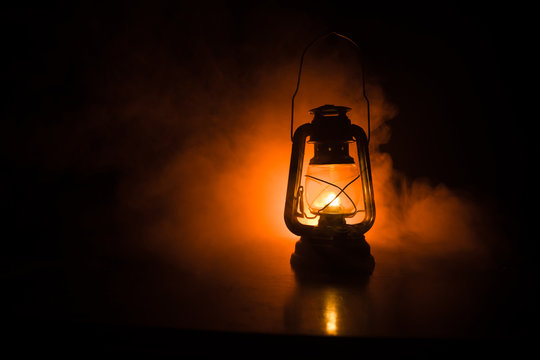
And then the bride, and her family and friends would all have their lamps ready to go, and a leather flask of oil, because the party was just getting started. (🔥Light the lamp!) Everyone would light their lamps, and now this joyful procession, twice the size as before, would shout and dance and sing through the streets. And let’s remember – the world was dark. But this group of 50 or 75 or 100 people carrying lamps together, you’d see it from a mile away.
It was a beautiful and wonderful start to the life that had been prepared.
(💡 Lights back on)
…But you had to be ready for it.
You had a year to get ready for the life to come, and then there was always a few days warning before the nighttime procession.
But if the wedding procession arrived and you weren’t ready, well… that was a real slap in the face to the groom and all of his father’s house.
If they came all the way to you, at great expense, carrying twice as much oil – enough to get there and back – and you had a lamp that was empty, you hadn’t even bothered to put in the bit of work to get ready, well… to put it simply, you couldn’t join the procession.
Sure, you had your lamp, but what good is a lamp without oil.
And everyone needs what’s in their flask for their own lamp – it’s not the sort of situation where you can borrow from a neighbour, because there’s no excuse.
In fact, (🔥Lantern off) if you came to the wedding feast and your lamp was out, it was assumed you were someone coming just to fill your belly, not someone prepared to celebrate and bless the new life that was just beginning.
And that’s what Jesus says at the end of the parable: Those foolish bridesmaids scrambled to find some oil, but the rejection – the slap in the face – was already done. ‘You had a job to do, fill your lamp to join the procession. You didn’t do it… so I don’t know who you are anymore.’ And the door is closed.
Serious business.
Jesus is coming again.
He is.
And we need to take that seriously. And that means we have to take it Biblically.
A lot of people, especially in the last 150 years, have all sorts of wild and wonderful ideas about “rapture” – a word that, actually, isn’t found anywhere in the Bible. Just as important, it isn’t an idea that is found anywhere in scripture; nowhere does it say anything about people randomly disappearing or anything like that.
What is Biblical – through the prophets and the gospels and the epistles and all through the Book of Revelation – is that the rightful Lord will return, and will take us to the place that is prepared for us to share in the marriage supper of the Lamb. Jesus said “if I go and prepare a place for you, I will come again, and take you with me, that where I am, you may be also”. (John 14:3)
That’s the biblical language, and that is our Christian hope.
There is a new life being prepared for us – but as every hearer and every reader would have understood up until our modern day, there’s work to be done to get ready for when the bridegroom comes; and we have to do that work now, because night is coming, and even in spite of all the artificial light, the world around us is dark.
Is there oil in your lamp?
And is it burning?
The prophet Amos was sent to the people of God in a time of peace and prosperity to remind them not to miss the point.
They had their lamp – we have our lamp.
Look at our first lesson today.
They had ways of doing worship, they had their favourite hymns and songs, they gave their tithes and offerings, they had assemblies – meetings, committees, feasts and festivals and all the rest.
But it missed the mark; or worse, it missed the point.
The church in every age risks the same fate.
We all have our own preferences and ideas about worship, about what we consider beautiful. We all have our favourite hymns and songs or styles – that’s human, and I can certainly say that there’s none of my favourites here today, but that’s ok. I give my tithe to the work of the Church, and I make offerings over and above to support worthy causes; I’m sure many of us do the same, or give to God the best we can as we feel led.
But, that’s just the lamp.
It’s just the structure, the stuff.
It’s important – you can’t have the flame without the lamp.
But, the warning from the prophet Amos, is that the Lord will come, and He’ll find his people carrying on with un-lit lamps – or worse, disgruntled because one wants a red lamp, another wants a black lamp, and another wants a shiny lamp – but it’s night, the world is dark, and there’s no oil to light them.
And the word of the Lord came through Amos to a prosperous and comfortable people:
“I hate your feasts, I take no delight in your gatherings, I don’t accept your offerings, and your songs are like noise”… why? Because it’s easy to forget your purpose.
You, People of God, Isaiah says, are called to be a light to the nations. You, people of God, were filled with the Holy Spirit to bring good news to the poor, to comfort the broken-hearted, to go to those shackled in chains of bondage and proclaim freedom; to raise up the heads of those who mourn; to be oaks of righteousness planted to the glory of God, to rebuild the ancient ruins and repair the cities destroyed long ago. That’s why a church is here.
The lamp can be as pretty or as plain as you’d like,
but it is no good without the flame to pierce the darkness.
And, let’s face it, Yellowknife gets very dark.
(🔥Light the Lantern)
And the Lord has called you, and this church, and the other churches, working together, to shine His light.
He is coming again, in joyful procession to lead us into a new life;
but He has to find us ready.
Is there oil in your lamp? Is it burning?
Lets pray and work together, to trim our lamp and shine our light here, in ways above and beyond what we have ever done before, and all for Gods glory, now and forevermore.